
Reviewed · GION & GEISHA DISTRICT TOURS
Authentic Kyoto Gion Geisha/Maiko Cultural Experience
Kyoto’s Gion looks magical at night. What makes this visit special is the chance to see live maiko or geiko performance and understand it with English translation right in an authentic teahouse. One thing to keep in mind: you cannot choose whether you meet a maiko or a geiko, and the experience can feel pricey for just 1.5 hours.
Here’s the practical part: you start at Gion-Shijo Station, walk through historic lanes including Hanamikoji Street, then settle into a tatami room for a small-group teahouse program. You’ll watch traditional dance and music, do a matcha tea ritual, and get time for photos—plus context so you know what you’re seeing (not just staring at costumes).
In This Review
- Key highlights to know before you go
- Gion Teahouse Culture: Why this kind of experience works in Kyoto
- From Gion-Shijo to Hanamikoji: a simple walk with the right context
- The teahouse program: maiko or geiko, dance, music, and guided Q&A
- Matcha, sweets, and tea ceremony etiquette you can actually use
- Photos, tatami manners, and socks: the small rules that make it smooth
- Price and value: what $155.22 buys in 90 minutes
- Getting the most out of your night in Gion
- Who should book this maiko or geiko teahouse experience?
- Should you book it?
- FAQ
- What is the duration of the experience?
- Where do I meet, and where does it end?
- What’s included in the teahouse part?
- Can I choose whether I meet a maiko or a geiko?
- How big is the group?
- What should I bring or wear for the teahouse?
- Who can join, and are there age limits?
Key highlights to know before you go
- Small group size (max 10): easier conversations and a calmer pace in busy Gion
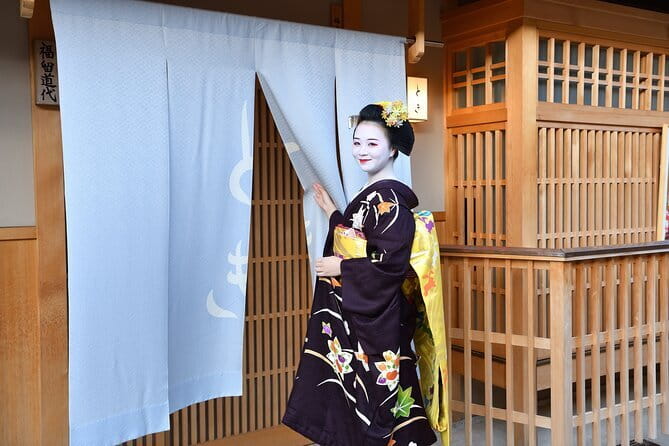
- Maiko or geiko at the teahouse: traditional dance viewing plus an intimate chat setup
- English-speaking guide throughout: explanations that give meaning to the performance and etiquette
- Matcha tea ceremony and photos: you’ll taste, you’ll learn, and you’ll capture the moment
- Tatami-room manners matter: you’re guided on how to keep shoes/bags and the space tidy
Gion Teahouse Culture: Why this kind of experience works in Kyoto
Geisha culture in Kyoto is not just a costume-and-photos thing. In Gion, it’s tied to formal arts, strict manners, and a long, living tradition of hospitality. This experience is built around that reality, because you’re not watching from the sidelines—you’re in a teahouse environment where the performance and tea ritual are part of the same cultural flow.
I like that the program is designed for meaning, not spectacle. The guide translates for you and provides context, so when you hear music or watch a dance, you understand the setting instead of treating it like a random show.
One extra plus: the group stays small. Kyoto can feel crowded fast, especially near the famous streets of Gion, so keeping the group size to 10 travelers makes a real difference in how relaxed your evening feels.
More evenings along the lantern-lit lanes of Gion


From Gion-Shijo to Hanamikoji: a simple walk with the right context
Your tour starts at Gion-Shijo Station (meeting point at 1 Chome Miyagawasuji, Higashiyama Ward). From there, you’re led on foot toward the teahouse, including a look at Hanamikoji Street, one of the iconic lanes in Gion.
This walking segment matters more than it sounds. It gives you bearings before you reach the teahouse, and it also tees up the cultural setting of what you’re about to see. With an English-speaking guide, you’re not just passing pretty streets—you’re learning what you’re looking at as you go.
The trade-off is that you should expect a gentle walking portion as part of the overall 1 hour 30 minutes. It’s not a long hike, but it is enough that you’ll want comfortable shoes for the outside portion and socks that are ready for indoor rules later.
The teahouse program: maiko or geiko, dance, music, and guided Q&A
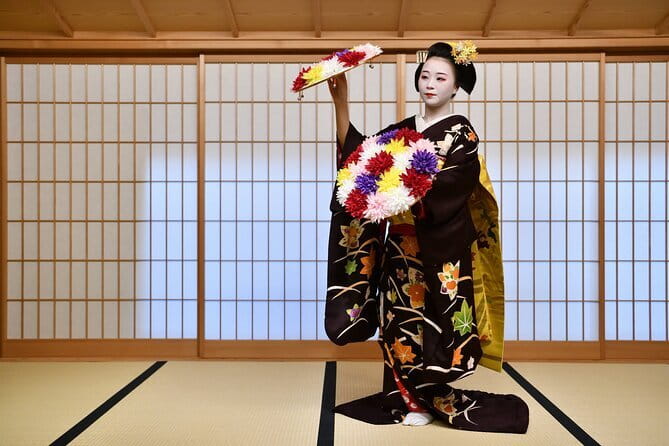
The core of the experience happens inside the teahouse. Once you arrive, you’re in a small-group setting (up to 10), and you’ll spend about an hour there.
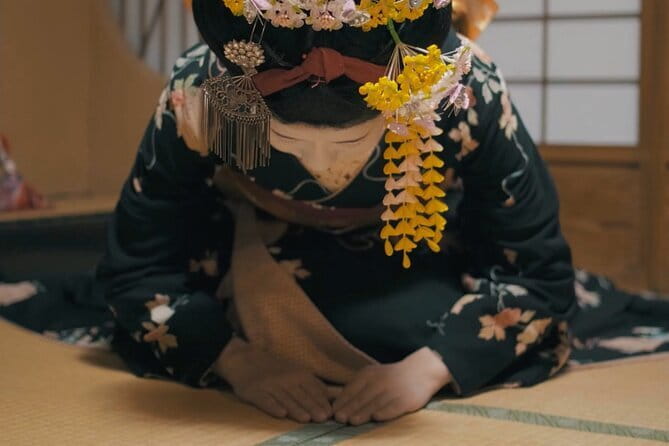
Depending on the day, you’re accompanied by a maiko or geiko along with a tea master. Importantly, you cannot select which one you’ll meet. That’s not a downside for everyone, but it is the key unknown factor in deciding whether this fits your expectations.
Inside, you can expect a mix of:
- Traditional dance viewing (maiko or geiko performance)
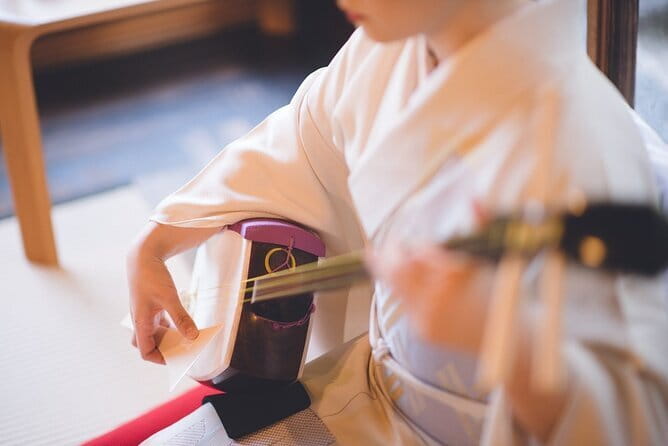
- Music as part of the program
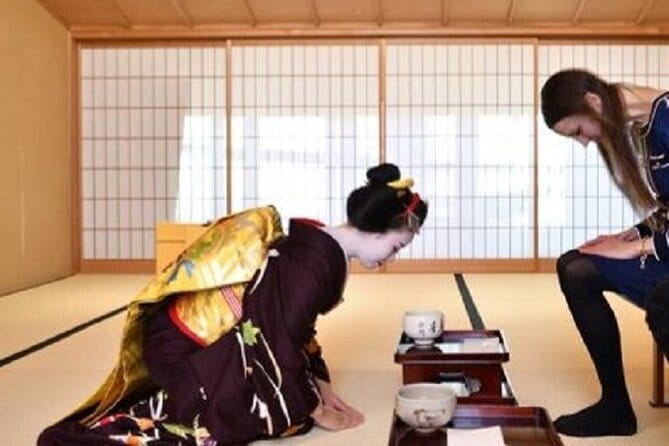
- A ceremonial matcha tea experience
- Time for questions and conversation in an intimate setting
- Photo opportunities, including time to take photos with the performer (when offered as part of the program)
If you like learning how traditions work, this is where the tone matters. Several guide names come up in prior accounts—people note excellent English translation and helpful explanations, including guides such as Yoshi, Yuko, and Youko. You can’t count on any one guide, but you can count on the structure: you’ll have someone translating and contextualizing so you get more out of the interaction.
Matcha, sweets, and tea ceremony etiquette you can actually use
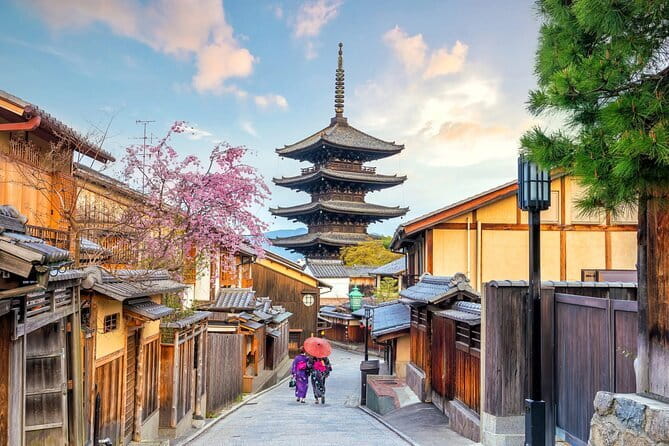
The tea moment isn’t just a drink. It’s a formal ritual, tied to respect for the space, the moment, and the host. During the teahouse portion, you’ll do a matcha tea experience and you may also be served sweets as part of the program flow.
What you’ll take away is less about memorizing steps and more about understanding why the ritual feels so precise. When there’s translation and an explanation running alongside the tea ceremony, you’ll notice details you might otherwise miss—how the experience unfolds, what guests are expected to do, and how the performer’s presence fits the atmosphere.
I also appreciate the practical element here: a tea experience in a traditional setting is something you can carry home as a reference point. Even if you never replicate the entire ceremony later, you’ll know what to look for the next time you see matcha culture in Kyoto—real hospitality beats “tourist performance” every time.
Photos, tatami manners, and socks: the small rules that make it smooth
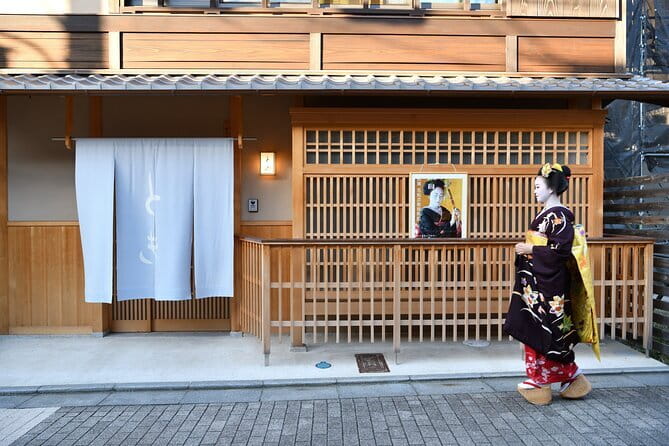
This is where etiquette matters. You’ll be entering a tatami room, and the rules are simple but strict: you need to wear socks, and if anything is wet (rainy day clothing, wet feet, a wet bag), you should wipe off water before entering. The goal is keeping tatami spaces clean.
That sounds basic, but it’s the kind of thing that can ruin a nice experience if you’re unprepared. Bring extra socks if rain is likely. Keep a small towel handy in your day bag. These tiny habits help you focus on the performance instead of worrying about rules mid-moment.
On photos: the experience includes picture taking during the program. That’s a real plus because you’re not just watching quietly from a distance—you have time to capture the memory. Still, treat it as part of the cultural flow, not an all-the-time photo shoot. Follow the guide’s cues.

Price and value: what $155.22 buys in 90 minutes
At $155.22 per person, this isn’t a budget activity. But for Kyoto, the price makes sense when you look at what you’re getting in one package: an English-speaking guide, a teahouse setting, a live maiko or geiko component, tea ceremony time, and a guided experience that keeps group size small.
Many Kyoto cultural activities are either:
- Cheap but more crowded, where you get less interaction
- Or expensive but more performative, where you don’t get much explanation
This tour tries to land in a better middle by combining intimate access with translation. In other words, you’re paying for your “time inside the cultural moment,” not just for a photo.
One consideration: it’s about 1 hour 30 minutes total. If you’re looking for a long, full evening with lots of stops, this won’t feel that long. But if you want a concentrated, respectful experience in Gion that doesn’t drag, that short length can actually be a plus.
Getting the most out of your night in Gion
If you want this to feel special (and not rushed), plan your timing in your head. The tour has a defined start at Gion-Shijo Station, and it ends after the experience at the teahouse area around Gionmachi Minamigawa.
That means you should avoid scheduling something right on top of the end time unless you’re sure you can handle the walking back. I’d also give yourself buffer time before the meeting point so you can arrive calm, not sprinting in Gion.
Also, think about your expectations. You’re stepping into a traditional teahouse setting with real cultural rules. If you go in wanting to ask questions, learn etiquette, and understand what you’re seeing, you’ll get far more out of it than if you treat it like a generic nightlife activity.
Who should book this maiko or geiko teahouse experience?
This is a strong fit if you:
- Want a small-group cultural experience in Gion
- Care about context, not just a performance
- Enjoy tea culture and traditional arts
- Like guided conversations where you can ask questions
You might skip it if you:
- Want to choose exactly whether you meet a maiko versus a geiko (you can’t)
- Dislike paying premium prices for a short, timed experience
- Are not comfortable with basic indoor etiquette rules like socks and keeping tatami clean
Should you book it?
If you’re prioritizing authentic Gion culture over ticking boxes, I think this is a smart book. The small group, the guided translation, and the combination of dance plus a tea ritual in a real teahouse give it a kind of structure that’s hard to copy on your own.
Just go in knowing the one big trade-off: you can’t pick maiko or geiko, and the whole experience is compact. If that uncertainty and shorter duration are fine with you, then this is the kind of Kyoto night you’ll remember for the right reasons.
FAQ
What is the duration of the experience?
It’s approximately 1 hour 30 minutes total, with an initial walk and then about an hour at the teahouse.
Where do I meet, and where does it end?
You start at Gion-Shijo Station (address listed near 1 Chome Miyagawasuji, Higashiyama Ward). The tour ends at the teahouse in Gion, around Gionmachi Minamigawa (Higashiyama Ward).
What’s included in the teahouse part?
The experience includes the teahouse program with traditional dance viewing (maiko or geiko), a tea ceremony experience, picture taking, and an English-speaking guide.
Can I choose whether I meet a maiko or a geiko?
No. During the teahouse experience, you’ll be accompanied by either a maiko or geiko, depending on the day, and you cannot select which one.
How big is the group?
The tour has a maximum of 10 travelers, which is part of why it feels more personal than larger sightseeing groups.
What should I bring or wear for the teahouse?
Wear socks. If your feet, clothes, or bag are wet (for example from rain), wipe off water before entering the teahouse and help keep the tatami spaces clean.
Who can join, and are there age limits?
Children 0–5 years old cannot join. For participants under 18, written parental permission is required, and anyone under 15 or not yet in middle school must be joined by a parent or guardian.
More Tour Reviews in Kyoto
Still in Gion? Keep Going


Just added: more Kyoto tours to browse






Gion & Geisha District Tours, compared.
 ★ 4.7Kyoto Geisha Walking Tour: Gion District & Hidden GemsFrom $253,273 reviews
 ★ 4.9Gion Magical Night Walking Tour with Geisha TriviaFrom $242,393 reviews
 ★ 4.7Gion Geisha District Walking Tour – Stories of GeishaFrom $202,187 reviews
 ★ 4.9Best of Kyoto: Gion, Geisha, Pagodas & CobblestonesFrom $242,058 reviews
 ★ 4.5Night Walk in Gion: Kyoto’s Geisha DistrictFrom $212,003 reviews
 ★ 5.0Kyoto Night Foodie Tour in Gion (9+ dishes + 6 Sake tastings)From $1631,762 reviews
 ★ 5.0Kyoto Gion Geisha District Walking Tour – The Stories of GeishaFrom $251,441 reviews
 ★ 5.0Kyoto Gion: 2-Hour Geisha Culture & History Walking TourFrom $231,186 reviews
Browse the lists this tour appears in