
Reviewed · KYOTO TEMPLE & SHRINE TOURS
Sacred Temple Yoga Experience in Japan
Sacred Temple Yoga in Kyoto feels oddly quiet. You practice in a temple setting with a sacred vibe that helps your mind drop its travel noise. I like the two-part flow (Vinyasa, then Relax Yoga) and the chance to chat with locals using English and Japanese cultural principles. One thing to consider: this is a calm, respectful temple experience, so if you want a loud, high-intensity studio workout, the tone may feel more meditative than gym-like.
The small group size matters here. With a maximum of 10 people, the session feels personal, and it’s easier to connect with others before and after class. I also appreciate that part of your fee goes toward temple preservation, so your money supports the place you’re practicing in. A potential drawback: lunch/dinner is optional and depends on how you want to spend your post-yoga time, so plan to eat out on your own if you’re not in the mood for the arranged organic option.
In This Review
- Quick hits: what makes this Kyoto temple yoga different
- Temple Yoga in Kyoto: why the sacred setting changes the whole day
- The two classes: Vinyasa Flow followed by Relax Yoga
- English-friendly local conversation and Japanese principles
- What happens after yoga: organic food and time to connect
- Price and value for $56.76 in Kyoto
- Getting there for the 10:30 start: location basics that matter
- Who this Kyoto temple yoga fits best (and who should rethink it)
- Booking FAQ: the essentials before you go
- FAQ
- How long is the Sacred Temple Yoga experience in Kyoto?
- What yoga styles are included?
- Where do I meet for the class?
- What time does it start?
- Is it suitable for beginners and solo travelers?
- How big is the group?
- Is the ticket digital?
- Should you book Sacred Temple Yoga in Kyoto?
Quick hits: what makes this Kyoto temple yoga different
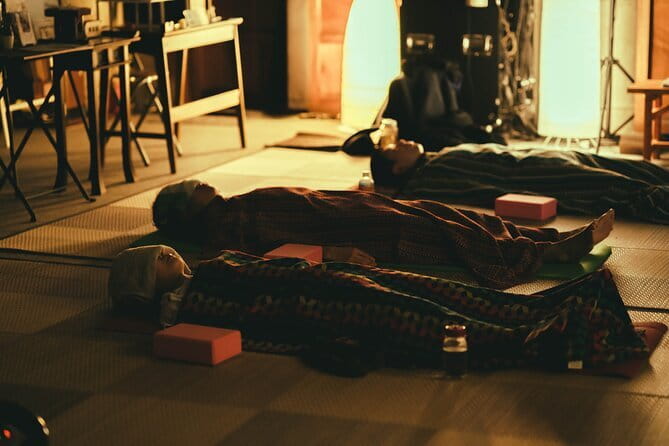
- Vinyasa Flow + Relax Yoga in one 3-hour reset (two distinct class moods)
- English beginners and yoga beginners welcome, including solo participants
- Meet locals and practice English naturally, with Japanese principles shared during the session
- Temple support built in: part of the fee is donated to help preserve the site
- Small group size (max 10), which keeps conversations and guidance more human
- Organic nourishment after yoga, with a high-quality organic restaurant option arranged by the host
Temple Yoga in Kyoto: why the sacred setting changes the whole day
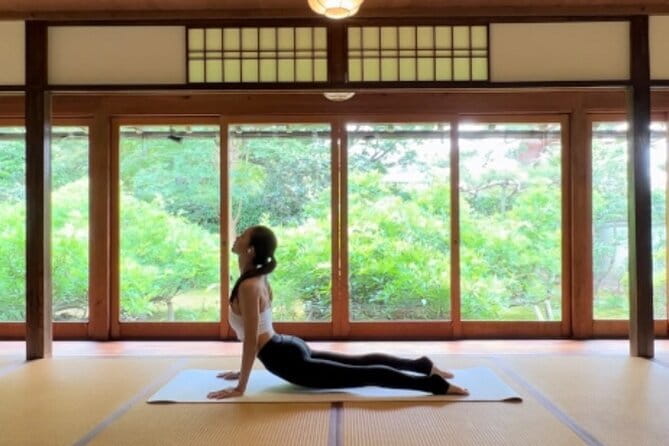
Kyoto is famous for temples and shrines, but this experience turns that scenery into a lived practice. The main ingredient isn’t the mat setup—it’s the atmosphere. When you slow down in a sacred space, your body gets the message fast. Your breath settles. Your thoughts stop sprinting ahead to the next stop on your itinerary.
That’s the real value for me: this isn’t just exercise in a pretty location. It’s a mental gear shift. After hours on trains, buses, or crowded sidewalks, a temple session gives you permission to be still for a while. You’ll likely notice that the outside world feels farther away once you start moving slowly and breathing intentionally.
And there’s a social layer too. The class is designed as a bridge between overseas guests and Japanese people who want to practice speaking English. That means your “lesson” isn’t only about yoga poses. You also get a gentle, low-pressure way to interact with locals and learn bits of Japanese culture in conversation—without it turning into a formal cultural lecture.
More temples and shrines to slow down in across Kyoto
The two classes: Vinyasa Flow followed by Relax Yoga
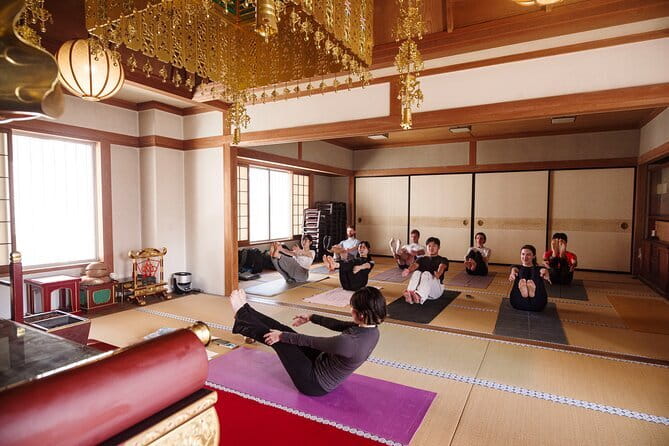
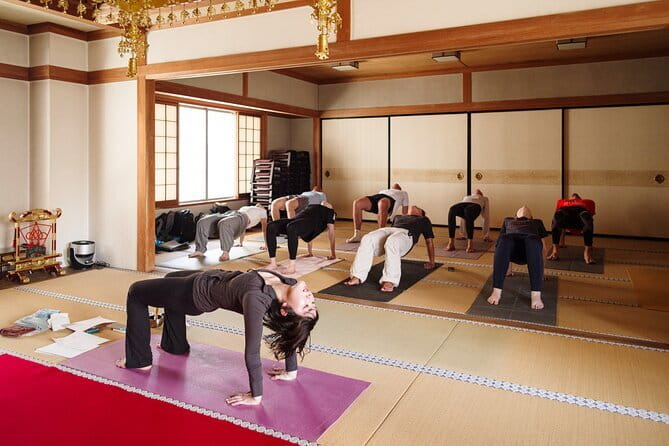
This session has a clear split: 1st class is Vinyasa Flow, then 2nd class is Relax Yoga. That structure is smart if you’re traveling. Vinyasa helps wake your body up and loosen travel stiffness. Relax Yoga then does the work of bringing you down—like switching from city traffic to quiet backstreets.
Vinyasa Flow is usually where you get attention to movement and breath. In a temple setting, that focus feels extra grounded. Instead of pushing through a workout, you’re more likely to pay attention to how your body feels from moment to moment. Even if you’re a beginner, this format can make it easier to follow along because the class has rhythm: move, breathe, reset.
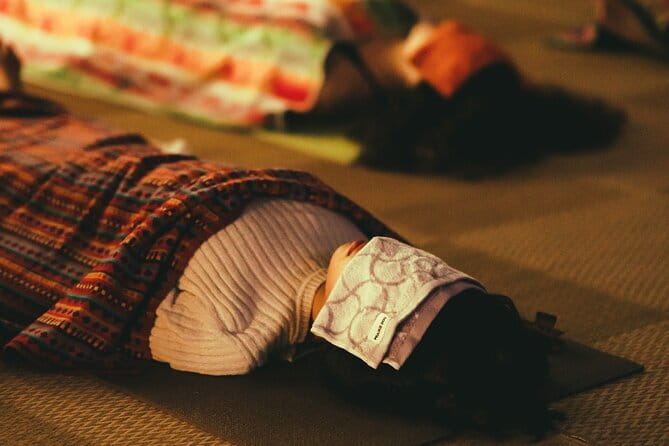
Relax Yoga is the “travel recovery” part. This is where you’re most likely to feel the benefits that make people keep talking about temple yoga long after they leave Kyoto. Expect slower pacing and a chance to release tension you didn’t realize you were holding—especially in hips, back, and shoulders.
If you’re brand-new to yoga, that sequence can also be reassuring. You’re not thrown straight into stillness, but you also don’t leave your body buzzing when you’d rather slow down. You get both worlds: movement first, then rest.
English-friendly local conversation and Japanese principles
One of the most practical reasons to book this kind of class is the human element. The session is set up so overseas guests and locals can connect through conversation. You’re not just watching a teacher. You’re practicing English in real time, while also learning Japanese cultural principles that get woven into the session.
The host, nana, is the main experience provider. In some of the class comments, you’ll see other names like Nanami and Hiyori, which suggests a warm, guided atmosphere with more than one person helping the group feel comfortable. Either way, the pattern is clear: the goal is friendly interaction, not “be perfect at English.”
So how does this help you as a visitor?
- You get to ask questions that matter to you—like how locals think about everyday culture.
- You hear small, useful explanations you wouldn’t find in a guidebook.
- You leave with memories that feel personal, not just photographed.
A small word of advice: go in with curiosity more than correctness. Simple questions land better than rehearsed sentences. If you want the experience to feel authentic, treat it like a conversation between humans who happen to share a yoga mat.
What happens after yoga: organic food and time to connect
After class, you’re invited to relax and connect. The plan is flexible: you can gather for lunch or dinner, share travel experiences, and swap local recommendations with the people you just met on the mat. If you’ve been doing the solo traveler thing—napping in your room, eating quickly, moving on—this part is a nice change of pace.
The host also arranges an organic restaurant with high-quality organic food for post-yoga nourishment. That’s a big part of the value equation, because you’re not stuck figuring out what to eat while your body is still cooling down from yoga. Organic food can be a good match after you’ve spent hours paying attention to breath and movement—especially when you want something lighter and restorative rather than heavy and rushed.
One thing to consider: “after yoga” can mean different things for different people. If you’re itching to sightsee right away, you may not want to linger. If you want to socialize, you’ll probably enjoy the group energy around a meal.
Either way, build in buffer time. A 3-hour class plus transit plus settling into conversation can stretch your afternoon faster than you expect.
Price and value for $56.76 in Kyoto
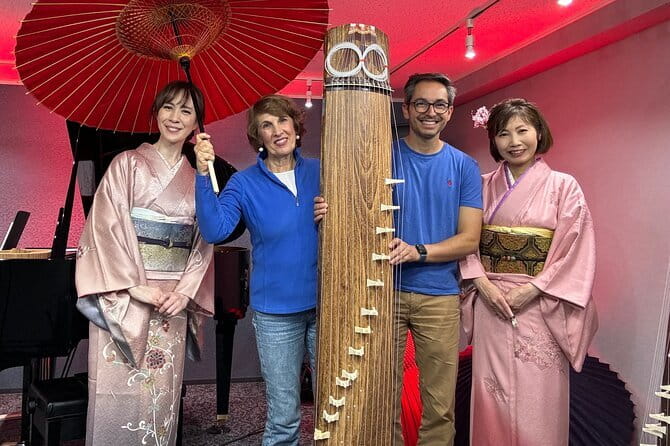
At $56.76 per person for about 3 hours, you’re paying for more than yoga instruction. You’re paying for:
- A temple-based setting that changes the mood of the session
- Two different yoga formats (Vinyasa and Relax) in one package
- A small group experience (max 10), which makes it easier to get comfortable
- A language/culture bridge that helps you meet locals
- Part of the fee donated toward temple preservation
- An organic food option arranged for after class
Could you find a cheaper yoga class in Kyoto? Probably. But this isn’t only about lowering cost. It’s about buying time and access: access to the temple atmosphere, access to a community-style group, and access to locals who genuinely want to use English and share culture.
If you’re trying to get the most “Kyoto-feeling” per hour, this kind of class can be a smart trade. It’s one block in your schedule where you both move your body and meet people—then you still have time to explore afterward.




Getting there for the 10:30 start: location basics that matter
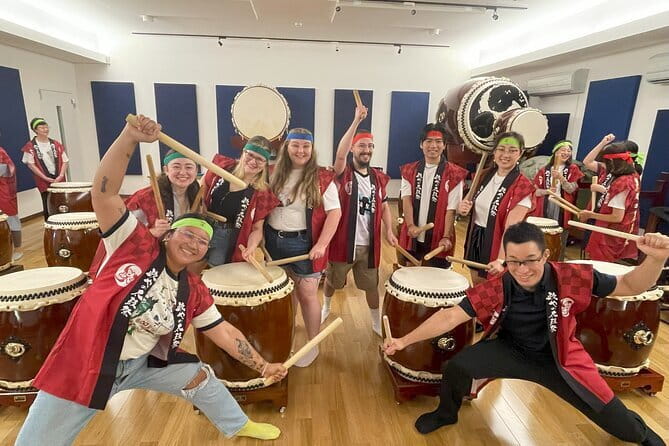
The meeting point is at 316 Rokkakuaburanokōjichō, Nakagyo Ward, Kyoto, 604-8245, Japan. The start time is 10:30am, and the activity ends back at the meeting point.
It’s also near public transportation, which is a big deal in Kyoto. Getting in and out smoothly means you’re less likely to arrive already tired or rushed. Temple experiences are most enjoyable when you’re not juggling last-minute directions.
Practical tip: Kyoto mornings can be cooler and calmer. Plan to arrive a bit early so you can settle your nerves, sign in if needed, and take in the area before class begins. When you start yoga already stressed, it shows.
Also note the tour uses a mobile ticket, which is convenient. Just make sure your phone has enough battery and you can access the ticket without scrambling.
Who this Kyoto temple yoga fits best (and who should rethink it)
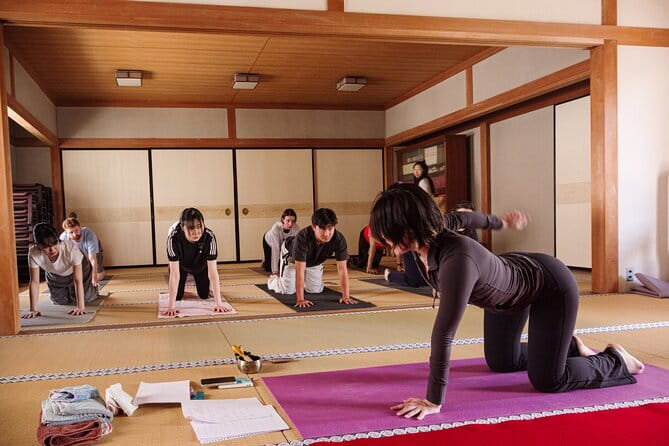
This Sacred Temple Yoga experience is a great match if you want:
- A gentle cultural connection alongside yoga
- An English-friendly class where beginners are welcome
- A small group setting where it’s easier to talk and not feel lost
- A post-yoga plan with the option of organic food
- Solo travel days that still feel social
It’s also a solid choice if you’re curious about Japanese principles and want them explained in a way that fits into real life—through conversation and movement.
You might reconsider if your goal is purely fitness. This class includes Vinyasa, but the overall tone is clearly built for calm and connection, not for chasing sweat levels. Also, since it takes place in a sacred environment, treat it like a respectful space, not a place to treat yoga as background noise.
Booking FAQ: the essentials before you go
FAQ
How long is the Sacred Temple Yoga experience in Kyoto?
It runs for about 3 hours.
What yoga styles are included?
The session includes Vinyasa Flow as the 1st class, followed by Relax Yoga as the 2nd class.
Where do I meet for the class?
You meet at 316 Rokkakuaburanokōjichō, Nakagyo Ward, Kyoto, 604-8245, Japan.
What time does it start?
The start time is 10:30am.
Is it suitable for beginners and solo travelers?
Yes. English beginners are welcome, yoga beginners are welcome, and solo participants are more than welcome.
How big is the group?
The group has a maximum of 10 travelers.
Is the ticket digital?
Yes, it’s a mobile ticket, and you receive confirmation at the time of booking.
Should you book Sacred Temple Yoga in Kyoto?
I think you should book this if you want a Kyoto experience that goes beyond sightseeing. The combination of temple calm, two-part yoga (Vinyasa then Relax), and friendly English-based interaction with locals makes it feel like a reset, not just an activity.
You’re also supporting something tangible: a portion of your fee is donated to the temple to help preserve it. And after you practice, you get the option for an organic, high-quality meal arranged for post-yoga energy.
If you’re the type who values atmosphere, conversation, and a schedule that’s easy to digest, this is a strong choice. If you’re hunting for only hardcore fitness and don’t care about cultural connection, you’ll probably be happier with a standard studio class.
Either way: it’s a small-group, respectful, beginner-friendly way to make your Kyoto day feel slower—in the best possible way.
More Tour Reviews in Kyoto
More Kyoto Temples and Shrines
Just added: more Kyoto tours to browse








Kyoto Temple & Shrine Tours, compared.
 ★ 4.9Tea Ceremony Ju-An at Jotokuji TempleFrom $293,207 reviews
 ★ 4.8Arashiyama Bamboo, Temple, Monkeys, or Secret Sake BreweryFrom $87886 reviews
 ★ 5.0Arashiyama Bamboo Forest, Monkeys, Matcha & Temple TourFrom $53759 reviews
 ★ 4.4Osaka/Kyoto: Arashiyama, Nara & Fushimi Inari Shrine w/LunchFrom $61754 reviews
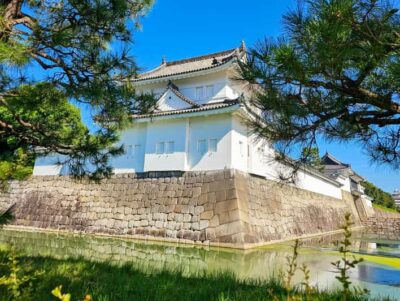 ★ 4.7Imperial Palace & Nijo Castle Guided Walking TourFrom $49453 reviews
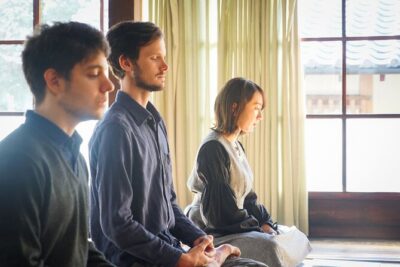 ★ 5.0Kyoto Zen Meditation & Garden Tour at a Zen Temple with LunchFrom $110441 reviews
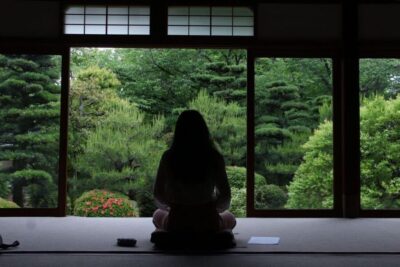 ★ 5.0Zen Experience in a Hidden TempleFrom $109437 reviews
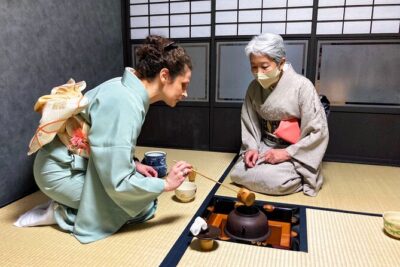 ★ 5.0KYOTO Tea Ceremony with kimono near by Imamiya Jinjya ShrineFrom $99343 reviews
Browse the lists this tour appears in