
Reviewed · KYOTO TEMPLE & SHRINE TOURS
Sacred Peak and Scenic View Hieizan Enryaku ji and Hiyoshi Shrine
You can feel the city fade on Mount Hiei. This day trip ties together Shinto and Buddhism in places that still feel calm and focused. You get scenic train and cable car rides, then time on shrine and temple grounds that sit above Kyoto’s daily noise.
I especially like the mix of big-picture meaning and small details. At Hiyoshi Taisha, you’ll learn about Kogane no Oiwa, a sacred rock formation, and how the shrine is connected with protecting Kyoto. Then at Enryaku-ji, you’re in the head temple world of Tendai Buddhism, founded by monk Saichō in the 8th century.
One consideration: lunch isn’t included, so you’ll want to plan around meal timing while you’re up on the mountain. Also, this is a long day (about 7 hours 30 minutes), with transfers and walking on religious grounds.
In This Review
- Key things to know
- A calm mountain day built around two sacred sites
- Hiyoshi Taisha: Shinto-Buddhist connections and Kogane no Oiwa
- Riding up on the Sakamoto Cable Car toward Lake Biwa
- Enryaku-ji Temple on Mount Hiei: Tendai Buddhism at the honzan
- Timing and what a 7.5-hour plan really feels like
- What you’ll get for $182.74 and why it can be worth it
- Who this tour suits best (and who might want a different plan)
- Book it or skip it: my decision checklist
- FAQ
- FAQ
- What time does the tour start, and where is the meeting point?
- How long is the experience?
- Are entry fees included in the price?
- Is lunch included?
- What about transportation during the day?
- What is the group size limit?
- Can I get a full refund if I cancel?
Key things to know
- Hiyoshi Taisha first: cedar shade, shrine buildings, and time to take in the quieter side of Kyoto’s spirituality
- Sakamoto Cable Car: Japan’s longest cable car ride with views down toward Lake Biwa
- Enryaku-ji on Mount Hiei: UNESCO World Heritage site and the honzan of Tendai Buddhism
- Small group feel: max 12 people, which helps keep the day relaxed instead of rushed
- All entry fees covered: ticket and admission costs are handled, so you don’t scramble for basics
- Guide-led context: English-speaking guide (and the tour guide Justin shows up in multiple praised experiences)
A calm mountain day built around two sacred sites
Kyoto is famous for temples, but this trip plays a different card. Instead of staying at ground level, you head into the sacred terrain of Mount Hiei, where religious history and mountain views come as a package deal.
What makes this itinerary work is pacing. You get a full stretch of time at Hiyoshi Taisha, then a cable car ascent that sets the mood before you even reach Enryaku-ji. The day is long enough to feel satisfying, but structured so you’re not wasting time guessing what to do next.
More temples and shrines to slow down in across Kyoto
Hiyoshi Taisha: Shinto-Buddhist connections and Kogane no Oiwa
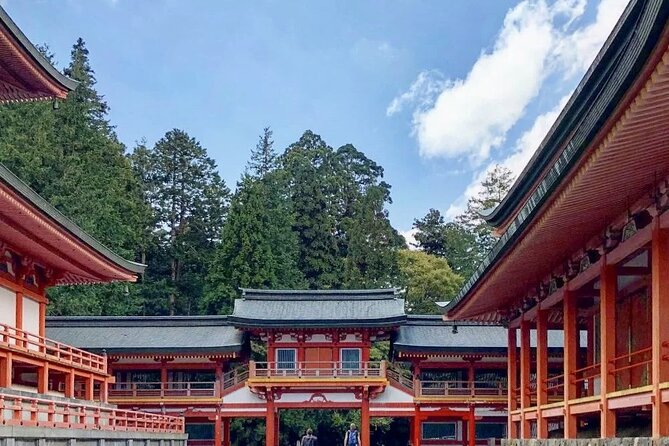
Hiyoshi Taisha is the start of the spiritual story. You begin in Kyoto Station and take a train up to the base of Mount Hiei, so the environment changes while you’re en route—less “tour bus day,” more “go up and switch gears.”
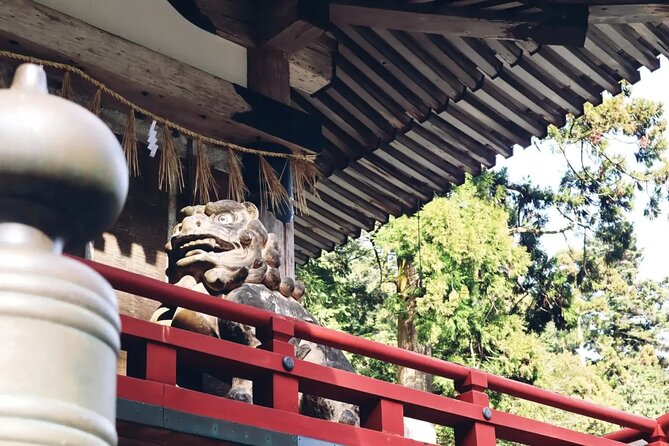
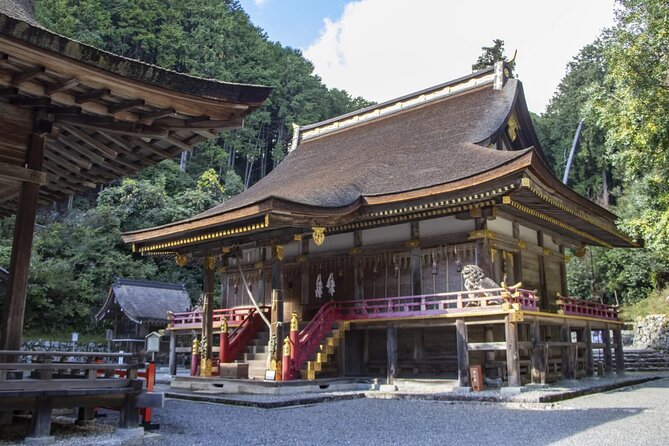
When you arrive, the grounds are framed by tall cedar trees, which naturally slows your pace. This shrine is considered an important site intertwined with both Shinto and Buddhist traditions, so the experience doesn’t feel one-note. You’ll explore impressive shrine buildings and get explanation of how these faith traditions overlap on this mountain.
One highlight here is Kogane no Oiwa, a sacred rock formation. Even if you’re not deep into the religious specifics, a named, meaningful site like this gives you something concrete to look for and learn from, not just buildings to pass through. You also cover the shrine’s role in protecting Kyoto—an idea that helps you understand why this place matters beyond its beauty.
A practical note: Stop 1 runs about 4 hours, so it’s not a quick photo stop. That’s a good thing if you like unhurried walking and reading the atmosphere. The downside is simply that you should start the day with energy, because you’ll come back out of the mountain a bit later and you’ll still have time to fill.
Riding up on the Sakamoto Cable Car toward Lake Biwa
After your time at the shrine, you head toward the cable car. A short walk gets you to the Sakamoto Cable Car, known as Japan’s longest cable car ride. That alone is a fun reason to go—there’s something satisfying about riding a route with a clear “this is the one” reputation.
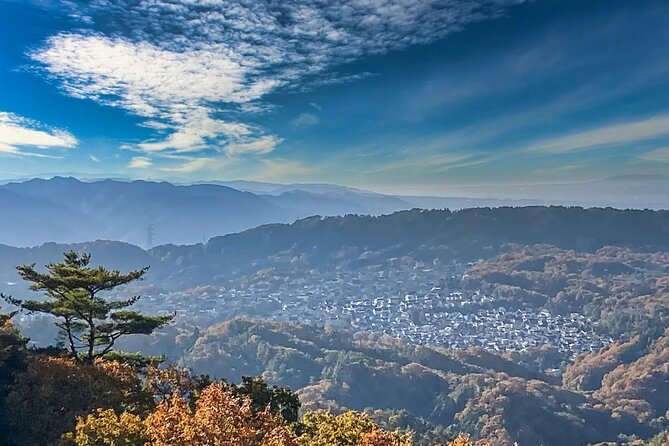
But the real payoff is what you see during the climb. Views of Lake Biwa open beneath you as the car rises. Lake Biwa is Japan’s largest lake, and seeing it from above gives you a sense of scale that’s hard to get from street level. It also makes Mount Hiei feel less like an isolated temple mountain and more like part of a wider geographic system.
This is also a nice pacing tool for the day. The cable ride acts like a breather before Enryaku-ji, so you’re not bouncing from one dense site to another without a transition.
Enryaku-ji Temple on Mount Hiei: Tendai Buddhism at the honzan
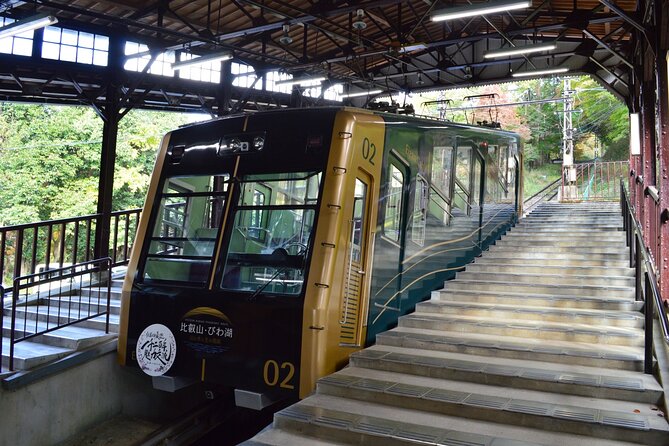
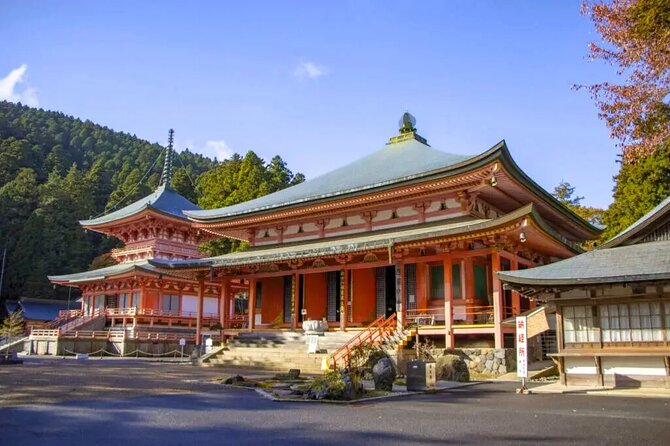
Enryaku-ji is the reason people make the trip. It’s a UNESCO World Heritage site, and it’s described as the honzan (head temple) of Tendai Buddhism. That matters because honzan isn’t just a label—it signals that the temple sits at the center of a larger religious tradition.
You’ll learn that Enryaku-ji was founded by the monk Saichō in the 8th century. With that context in mind, the site stops feeling like a random collection of halls and starts feeling like an institution that helped shape Japanese Buddhism.
You’ll visit key parts of the complex, including the Konpon Chudo, the grand hall. This is the kind of stop where having an English-speaking guide helps a lot, because you’re not only looking at architecture—you’re learning what you’re looking at and why it’s meaningful in Tendai practice.
The tour also includes additional temple buildings on the grounds (the program references further areas beyond Konpon Chudo). That matters because Enryaku-ji is not designed like a single “must-see spot.” It’s a place where your understanding grows as you move through spaces connected to the tradition.
And yes, the mood is part of the experience. Multiple comments attached to this tour point to a calm, peaceful feel—an atmosphere that can be hard to find when you’re stuck in the busiest Kyoto loops. Going up to a mountain temple and spending real time there changes the tempo of your day.
Timing and what a 7.5-hour plan really feels like
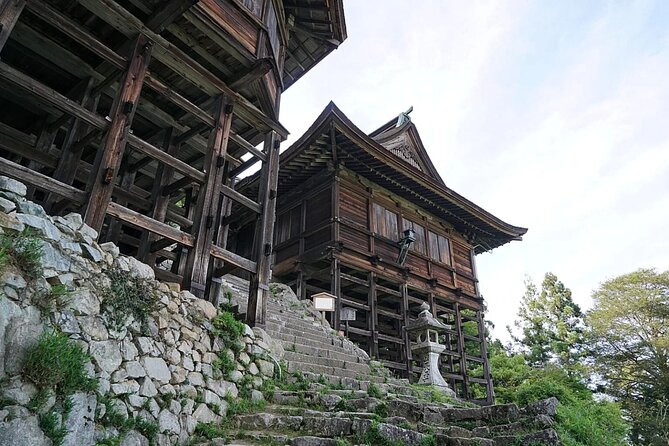
The total duration is about 7 hours 30 minutes, and it’s built from two major blocks: roughly 4 hours at Hiyoshi Taisha and about 3 hours at Mount Hiei for the cable car and Enryaku-ji visit.
Here’s how that usually plays out in real life: the start is early enough to avoid some of the worst midday crush, but you should treat the day as a full outing. You’ll have transportation segments between sites, and once you’re on the mountain, it’s more about steady walking and looking than quick sightseeing.
You’ll start at 9:00 am at Starbucks Coffee – Kyoto Tower Sando Japan, and the tour ends back at the same meeting point. Since it loops back, you don’t have to worry about figuring out a separate route back across town later.
For logistics, the tour uses a mobile ticket, which is convenient. It also keeps things simple if you’re juggling multiple tickets during a Kyoto stay.
What you’ll get for $182.74 and why it can be worth it
At $182.74 per person, this isn’t a bargain-basement day trip. But it’s priced like a guided, transportation-included experience with admissions handled for you.
Here’s what your money covers:
- English speaking guide
- Transportation during the tour
- Entry fees at all tour locations
Lunch is the one thing you need to budget separately, since it’s not included.
So what does that mean for value? If you’re the type who wants to show up, follow the plan, and understand what you’re seeing without spending extra time researching train changes and ticket prices, this is a straightforward way to do that. The small group size (max 12) also supports the idea that you’re paying for a guided day that doesn’t turn into a stampede.
Is it worth it if you love doing everything on your own? Maybe not. But if you want a calm, structured mountain day where you can focus on the sites instead of the logistics, the pricing starts to make sense fast.
Who this tour suits best (and who might want a different plan)
This tour fits best if you want:
- Spiritual sites with context, not just selfies
- A Kyoto day that includes a major ride (the Sakamoto Cable Car)
- A less frantic rhythm, with small-group pacing
- A guide who can connect the dots between Shinto, Buddhism, and mountain traditions
It may be less ideal if you’re looking for a short, casual outing or if you hate long transit days. Also, because lunch isn’t included, you’ll want a plan for food so the day doesn’t feel like it’s running on empty.
On the plus side, the tour notes that most people can participate. That doesn’t mean it’s a couch ride—temple and shrine grounds still require walking—but it suggests the itinerary isn’t designed for only elite hikers.
Book it or skip it: my decision checklist
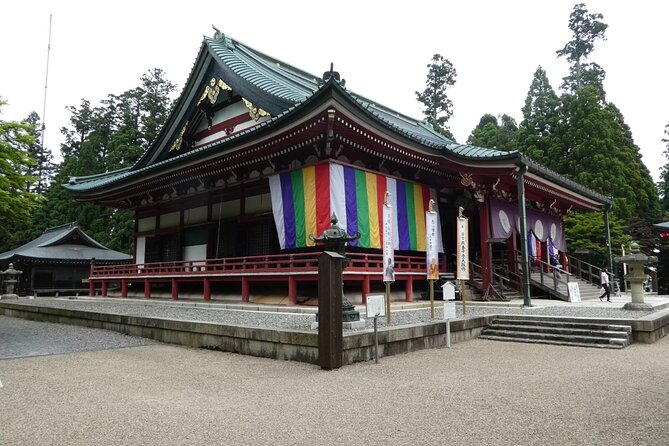
I’d tell you to book this tour if you want Kyoto in a different key—up on Mount Hiei, where Enryaku-ji’s Tendai significance and Hiyoshi Taisha’s Shinto-Buddhist overlap both matter. The combination of a full shrine visit, a cable car ascent with Lake Biwa views, and a UNESCO temple complex is a strong use of one day.
You might skip it if:
- You’re on a tight schedule and can only spare a short outing
- You prefer self-guided travel with minimal fixed timing
- You don’t want to manage your own lunch
If you’re on the fence, think about your travel style. This is a guided day built for people who like clear structure, meaningful context, and scenic rewards without the stress of planning every step.
FAQ
FAQ
What time does the tour start, and where is the meeting point?
The tour starts at 9:00 am and meets at Starbucks Coffee – Kyoto Tower Sando Japan (address: 600-8216 Kyoto, Shimogyo Ward, Higashishiokōjichō, 7211 京都タワービル).
How long is the experience?
The duration is approximately 7 hours 30 minutes.
Are entry fees included in the price?
Yes. The tour includes entry fees at all tour locations.
Is lunch included?
No. Lunch is not included.
What about transportation during the day?
Transportation is included as part of the tour, and it includes rides between Kyoto and the mountain areas (including train and cable car portions).
What is the group size limit?
The tour has a maximum of 12 travelers.
Can I get a full refund if I cancel?
Yes, you can cancel for a full refund if you cancel up to 24 hours in advance of the experience’s start time.
More Tour Reviews in Kyoto
More Kyoto Temples and Shrines

Just added: more Kyoto tours to browse





Kyoto Temple & Shrine Tours, compared.
 ★ 4.9Tea Ceremony Ju-An at Jotokuji TempleFrom $293,207 reviews
 ★ 4.8Arashiyama Bamboo, Temple, Monkeys, or Secret Sake BreweryFrom $87886 reviews
 ★ 5.0Arashiyama Bamboo Forest, Monkeys, Matcha & Temple TourFrom $53759 reviews
 ★ 4.4Osaka/Kyoto: Arashiyama, Nara & Fushimi Inari Shrine w/LunchFrom $61754 reviews
 ★ 4.7Imperial Palace & Nijo Castle Guided Walking TourFrom $49453 reviews
 ★ 5.0Kyoto Zen Meditation & Garden Tour at a Zen Temple with LunchFrom $110441 reviews
 ★ 5.0Zen Experience in a Hidden TempleFrom $109437 reviews
 ★ 5.0KYOTO Tea Ceremony with kimono near by Imamiya Jinjya ShrineFrom $99343 reviews
Browse the lists this tour appears in