
Reviewed · NISHIKI MARKET FOOD TOURS
Nishiki Market Food Tour with Cooking Class
That first walk through Nishiki can be confusing. This private tour pairs an English-speaking local guide with a hands-on donburi cooking class, using the ingredients you buy along the way. I also like that the tastings add context, including free Japanese pickles and optional sake.
Two big wins for me are the guide-led market focus (so you don’t waste time in the crowd) and the chance to cook your own bowl afterward, choosing from Kaisen-don, Ten-don, or Oyako-don. One consideration: it’s a tight 150-minute experience, so if you want lots of extra eating time on your own, you’ll likely need to budget time and money beyond what’s included.
In This Review
- What Makes This Tour Work So Well
- Nishiki Market With an English Guide (Not Just a Walk)
- A realistic timing note
- The Donburi Choice: Kaisen-don, Ten-don, or Oyako-don
- From Market Ingredients to Your Bowl: How the Cooking Class Feels
- The “pretty results” factor
- Family-friendly and question-friendly
- Optional Sake and Free Pickles: Small Tastings, Big Context
- Private Group Setup: Asking Questions Without Rushing
- One practical tip before you go
- Price and Value: Is $109 Worth It for 150 Minutes?
- Best Fit: Who This Tour Suits
- Should You Book This Nishiki Market Donburi Tour?
What Makes This Tour Work So Well
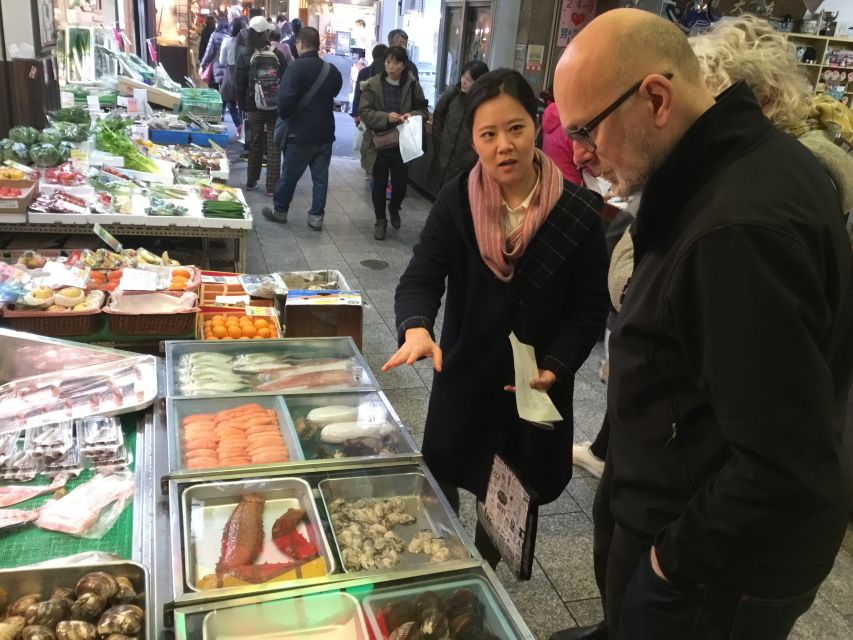
- Private pace with fluent English guidance, including translations when shop staff help out
- Donburi choices: Kaisen-don (seafood), Ten-don (tempura), or Oyako-don (chicken & egg)
- Market-to-kitchen flow, with a taxi ride included from the market to the studio
- You cook with ingredients included, plus you leave with a recipe
- Optional sake tasting and free pickles tastings during the tour
Nishiki Market With an English Guide (Not Just a Walk)
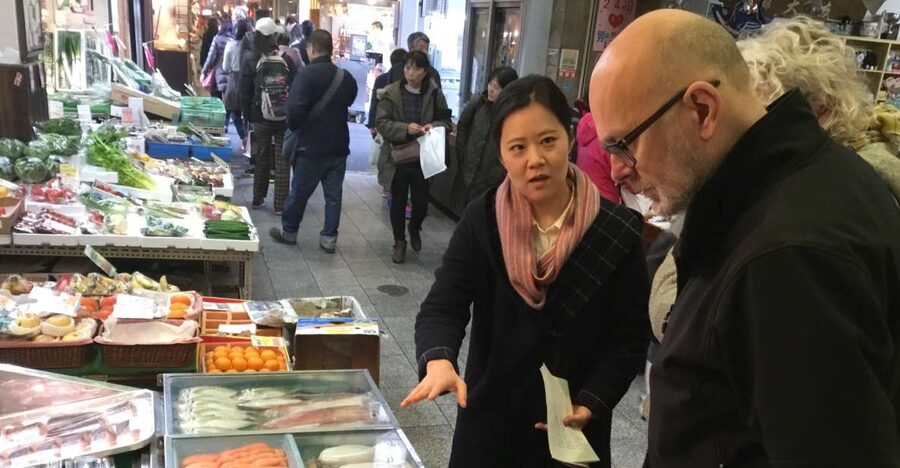
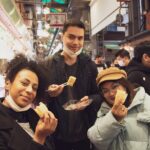
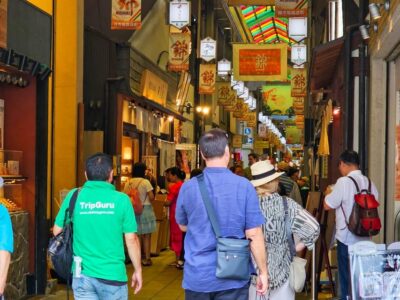
Nishiki Market is one of those places where everything looks delicious and your brain goes into overload mode fast. The good news here is that you start at the Western entrance, meet your guide, and get a route that makes sense. A quick scan of the market can feel like 15 minutes—without context. With a good guide, it can stretch much longer, because you’ll actually understand what you’re seeing and why certain stalls are famous.
The guide experience is a core part of the value. Names I saw come up include Chie and Chei, plus Mio and Momo in other bookings. That matters because it’s not just pointing at snacks. You’ll be encouraged to ask questions about foods you may not recognize, and your guide can also help when shop staff need translation. That turns a crowded shopping street into a clear lesson in Kyoto ingredients and shopping etiquette.
You’ll also get some practical rules that save you from awkward mistakes. For example, etiquette around eating on the street can be stricter than you expect. Knowing where you can snack and where you can’t helps you enjoy the market without feeling like you’re constantly worried about breaking a norm.
Graze a little further along Nishiki Market
A realistic timing note
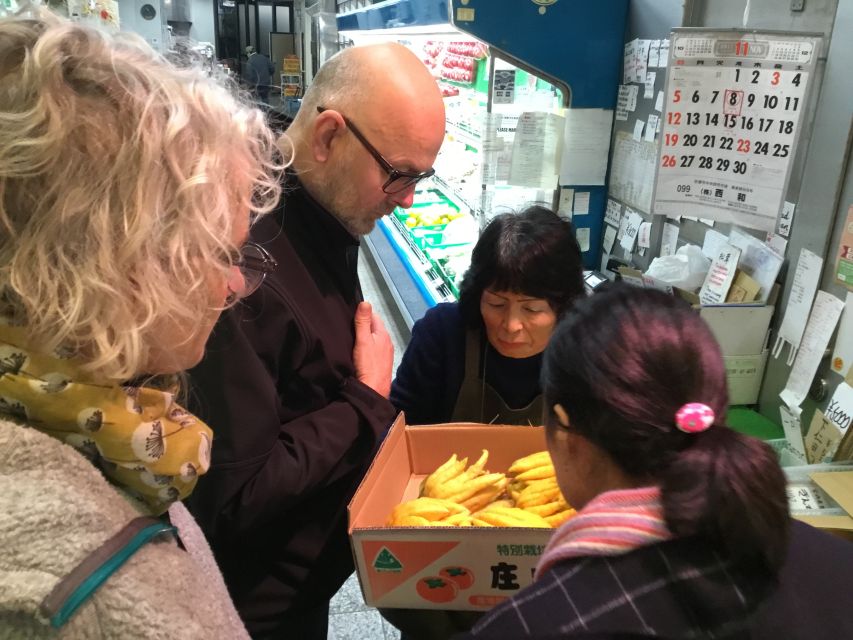
Plan on about one hour in Nishiki Market. After that, you shift to cooking and eating your donburi for about one hour. The tour is designed to be efficient, not endless. If your dream is to graze for hours and linger at every stall, treat this as a well-guided highlight session—and then plan extra time to return later on your own.
The Donburi Choice: Kaisen-don, Ten-don, or Oyako-don
This is the part that most people remember, because it’s personal. In your cooking class, you can choose one (and some groups may make multiple options depending on how the class runs for your party):
- Kaisen-don (seafood bowl)
- Ten-don (tempura bowl)
- Oyako-don (chicken & egg bowl)
What I like about having a choice is that you can match your cooking to your comfort level and appetite. Seafood tends to feel adventurous but straightforward when you’re assembling with prepared components. Ten-don is great if you want the crisp/soft contrast that tempura brings. Oyako-don is often the crowd-pleaser because it’s warm, savory, and very Japan-comfort-food.
Your ingredients come from the market, and the ingredient cost is included in the tour price. That’s important for value. You’re not just paying for a class; you’re paying for the actual grocery run tied to what you’ll cook.
You should also know that the experience can handle substitutions. One booking mentions a request for tofu instead of chicken, and another notes accommodation for side choices. So if you have dietary preferences or you want to swap ingredients, it’s worth raising it during the market portion so the shopping matches your bowl.
From Market Ingredients to Your Bowl: How the Cooking Class Feels
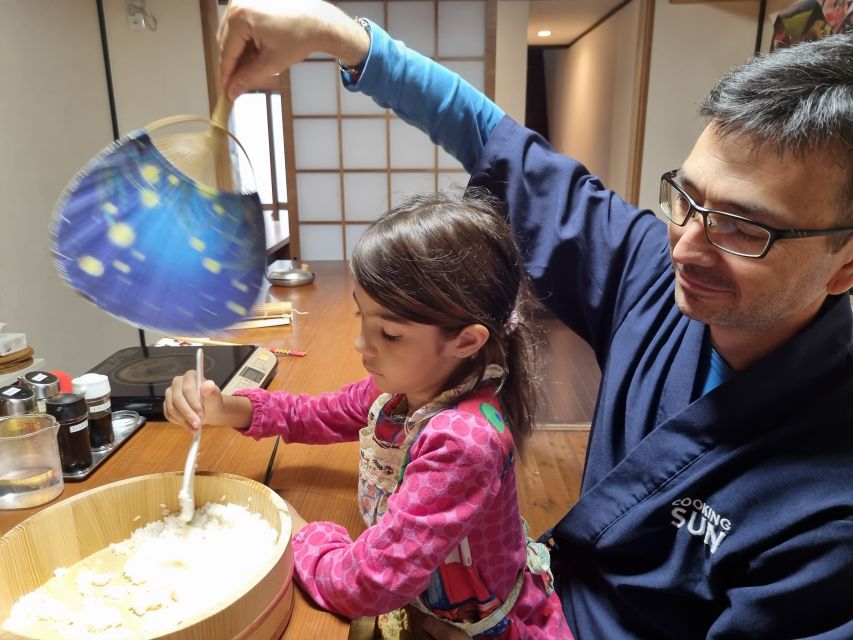
After the market portion, you’ll head to the kitchen studio by taxi—this ride is included. That’s a small detail, but it’s a big convenience factor. It means you don’t have to manage bags, directions, or timing while your ingredients are waiting.
The cooking class itself is described as cozy and welcoming, with a clean, well-stocked kitchen. It’s set up for teaching, not just letting people “watch and eat.” You’ll be briefed and then start preparing your dishes shortly after arriving.
You’ll also get a recipe to take home. That’s one of the best parts of these experiences because it helps you recreate what you cooked later, instead of relying on memory of flavors you can’t fully reproduce.
Several diners highlighted specific learning outcomes, like learning how to make dashi, and understanding how to make dishes taste good and look good (not just “add sauce and hope”). If you’ve ever made Japanese-style meals at home but felt like the final step was a mystery, this is exactly the kind of guided clarity that helps.
The “pretty results” factor
This class doesn’t stop at flavor. There’s instruction on things like how to plate and how to work with sauces so your bowl looks the way it should. That matters if you’re photographing your meal or if you just want your home version to feel authentic.
Still hungry? More tastes of Kyoto
Family-friendly and question-friendly
One booking mentioned that the methods kept kids interested, which suggests the instructors don’t treat this as an adult-only lecture. Another mentioned that the teacher was attentive and engaging, walking step-by-step through each dish. Even if you’re traveling solo, you’ll likely appreciate that rhythm: hands on, answers coming, and no sense that you’re being rushed out.
Optional Sake and Free Pickles: Small Tastings, Big Context
Food tours can be hit-or-miss when the tastings feel random. Here, the extras add structure.
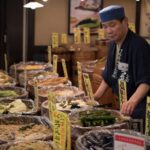
You can have free Japanese pickles tastings as part of the tour. Pickles are a great entry point because they show up in Japanese meals in many forms—and they teach your palate how “tangy” and “salty” balance works alongside richer flavors.
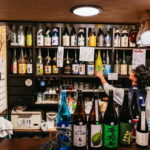
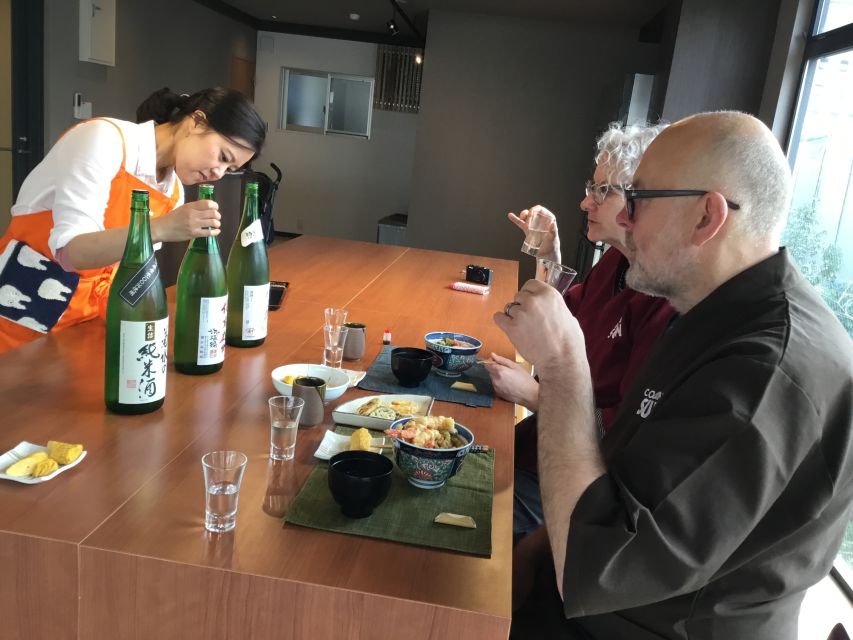
Then there’s an optional sake tasting (three different types). This is a nice value add because it helps you think about pairing. You don’t need to be a sake expert to enjoy this. Even tasting a few styles gives you a sense of how sweetness, acidity, and finish can change what food feels like.
If you’re not into alcohol, the tour still works without the sake. The pickles are included, and the donburi is the main event anyway.
Private Group Setup: Asking Questions Without Rushing
The tour is private, and that changes the experience. In a crowded market, time is everything. When you’re with a group, you often follow a leader’s pace. Here, you can move at your pace and ask as many questions as you want.
This is especially useful in Nishiki, where lots of shops sell similar-looking items. Your guide helps you focus on what matters, including guidance on which stalls are original and which ones are more tourist-oriented. That makes it easier to decide what to buy and where to return later.
It also helps when you want to ask about etiquette, brands, sauces, or how certain foods are used. One booking mentioned the guide sharing advice not only on taste but on cooking tips, including using sauces correctly. If you’re someone who likes to understand the why behind a dish, this is a strong fit.
One practical tip before you go
A small issue came up in past bookings about whether you’re expected to do extra shopping during the tour versus returning afterward. To avoid confusion, I’d message or ask your host directly at the start:
- Are you buying only ingredients for the donburi, or can you also add extra items during the guided time?
- If you want additional snacks or souvenirs, when’s the best moment to do it?
That one question can save you stress in the market crowd.
Price and Value: Is $109 Worth It for 150 Minutes?
At $109 per person for 150 minutes, this doesn’t look like an “every snack costs extra” tour. Ingredients for your donburi are included, plus you get samples, a recipe, and the taxi cost from the market to the studio.
Here’s how that value usually works out:
- You’re paying for two things: guided market time + an actual cooking class using what you picked up.
- You’re not just eating; you’re learning steps and techniques you can repeat.
- The taxi and ingredient inclusion remove common hidden costs that pop up in other food experiences.
Will you spend extra money? Almost certainly, because Nishiki Market is impossible to walk past without wanting to buy more. But the key is that your core meal and class are already covered.
One caution: ingredients can vary in quality depending on the specific selection for your menu option. One booking mentioned that a fatty tuna component wasn’t great. That’s not something you can fully predict, but if you have strong preferences (especially for seafood textures), ask questions early and be clear about what you like.
Best Fit: Who This Tour Suits
This experience tends to be a great match if:
- You want a guided plan through a crowded market and you don’t want to guess what’s worth your time
- You want to leave with a learnable skill, not just a full stomach
- You like hands-on cooking and want to make your meal using market ingredients
- You travel as a couple, family, or small private group and want more attention from the instructor
If you’re purely looking for maximum “free eating,” you might find the tasting portion limited because the schedule is built around market time + cooking time. Also, if you’re hoping for hours of market explanation and lots of samples, this is structured to be efficient rather than endless.
Should You Book This Nishiki Market Donburi Tour?
I’d book it if you want Kyoto food that feels practical, not performative. The standout value is the combo: guided Nishiki Market time that teaches you what you’re shopping for, followed by a kitchen lesson where you make a real bowl—then take home a recipe you can actually use again.
Skip it (or add extra unguided time) if you’re the type who wants to graze for hours, sample everything available, and wander with no structure. Also, if you have strong dietary or ingredient preferences, plan to communicate them early so your shopping and cooking match what you want.
If you want a single, well-managed experience that turns market chaos into a meal you can cook again at home, this one earns its high rating.
More Kyoto Cooking Classes
More Kyoto Food Tours
More Bites Along Nishiki
Just added: more Kyoto tours to browse

Nishiki Market Food Tours, compared.
 ★ 5.0Nishiki Market Brunch Walking Tour (7 Tastings + Brunch)From $681,355 reviews
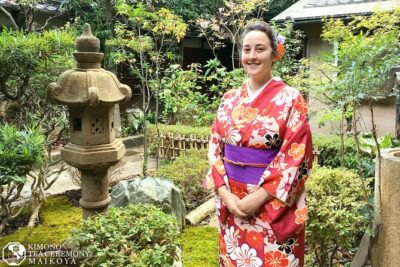 ★ 5.0Kimono Tea Ceremony at Kyoto Maikoya, NISHIKIFrom $65911 reviews
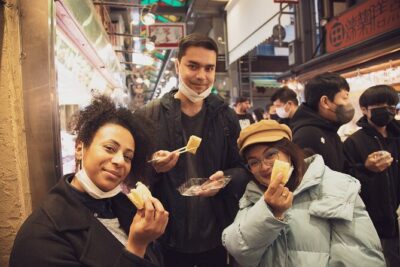 ★ 5.0Kyoto Nishiki Market Food and Culture Walking TourFrom $80412 reviews
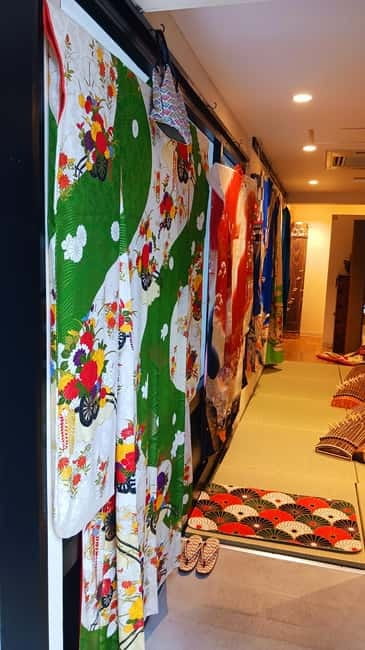 ★ 4.8Nishiki Market Tea Ceremony with Koto PerformanceFrom $56294 reviews
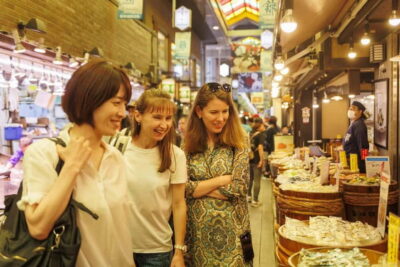 ★ 4.7Local Food Tasting Tour at the Nishiki MarketFrom $78135 reviews
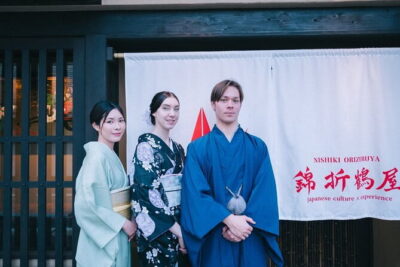 ★ 5.0Kimono Tea Ceremony Experience at Kyoto Oritzuruya, NishikiFrom $50116 reviews
 ★ 4.7Nishiki Market and Depachika Food Tour with a LocalFrom $4276 reviews
 ★ 4.5Nishiki Market Tour with a Local Foodie & TastingsFrom $6767 reviews
Browse the lists this tour appears in