
Reviewed · KYOTO KIMONO EXPERIENCES
[Kyoto Street Shot] Recording every wonderful moment of travel with shutter (free kimono experience)
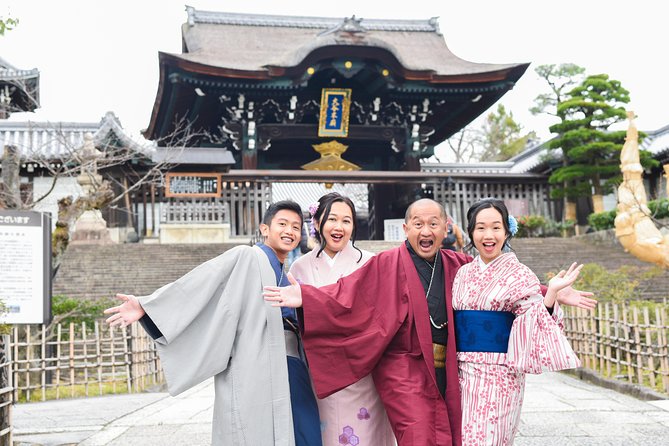
One hour in a kimono, captured on camera. This Kyoto street-shoot experience pairs free kimono rental with help from female photographers who can speak at least two languages, then walks you through iconic photo areas like Gion Shirakawa, Yasaka Shrine, and Maruyama Park. I like that the focus stays on getting the shot you want in the exact seasonal mood, not just posing in one place.
You’ll want to plan for the trade-off: the free kimono is limited and usually only covers two people, while hair set and makeup cost extra. If you want the full look, budget for hair set and makeup right away so there are no surprises when you arrive.
In This Review
- Key highlights worth knowing
- Kimono dressing and shooting time: how the flow really feels
- Where the photos get made: Gion Shirakawa
- Yasaka Shrine and Maruyama Park: getting variety without wasting time
- The photographers: what having a pro guide changes
- Kimono rental rules: free for two, then plan for upgrades
- Photo delivery and what to expect when you get home
- The itinerary stays tight: stops, timing, and real-world flexibility
- Price and value: what $235.33 covers for up to 6
- Who this Kyoto kimono photo session is best for
- A note on reliability and how to protect your plan
- Should you book this Kyoto street shot experience?
- FAQ
- How many people can be in a booking?
- Is the kimono included?
- What are the hair and makeup costs?
- When will I receive the photos?
- Where do you go for the photos?
- Do I need to arrive early?
Key highlights worth knowing
![[Kyoto Street Shot] Recording every wonderful moment of travel with shutter (free kimono experience) - Key highlights worth knowing](https://img.exploringkyoto.com/wp-content/uploads/kyoto-street-shot-recording-every-wonderful-moment-of-travel-with-shutter-free-kimono-experience-1.jpg)
- Kimono starts the experience: you’ll dress first, then move straight into shooting mode
- Season-aware photo planning: recommended spots shift with cherry blossoms, autumn leaves, and real-world conditions
- Photo delivery is included: you get all unedited images from the service time, plus emailed edited photos later
- Gion Shirakawa and Yasaka Shrine area: classic Kyoto streets and shrine views within a short loop
- Private group setup: you’re grouped only with your party (up to 6), so you can move at a comfortable pace
- Rain and congestion flexibility: locations may be adjusted depending on weather and crowding
Kimono dressing and shooting time: how the flow really feels
![[Kyoto Street Shot] Recording every wonderful moment of travel with shutter (free kimono experience) - Kimono dressing and shooting time: how the flow really feels](https://img.exploringkyoto.com/wp-content/uploads/kyoto-street-shot-recording-every-wonderful-moment-of-travel-with-shutter-free-kimono-experience-2.jpg)
This is built around a simple rhythm: get into your kimono, then go out and get photographed in key Kyoto spots. The total course is set up as about 1 hour for kimono dressing plus about 1 hour of shooting, with shorter stops at each area while you move through the streets.
Here’s the practical part that matters: you should arrive at least one hour before kimono dressing starts. That buffer isn’t just to be polite. Kimono isn’t a two-minute outfit in Kyoto, and you want time to settle before you start walking and posing.
The service is sightseeing photography only, not wedding photography. So if you’re thinking of anything that feels like a full-on ceremony shoot, you’ll want to choose a different kind of provider.
You should also know what you get on the tech side. During the time you’re being photographed, you’ll receive all unmodified photos taken during the service window. Then, the edited photo data gets sent to your email about 2 to 3 weeks later. One guest said their photos were ready in 3 days, so it sounds like timing can vary, but the stated expectation is still the 2 to 3 week window.
Wander Kyoto in kimono a little longer

Where the photos get made: Gion Shirakawa
The experience typically starts at Gion Shirakawa, one of Kyoto’s most camera-friendly neighborhoods. Even if you know the area already, what you’re paying for here is not just location access. You’re paying for direction: where to stand, what angle works best, and how to slow down long enough for your kimono to look like it belongs in the scene.
This is also the kind of place where weather changes everything. Streets like Shirakawa can look magical even when it’s overcast, and in rain you still get that reflective street mood. Just keep in mind the practical notes: there’s no umbrella provided, so bringing one (or planning for a quick rain solution) is a good idea.
The stop itself is short, about 20 minutes of photo time in this area. That can be a plus if you don’t want to stand around. It also means you should communicate early if you have specific must-have shots in mind, like a full-length street portrait, a profile shot, or a close-up style moment with your hair and makeup.
Yasaka Shrine and Maruyama Park: getting variety without wasting time
After Gion Shirakawa, the shoot moves toward the Yasaka Shrine area. This is the part where your photos stop looking like one neighborhood and start feeling like a Kyoto day. Yasaka Shrine is a strong visual anchor, and it tends to deliver classic results: shrine architecture, layered streets, and photo-friendly sightlines.
The time here is also about 20 minutes. That’s enough for a few different compositions if the photographer is guiding you efficiently. But because it’s sightseeing-focused, you’re not getting a full custom marathon shoot. If you’re a slow walker or want many wardrobe variations, I’d treat this as a “best-of” session rather than a session with unlimited time.
Then you’ll head to Maruyama Park, typically for about 10 minutes. Short time means less pressure, and you can use it for quick environmental shots where your kimono blends into the seasonal vibe. This park area is especially useful when the timing lines up with seasonal scenes like cherry blossoms or autumn color.
One helpful detail: admission tickets for these stops are listed as free. So you’re not paying entrance fees just to get your photos. That said, if you ever decide to add a taxi ride or shoot somewhere with an entrance fee, that cost becomes your responsibility, including the photographer’s cost.
The photographers: what having a pro guide changes
![[Kyoto Street Shot] Recording every wonderful moment of travel with shutter (free kimono experience) - The photographers: what having a pro guide changes](https://img.exploringkyoto.com/wp-content/uploads/kyoto-street-shot-recording-every-wonderful-moment-of-travel-with-shutter-free-kimono-experience-4.jpg)
You’re not just renting a costume. You’re working with female photographers who can speak at least two kinds of languages. That matters more than people expect. Even basic language barriers can slow you down at exactly the wrong moment, like when you’re trying to angle your body so the kimono lapel falls correctly or when you need quick direction to avoid blocking other people.
The best part is how the service handles the full “look.” One review described it as basically handled from the studio: fitting into the kimono, getting a hairstyle chosen, and completing makeup, then walking to the neighborhood and photographing in the streets. That kind of end-to-end support is what makes the difference between getting random photos and getting images that feel intentional.
If you care about your hair and makeup look in particular, read the cost structure carefully. Free kimono rental typically covers the outfit for up to two people, but hair set and makeup are charged separately. Hair set is listed as 1,800 yen per person. Simple makeup is 3,000 yen per person and full makeup is 5,000 yen per person.
Kimono rental rules: free for two, then plan for upgrades
![[Kyoto Street Shot] Recording every wonderful moment of travel with shutter (free kimono experience) - Kimono rental rules: free for two, then plan for upgrades](https://img.exploringkyoto.com/wp-content/uploads/kyoto-street-shot-recording-every-wonderful-moment-of-travel-with-shutter-free-kimono-experience-5.jpg)
The free kimono rental is attractive, but it comes with two strings attached: it’s limited quantity, and it’s for 2 people. If your group is larger than two, only the first two may receive the free kimono.
You can add more kimono on site. The extra fee is from 4,000 yen, and the exact cost depends on what’s available at the time you arrive. That’s why showing up on time matters. If you arrive late, you might have fewer outfit options, which can affect how you feel about the final photos.
Also note what is not included. The listing specifically says umbrella is not included. It’s a small line, but in Kyoto street shooting, it can be the difference between calm walking and chaotic problem-solving.
And remember the service limits to sightseeing photography. If your plan includes anything like an entrance-only paid area, you’ll need to cover that cost, and you’ll also be responsible for the photographer’s cost if they need to join you there.


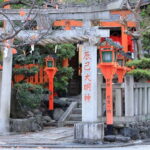

Photo delivery and what to expect when you get home
![[Kyoto Street Shot] Recording every wonderful moment of travel with shutter (free kimono experience) - Photo delivery and what to expect when you get home](https://img.exploringkyoto.com/wp-content/uploads/kyoto-street-shot-recording-every-wonderful-moment-of-travel-with-shutter-free-kimono-experience-6.jpg)
This is where the experience is refreshingly clear. During your session, you’ll have access to all unmodified photos taken during the service time. That means you’re not waiting blindly for every single file to be processed.
Then you’ll receive edited images by email 2 to 3 weeks later. One guest said their edited photos were done in 3 days, which suggests timelines may occasionally be quicker. Still, if you’re traveling with an event deadline, don’t build your schedule around a fast turnaround.
The fact that you get both unedited and edited results is a practical win. Unedited files can help you pick favorites right away, while the edited ones are the “final set” you may want to print, post, or save as your Kyoto memory.
If you’re planning to share on social media, I’d skim and choose quickly once you receive the unmodified images. Then wait for the edited set for the final polish.
The itinerary stays tight: stops, timing, and real-world flexibility
![[Kyoto Street Shot] Recording every wonderful moment of travel with shutter (free kimono experience) - The itinerary stays tight: stops, timing, and real-world flexibility](https://img.exploringkyoto.com/wp-content/uploads/kyoto-street-shot-recording-every-wonderful-moment-of-travel-with-shutter-free-kimono-experience-7.jpg)
The shoot is set up with short time blocks at each location, and that’s intentional. You get structure, but not so much structure that you feel stuck. You’ll spend about 20 minutes at Gion Shirakawa, about 20 minutes at Yasaka Shrine, and about 10 minutes at Maruyama Park.
There’s also flexibility baked in. The provider notes that shooting locations may change depending on weather or congestion, including examples like Shirakawa. That’s important because Kyoto crowds are real, especially in peak seasons. A good photographer won’t fight the crowd if they can adjust and still produce strong results.
So what should you do as the person booking? Keep your expectations flexible. If the plan changes, it usually isn’t a downgrade. It’s often the difference between getting a clear background shot versus getting photos that look cramped and distracted.
If you really care about a specific spot, ask ahead (or communicate on the day) what you want most. Then accept that the best plan may be a weather-friendly or crowd-friendly version of it.
Price and value: what $235.33 covers for up to 6
![[Kyoto Street Shot] Recording every wonderful moment of travel with shutter (free kimono experience) - Price and value: what $235.33 covers for up to 6](https://img.exploringkyoto.com/wp-content/uploads/kyoto-street-shot-recording-every-wonderful-moment-of-travel-with-shutter-free-kimono-experience-8.jpg)
At $235.33 per group (up to 6), the pricing looks better when you think about what’s included. You’re paying for a private session, professional photo guidance, and kimono styling support. You’re also paying for the photographer time across dressing and shooting.
The key value detail is that it’s per group, not per person, while the free kimono benefit itself is limited (typically for two people). So the value is strongest when:
- your group is small enough that most of you can use the kimono benefit, or
- you’re comfortable paying the hair/makeup costs to finish the look, and
- you want a guided street-shoot rather than relying on friends to take pictures while you dress and walk.
If your group is four or six people, you’ll likely end up paying for additional kimono add-ons at the on-site rate, which starts from 4,000 yen. That can still be worth it if you want everyone to be in matching outfits for the photos, but it’s something to plan for mentally.
The service includes admission tickets free for the listed stops. That helps keep costs predictable for a standard route.
Who this Kyoto kimono photo session is best for
This is a great fit if you want photos that look like Kyoto, with minimal effort and a pro handling the details. You’ll probably enjoy it most if you:
- want classic Gion and shrine-area shots without planning locations yourself,
- care about looking polished in kimono with hair and makeup options, and
- prefer a private, guided experience rather than a crowded group tour.
It’s less ideal if you want total freedom to roam independently. The stops are time-boxed and designed around photography, not a long self-guided day.
A note on reliability and how to protect your plan
One caution: there’s at least one case where a guest reported a no-show and difficulty contacting the operator, with the refund situation still pending at the time of that report. The operator later apologized and said responses were delayed during busy months like March and April, and that they’re improving.
You can’t eliminate every risk, but you can reduce it. I’d:
- confirm your booking details as soon as you receive them,
- keep the provider contact ready on your phone (email [email protected], phone +81 90-6662-4909), and
- arrive early, since delays can compound if your dressing timeline is already tight.
Should you book this Kyoto street shot experience?
I’d book it if you want an efficient, guided way to get kimono photos in iconic Kyoto spots like Gion Shirakawa and the Yasaka Shrine/Maruyama Park area, with professional direction that helps your kimono and pose look right on camera. The pricing makes sense for a private group, and the photo delivery plan (unmodified files plus edited email later) gives you real output.
I’d hesitate only if free kimono coverage is your top priority for a larger group, or if you have zero flexibility in timing. The free kimono is limited, and hair/makeup add-ons are extra. Also, keep in mind that locations may shift due to weather or congestion.
If you want Kyoto photos that feel intentional rather than random, this one is a strong option. Just plan for the add-ons and keep your schedule buffer generous.
FAQ
How many people can be in a booking?
It’s a private activity, and the price is per group for up to 6 people.
Is the kimono included?
There is free kimono rental included, but it’s limited quantity and typically for 2 people. Additional kimono can be added on site.
What are the hair and makeup costs?
Hair set is 1,800 yen per person. Simple makeup is 3,000 yen per person. Full makeup is 5,000 yen per person.
When will I receive the photos?
You receive the unmodified photos taken during the service time, and the edited photo data is sent by email about 2 to 3 weeks later.
Where do you go for the photos?
The shoot includes spots such as Gion Shirakawa, Yasaka Shrine, and Maruyama Park. Locations may change depending on weather or congestion.
Do I need to arrive early?
Yes. You should arrive at least one hour before kimono dressing.
More Tour Reviews in Kyoto
More Kimono Days in Kyoto
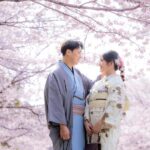
Just added: more Kyoto tours to browse








Kyoto Kimono Experiences, compared.
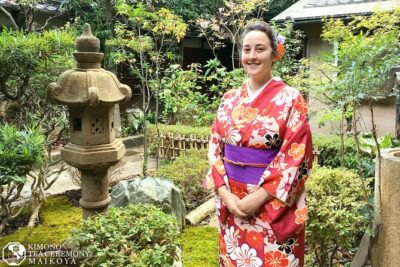 ★ 5.0Kimono Tea Ceremony at Kyoto Maikoya, NISHIKIFrom $65911 reviews
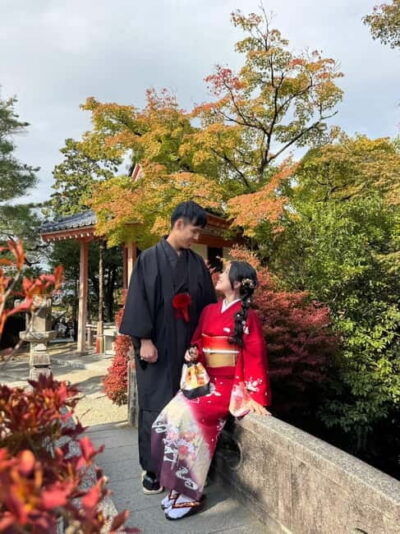 ★ 4.8Kimono Rental with Hairstyling and AccessoriesFrom $21653 reviews
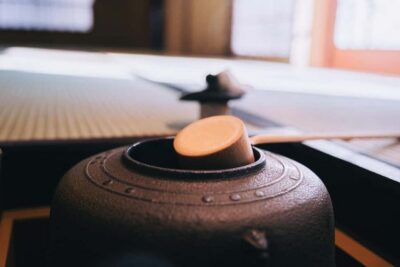 ★ 4.9Kimono Tea Ceremony at Orizuruya GionFrom $49618 reviews
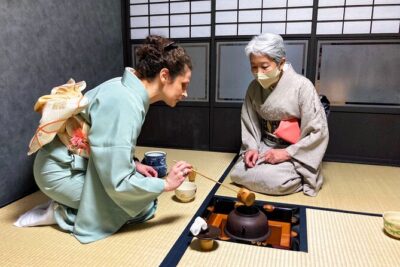 ★ 5.0KYOTO Tea Ceremony with kimono near by Imamiya Jinjya ShrineFrom $99343 reviews
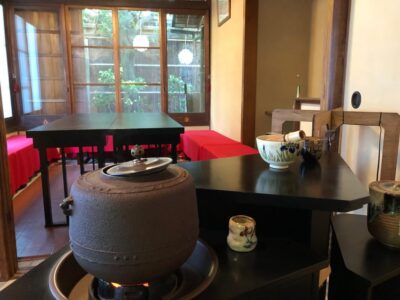 ★ 4.3Kimono and Tea Ceremony Experience at Cultural AssetFrom $222306 reviews
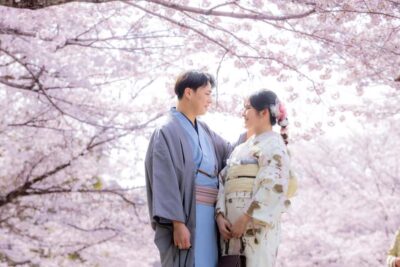 ★ 4.7Traditional Kimono RentalFrom $25265 reviews
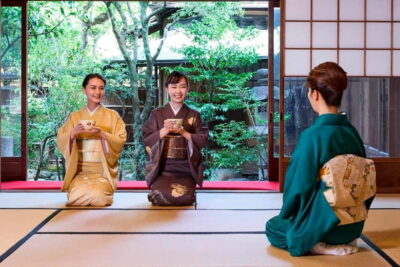 ★ 4.9Kimono Tea Ceremony with Matcha and SweetFrom $66249 reviews
 ★ 5.0Family-Friendly Kimono & Yukata Experience at WARGOFrom $31147 reviews
Browse the lists this tour appears in