
Reviewed · FUSHIMI INARI SHRINE TOURS
Kyoto: Fushimi Inari Taisha Night Tour with Guide
Fushimi Inari at night feels like a different Kyoto. This guided walk turns the famous torii tunnel into a calm, moonlit experience, with a live guide to explain what you’re seeing. I especially love the long, shadowy gate views and the quiet forest feeling that’s hard to find on a daytime crowd-fest.
Two things I like a lot: you get a focused route through the shrine grounds, and you also get access to areas without crowds. The guide brings the place to life with history and meaning, so the walk feels more like a story than a checklist.
One thing to consider: it’s a night walk on uneven paths, so you’ll want solid shoes—and it isn’t suitable for people with mobility impairments.
In This Review
- Key highlights to look for on this Fushimi Inari night walk
- Starting at Daily Yamazaki: your easy, well-marked meet-up
- Entering the torii tunnel at night: what changes after dark
- The quiet forest paths: fewer crowds, better walking rhythm
- What your guide actually adds (English or Japanese)
- Reaching the higher views: Kyoto lights under the night sky
- Photo rules and flashlight tips: protect the mood, get better shots
- Shoes, warmth, and uneven steps: the stuff that keeps the tour enjoyable
- Price and value: is $49 per person fair for 2 hours?
- Where you meet, where you finish: planning the rest of your night
- Who this Kyoto night tour suits best
- Should you book the Fushimi Inari Taisha night tour?
- FAQ
- How long is the Fushimi Inari Taisha night tour?
- Where is the meeting point for the tour?
- Where does the tour finish?
- What languages are the guides?
- Is this tour private or shared?
- Do I need to arrange transportation myself?
- Are flash photos allowed during the tour?
- What should I bring?
- Who is the tour not suitable for?
- What is the cancellation policy?
Key highlights to look for on this Fushimi Inari night walk
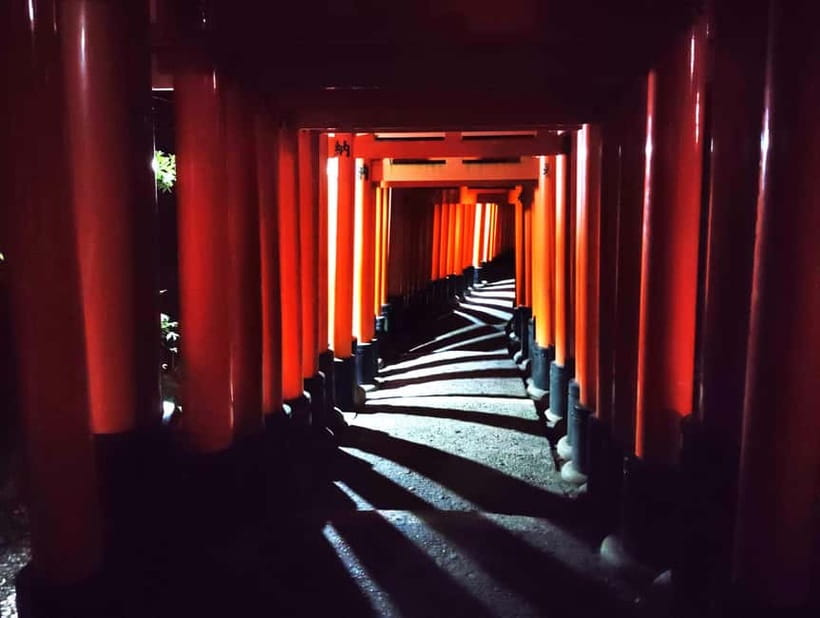
- Torii gates after dark with long shadows that change how the whole shrine feels
- A guide-led route that keeps you moving without guesswork
- Quieter forest paths away from the densest daytime crowds
- City lights from higher ground—Kyoto glowing in the distance
- No flash photography to protect the peaceful atmosphere
- Meet easily at Daily Yamazaki and finish at Inari Station
Starting at Daily Yamazaki: your easy, well-marked meet-up
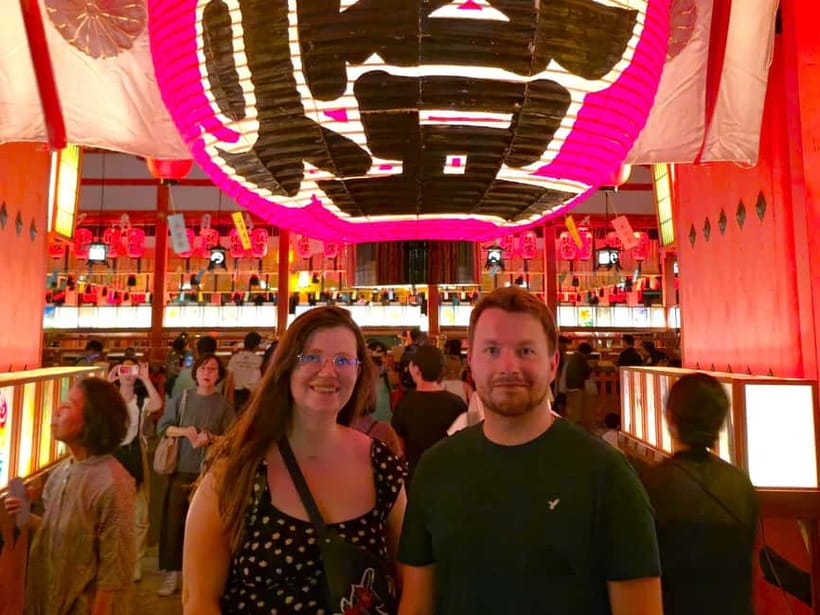
Your tour begins in front of Daily Yamazaki Fushimi Inari Taisha-mae Store. This is one of those small-but-important details that saves time at night. In a place where streets can feel confusing once it’s dark, you’re not stuck searching the shrine entrance—you’re meeting at a recognizable store location.
The guide waits holding a yellow sign panel that says DeepExperience. That sign matters. At night, it’s the difference between a quick handoff and wandering around hoping you’re in the right spot. If you’re early, hang nearby and double-check that yellow sign; if you’re late, step back and re-orient rather than rushing straight into crowds.
One more practical note: you’ll want to be ready to walk soon after meeting. There isn’t time for long detours to get oriented once the night portion starts, so I’d suggest you arrive with your camera set up (and your jacket zipped).
More walks up through the vermilion torii of Fushimi Inari

Entering the torii tunnel at night: what changes after dark
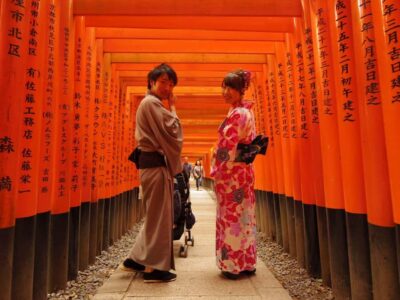
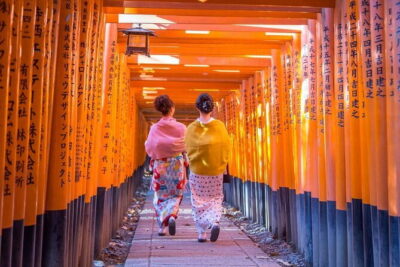
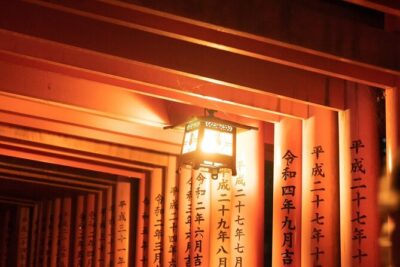
By day, Fushimi Inari Taisha is famous for its endless vermilion torii gates, stone fox guardians, and busy photo scenes. At night, the same setting turns quieter and more emotional. The torii tunnel becomes a glowing corridor, with each gate throwing long shadows across the dark walkway.
What you’re really paying for here is the shift in atmosphere. Daytime visits can be visually overwhelming because people are constantly stopping, taking photos, and moving in different directions. On this night tour, you walk through the gates under moonlight and softer lighting, and the whole place feels less like a sightseeing circuit and more like a moving experience.
The tour description also leans into sensory detail—the air thickens and you can catch the scent of cedar as you move along the paths. You don’t need to force “spiritual vibes.” Even if you’re a practical traveler, you’ll feel the change once the crowds thin out and the route stays paced.
The quiet forest paths: fewer crowds, better walking rhythm
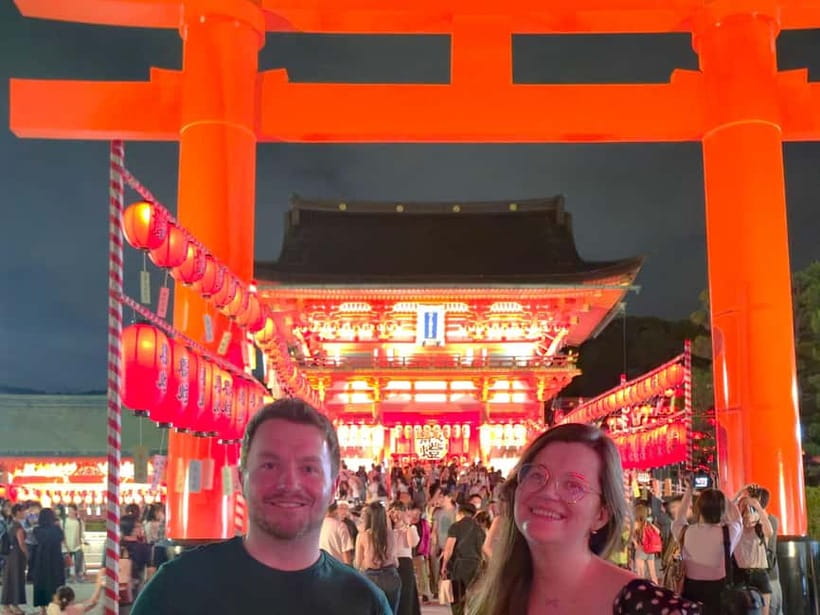
This is where the tour earns its value in a very practical way. You’re not just seeing torii at night; you’re also getting the tranquility of the forest paths without the daytime crowd pressure.
That matters because Fushimi Inari isn’t small. It’s layered, steep in parts, and easy to lose your flow when you’re constantly stepping around other groups. With a guided route, you keep a steadier rhythm. You also get access to areas described as less crowded, which means more time looking around and less time waiting for other people to move.
Even if you’re used to walking tours, the night changes things: your pace slows naturally because the ground is uneven and you want to watch your footing. A group that stays together helps you avoid stopping every few minutes to figure out where to go next.
Also, the darkness can be peaceful in a way that sounds dramatic but feels simple in real life. When you can’t see as much detail right away, you stop trying to photograph everything and start noticing what’s near you: the texture of the steps, the way the torii lights fade, the hush between sounds.
What your guide actually adds (English or Japanese)
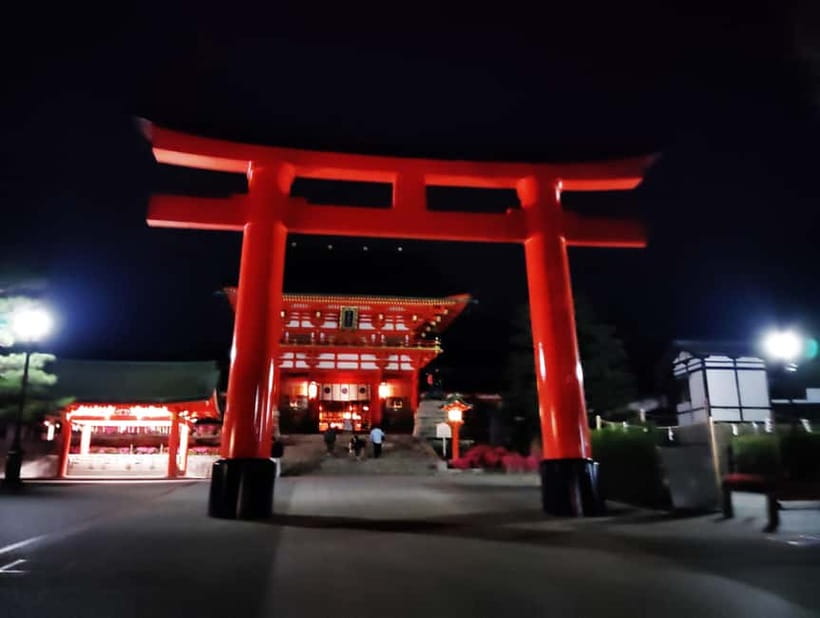
This tour is led by a live guide in English or Japanese. That’s a huge quality factor at a place like Fushimi Inari, where it’s easy to see a lot but understand little if you go solo.
Your guide covers the shrine’s history and significance. That doesn’t mean you’ll sit through a lecture. It’s more about helpful context while you’re walking—so the stone fox guardians and the mountain-temple setting make more sense as you move through them.
The reviews reinforce this point. People mention guides who are enthusiastic and accommodating, and that the guide is informative and willing to chat about other topics too. One review specifically thanks Judah (spelled that way in the message) for being informative, and another references Juraj in a similar positive tone. If you’re hoping for more than just directions, this is the part of the experience that tends to deliver.
I’d also pay attention to how your guide responds to the group’s energy. One review notes patience for guests who couldn’t do too much walking. That tells you the guide likely adjusts pace when needed—another quiet value you don’t always get on structured tours.
Reaching the higher views: Kyoto lights under the night sky
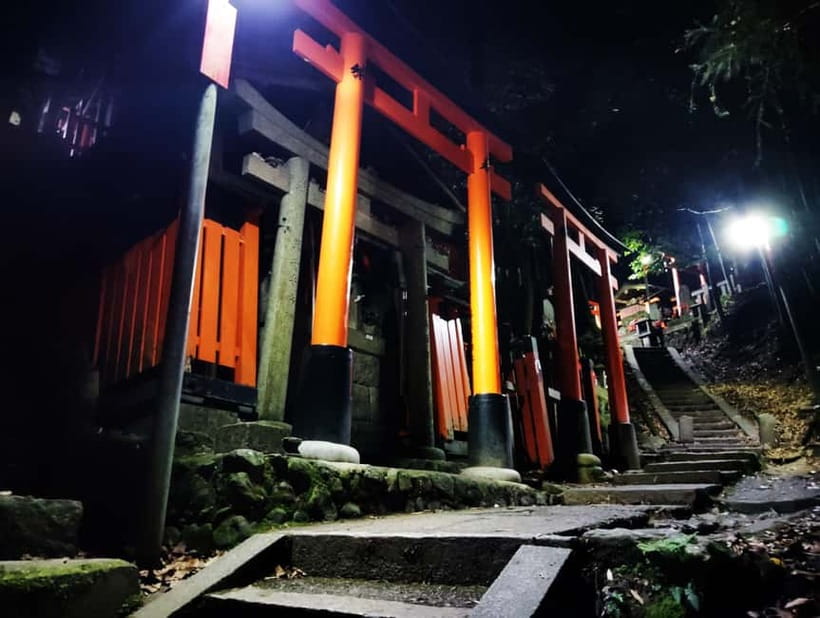
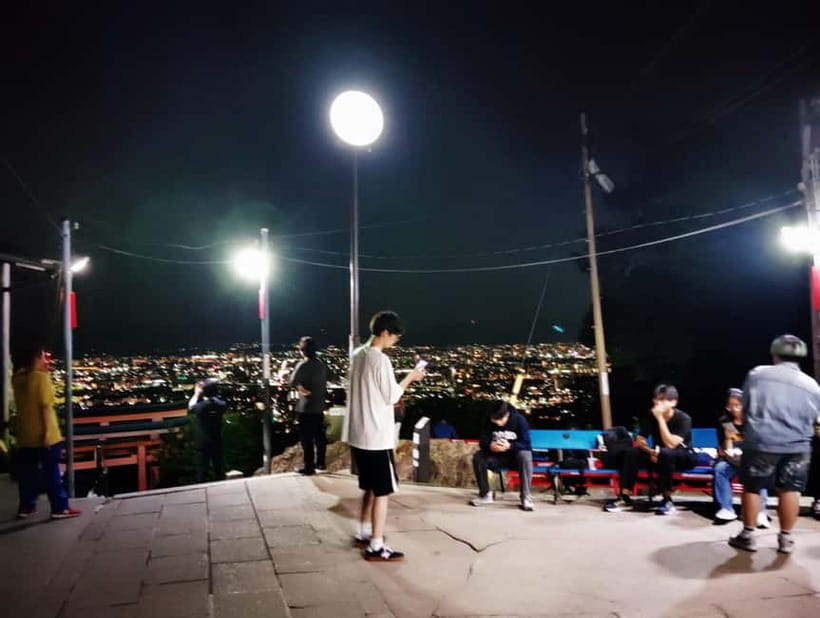
As you work your way through the grounds, you get the payoff view from higher ground. The tour experience includes a moment from the mountaintop area where Kyoto’s distant lights shimmer like stars scattered beneath you.
This is the kind of view that’s only half about the scenery. At night, it also gives you perspective. You can feel the scale of Kyoto as a city, not just a place with sights. Then you come back down and the torii tunnel feels even more dramatic because you’ve just seen the wider night.
If you’re the type who likes photos, this is likely the moment you’ll care about most. Just remember: flash photography isn’t allowed. That means you’ll rely on ambient light, camera settings, and steadiness. Bring a camera strap, keep your hands warm, and don’t fight the settings if the shot doesn’t happen immediately. Night photography often rewards patience over speed.
See how Kyoto shifts after dark

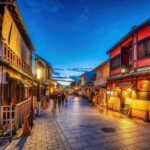


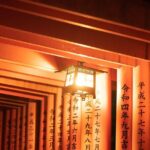
Photo rules and flashlight tips: protect the mood, get better shots
There’s an explicit rule: flash photography is not allowed. The reason is simple—keeping the shrine atmosphere peaceful. Practically, it also changes how you should prep.
If you use a phone camera, test exposure before you start rushing for shots. If your camera has a night mode, use it, but don’t expect a perfect result in every corner. Torii lighting varies as you move, and the point of the tour is the walk itself, not blasting flash to freeze every shadow.
You’re also advised to bring a flashlight. That’s not just about safety; it helps you keep your footing on uneven paths. If you bring a small light (and keep it low where appropriate), you’ll feel more confident in the dark sections. The goal is steady steps, not shining light around the group.
Comfort comes first. A camera is great, but a sore ankle at hour one ruins the last forty minutes. I’d rather you bring a slightly less fancy setup and have comfortable shoes than bring the best gear and spend the evening worrying.
Shoes, warmth, and uneven steps: the stuff that keeps the tour enjoyable
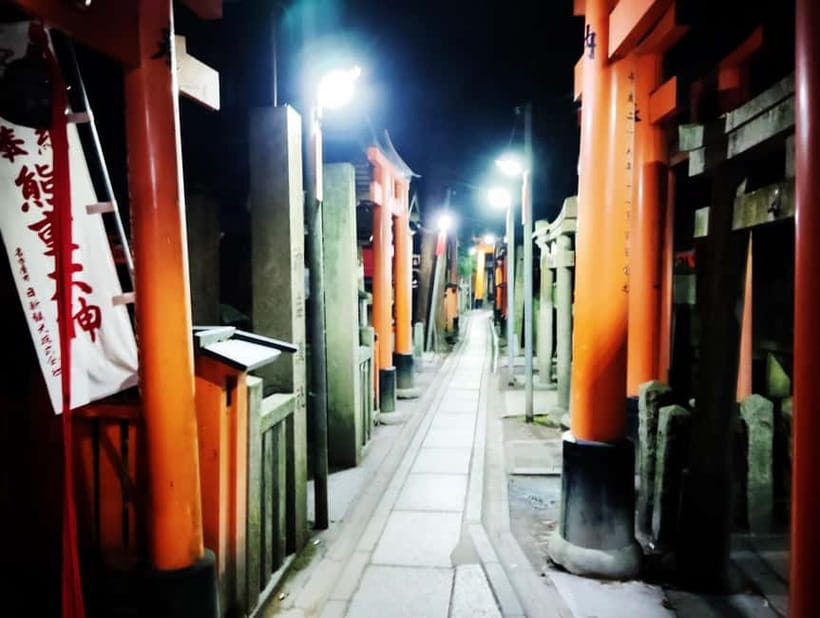
This is a night tour, so plan for colder weather than you’d guess from the day. The tour recommends weather-appropriate clothing, and I agree with that. Layers beat one bulky jacket because you’ll warm up as you walk and then cool down when you slow or stop.
Even though the tour is paced for a group, the paths can be uneven. That’s a big deal at a shrine setting where stone steps and natural surfaces don’t always feel flat like a sidewalk. Wear comfortable shoes with grip. If you’re used to city sneakers, great—but make sure they hold traction on dark stone.
One more practical detail: you’ll walk for about 2 hours. That’s long enough to matter, especially at night when you slow down. Stretch your legs before the tour if you can, and consider bringing a light layer you can remove if you get warm.
Price and value: is $49 per person fair for 2 hours?
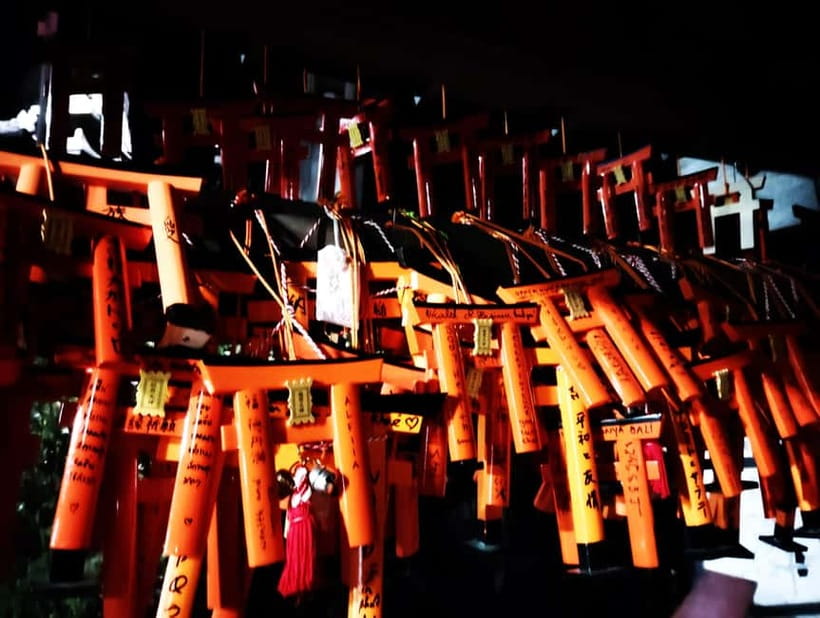
At $49 per person for a 2-hour guided night walk, the price isn’t about buying access to a “secret door.” You’re paying for three things that are hard to replicate well on your own:
First, you’re getting a guided route timed for night conditions, which matters at a complex, multi-level site.
Second, you’re getting access to areas without crowds, which is where the experience becomes calm enough to feel meaningful rather than chaotic.
Third, you’re getting a live English/Japanese guide to share the shrine’s history and significance while you walk. That transforms the visit from “I saw torii gates” into “I understand what I’m looking at.”
If you’re traveling with someone who gets tired easily, this tour may still work because the guide is described as patient with walking limitations. On the flip side, if you’re the type who loves wandering freely with no structure at all, you might feel a paid tour is unnecessary. But if you want a clear meet-up, a coherent route, and a guided, quieter experience, $49 feels reasonable.
Where you meet, where you finish: planning the rest of your night
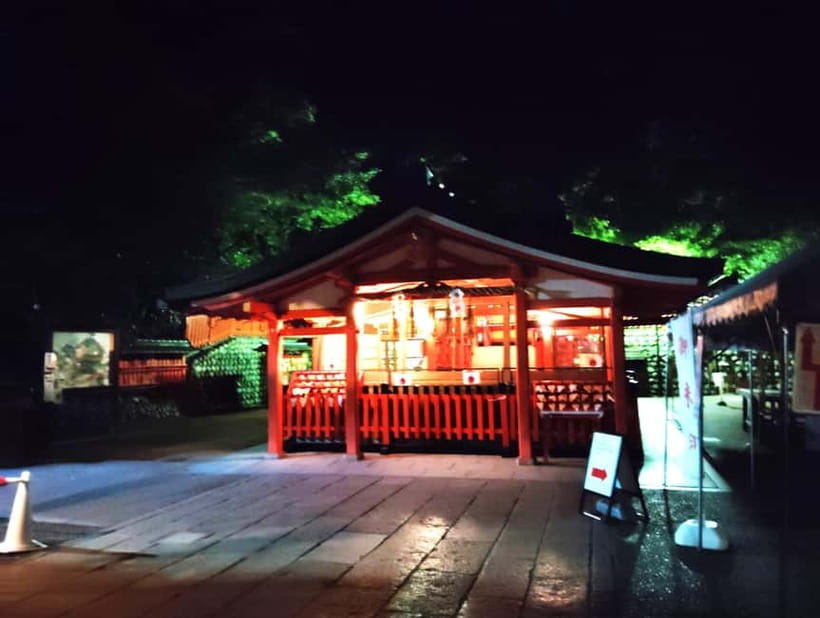
You’ll meet in front of Daily Yamazaki Fushimi Inari Taisha-mae Store and finish at Inari Station. That’s helpful because it lets you plan your next step—dinner, a return to your hotel, or a stroll nearby—without needing to reverse your route.
Transportation to and from the shrine isn’t included. So you’ll want to build in time for getting there and, after the tour, getting back from Inari Station. If you’re using public transit, set your plan in advance so you’re not sorting it out while you’re tired at night.
Meals and drinks also aren’t included. That’s typical for a shorter tour, but it still affects your prep. If you tend to get hungry during night activities, grab a snack beforehand. Once the walk starts, your focus should stay on walking and safety.
Who this Kyoto night tour suits best
This tour is a strong fit if you want Fushimi Inari Taisha in a calmer mood. You’ll likely enjoy it most if you:
- Want torii gates and forest paths with fewer people around you
- Appreciate context from a guide, not just photos
- Prefer walking with direction rather than navigating in the dark
It’s not suitable for people with mobility impairments, mainly because the paths are uneven and the experience is built around walking.
It also helps if you don’t mind that flash photography is off-limits. If you rely heavily on flash for night shots, you may feel limited. But if you’re willing to work with ambient light, you’ll get better results and a calmer atmosphere for everyone.
Should you book the Fushimi Inari Taisha night tour?
Book it if you want the torii experience when it’s quieter and more atmospheric, and if you value a guide who can explain what you’re seeing while keeping the walk moving. The best reason to book is simple: night changes everything here, and the tour is designed to let you enjoy that change.
Skip it if you’re determined to explore completely on your own and you don’t care much about guided context. Also skip or reconsider if uneven night paths could be an issue for you.
If you book, go in with the right mindset: comfortable shoes, warm layers, and your camera ready without flash. Then show up at the store entrance, find the yellow DeepExperience sign, and let the torii tunnel lead the pace.
FAQ
How long is the Fushimi Inari Taisha night tour?
The tour lasts 2 hours.
Where is the meeting point for the tour?
You meet in front of Daily Yamazaki Fushimi Inari Taisha-mae Store.
Where does the tour finish?
The tour finishes at Inari Station.
What languages are the guides?
The live tour guide is available in English and Japanese.
Is this tour private or shared?
The tour is listed as a private group.
Do I need to arrange transportation myself?
Yes. Transportation to and from the shrine is not included.
Are flash photos allowed during the tour?
No. Flash photography is not allowed to preserve the shrine’s tranquility.
What should I bring?
You’re advised to bring comfortable shoes, a camera, weather-appropriate clothing, and a flashlight.
Who is the tour not suitable for?
It is not suitable for people with mobility impairments.
What is the cancellation policy?
Free cancellation is available up to 24 hours in advance for a full refund.
More Tour Reviews in Kyoto





More of Kyoto After Dark
Fushimi Inari, a Few More Ways
Just added: more Kyoto tours to browse








Fushimi Inari Shrine Tours, compared.
 ★ 4.8Fushimi Inari, Kinkakuji, Bamboo Grove 1 Day Bus TourFrom $1224,316 reviews
 ★ 5.0Fushimi Inari Hidden Hiking Tour (Private Option Available)From $631,750 reviews
 ★ 4.7Kyoto/Osaka: Nara, Fushimi Inari Taisha, Arashiyama Bus TourFrom $521,275 reviews
 ★ 4.4Osaka/Kyoto: Arashiyama, Nara & Fushimi Inari Shrine w/LunchFrom $61754 reviews
 ★ 4.7Nijo Castle, Kiyomizu & Fushimi Inari Guided TourFrom $54700 reviews
 ★ 5.0Nijo, Kinkaku-ji, Arashiyama, Kiyomizu & Fushimi InariFrom $51699 reviews
 ★ 5.0Kyoto Fushimi-Inari Night Walking TourFrom $43320 reviews
 ★ 4.93-Hour Fushimi Inari Shrine Hidden Hiking TourFrom $72270 reviews
Browse the lists this tour appears in