
Reviewed · FUSHIMI INARI SHRINE TOURS
Kyoto Fushimi Inari Night Walking Tour
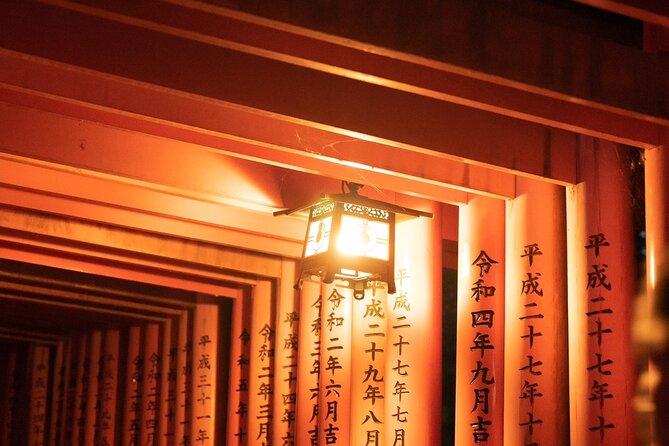
The torii gates look different at night. This Kyoto Fushimi Inari Night Walking Tour lets you see the famous shrine in the evening, when it’s cooler and the foot traffic is easier to manage. I like that it’s short, friendly, and built for people who want a meaningful stop without losing half the day.
I also love the human factor: the English-speaking guide brings the place to life with explanations and real-time help. In particular, guides such as Kanami, Mai, Satsuki Morikawa, Moto, and Haruki are praised for clear answers, extra details, and guiding you to good moments for photos.
One possible drawback: it’s about 1 hour, so it’s not the same thing as a long, go-at-your-own-pace hike deep into the hills.
In This Review
- Key highlights you should know
- Why Fushimi Inari at 5:00 pm feels like Kyoto’s real mood
- Meeting point near JR Inari Station: no guesswork, just one landmark
- The 1-hour tour: what you actually get for $35.93
- Stop at Fushimi Inari-taisha: torii gates are the headline, meaning is the plot
- The evening pace: cooler stroll, better photos, fewer stresses
- Your guide matters: Kanami, Mai, Satsuki Morikawa, Moto, Haruki
- What you should bring (and what you can skip)
- Who this tour is best for
- Practical expectations: duration, group size, and how to plan your day
- Should you book the Kyoto Fushimi Inari Night Walking Tour?
- FAQ
- How long is the Kyoto Fushimi Inari Night Walking Tour?
- What time does the tour start?
- Where do we meet for the tour?
- How much does the tour cost?
- Is the shrine admission included?
- What’s included in the tour price?
- What is not included?
- Do I need a paper ticket?
- How big are the groups?
- Can I cancel for a full refund?
Key highlights you should know
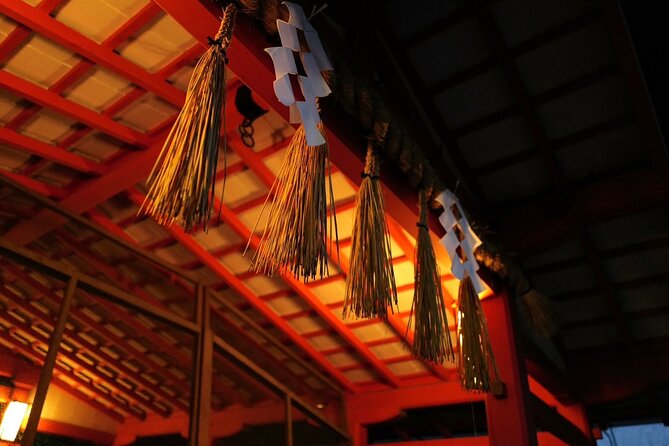
- Evening timing (5:00 pm): a practical way to avoid midday heat and crowds
- Small group size (max 15): you’ll get more personal attention
- Free shrine admission included: your money goes toward the guide and the walk
- English-speaking guide: explanations plus Q&A as you go
- Shinto and Buddhism context: the shrine’s meaning makes more sense afterward
- Easy meeting point: front of Daily Yamazaki near the JR Inari Station exit
Why Fushimi Inari at 5:00 pm feels like Kyoto’s real mood
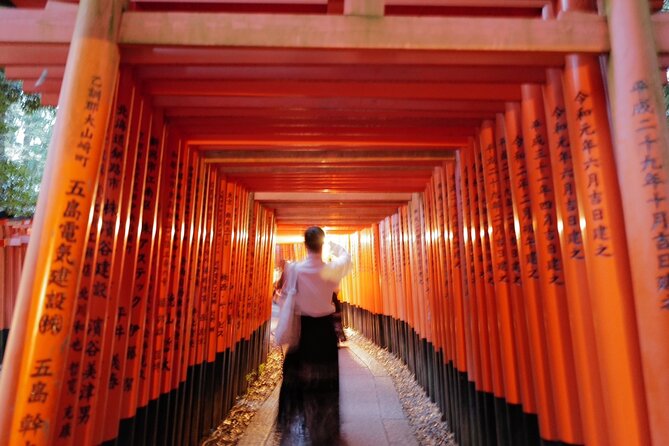
Fushimi Inari is one of those places you’ve already seen in photos, so the real question is whether it still surprises you in person. At night, the shrine’s atmosphere changes. The torii tunnel feels less like a photo background and more like a living path you’re walking through.
This tour leans into that idea. The evening schedule is designed to make your visit more comfortable, especially compared with the harsh middle-of-the-day heat. It also helps you experience the shrine without feeling like you’re constantly dodging other groups.
And because the tour is timed for before or after dinner, it fits easily into a Kyoto day. You get a memorable anchor activity without turning your schedule into a spreadsheet.
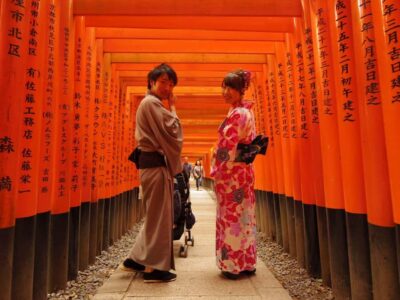
More walks up through the vermilion torii of Fushimi Inari



Meeting point near JR Inari Station: no guesswork, just one landmark
Finding Fushimi Inari can be easy—if you know where you’re starting. This tour’s meeting point is at the exit of JR Inari Station. Once you step out, you turn left. Then you’ll see a Daily Yamazaki convenience store, and the group meets in front of that store.
That’s the kind of detail I appreciate. When you’re in a new neighborhood, having one clear landmark is better than trying to follow a vague pin on your phone.
One practical note: you’ll want to arrive a few minutes early. With a small group and a set start time, you don’t want to rush the meeting while you’re also trying to orient yourself.
The 1-hour tour: what you actually get for $35.93
The price is about $35.93 per person, and that matters most because this isn’t a long, multi-stop day tour. This is a focused, one-hour experience with an English-speaking guide and shrine entry included.
Here’s how I think about the value. Since the shrine admission is free and part of what’s covered, you’re mostly paying for guided time—interpretation, pacing, and help turning the gates into something you understand. For many people, that’s exactly what’s missing when they visit Fushimi Inari on their own: they see the torii gates, but the meaning can feel like it’s behind glass.
The group is capped at 15 travelers. That tends to keep the walk from feeling like a parade, and it usually makes it easier to ask questions without shouting across a crowd.
You also get a mobile ticket. That’s convenient in real life. Less paper, less hassle, more time to actually enjoy the walk.
Stop at Fushimi Inari-taisha: torii gates are the headline, meaning is the plot
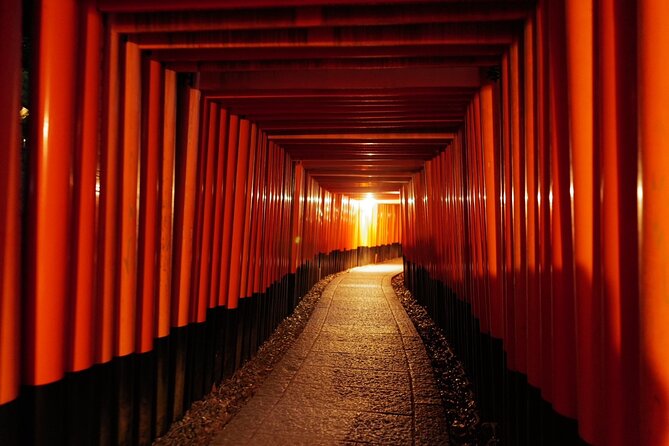
The main stop is Fushimi Inari-taisha Shrine, Kyoto’s best-known torii-gate complex. You’re there for the visual wow—the famous “10,000 torii gates” look—but the tour is designed to give you the why behind what you’re seeing.
During the walk, your guide focuses on the shrine’s history and explains important background. The goal is to help you understand the site beyond its Instagram shape. Guides also address the differences between Shintoism and Buddhism, which gives context to why you might notice certain styles, symbols, and religious elements interacting in the same space.
In plain terms: if you’ve ever felt like you were touring a building without knowing what you were supposed to notice, this is built for you. The guide gives you points to look for as you move—so the place becomes a story instead of a route.
The evening pace: cooler stroll, better photos, fewer stresses
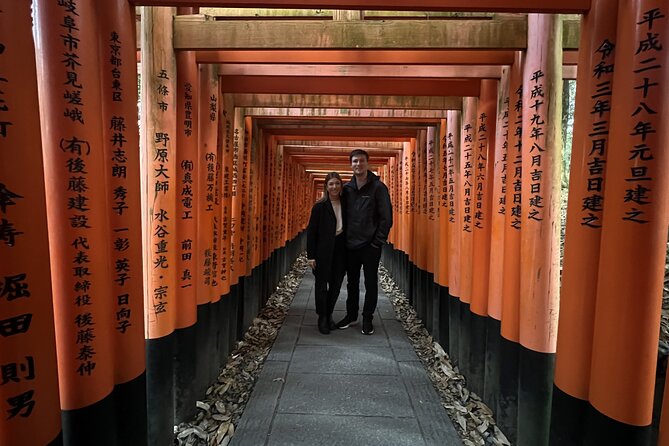
Evening is often the best compromise in Kyoto. It’s not as brutal as midday, and the atmosphere can feel calmer. This tour takes advantage of that timing, so you’re less likely to feel drained before dinner.
It also helps your photography. In the reviews, people call out getting great photos, and guides are credited with suggesting photo spots and timing. That doesn’t mean you’ll take a professional shoot, but it does mean you’re more likely to walk away with images that feel intentional rather than random.
A practical tip I’d follow: wear shoes you can walk in comfortably for a full hour of strolling. The shrine is active, and even if you’re not doing a long ascent, you’ll still be moving at a steady pace.
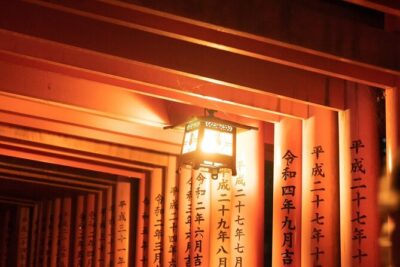
See how Kyoto shifts after dark






Your guide matters: Kanami, Mai, Satsuki Morikawa, Moto, Haruki
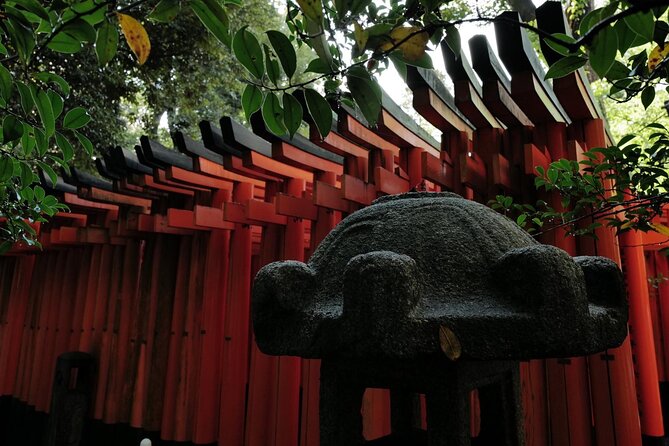
The standout theme across feedback is the guide quality. Different names show up—Kanami, Mai, Satsuki Morikawa, Moto, Haruki—but the pattern is consistent: people felt the tour was informative and genuinely personal.
What I like about this for you is that a guide doesn’t just recite facts. They handle questions, add small details, and keep the experience flowing. One review highlights how the guide gave answers plus photo-op suggestions. Another points to a guide who explained the Shinto and Buddhist angle clearly and also offered practical transport guidance for later in the area.
That last part matters more than you might think. Fushimi Inari is popular, and the train/bus situation can get confusing when you’re tired. Having a guide give direction on transport around the area can save you time and stress.
What you should bring (and what you can skip)
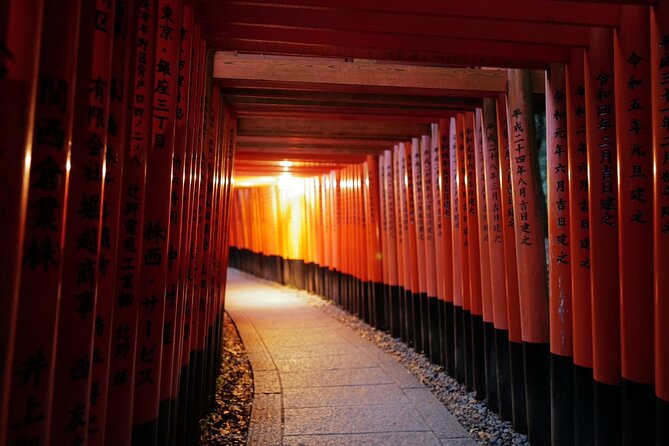
Because the tour includes the shrine visit and guide time, your planning is simpler than many tours. But you still need a few basics.
Bring:
- comfortable walking shoes
- a small bag for essentials
- any water you like (the tour does not include food or drinks)
- your phone for the mobile ticket
Skip planning for food on the tour. This is designed as a quick activity around dinner. So if you’re hungry afterward, plan to eat right after, not before you start.
Also, there’s no hotel pickup. You’ll make your own way to the meeting point near JR Inari Station.
Who this tour is best for
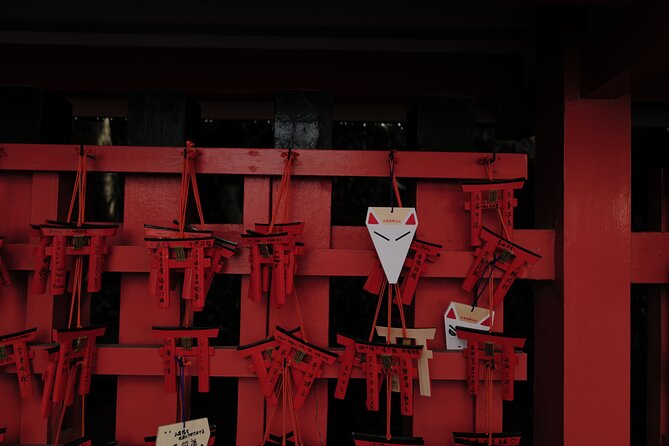
This tour fits travelers who want a high-impact Kyoto experience without turning it into a long commitment. If you’re doing a busy itinerary and you still want the Fushimi Inari story (not just the scenery), it’s a strong match.
It’s also a good fit if:
- you like learning as you walk
- you prefer smaller groups
- you want help with questions about Shinto/Buddhist context
- you’re trying to avoid the midday heat
If you’re the type who wants hours of exploring and you like to wander independently without any structure, you might find the one-hour format limiting. But you’d likely still enjoy it as a guided introduction—then you can return later on your own for longer time.
Practical expectations: duration, group size, and how to plan your day
The tour runs for about 1 hour. That means it’s not just a checkpoint—it’s long enough to cover the key experience and learn something, but short enough to keep your schedule flexible.
The maximum group size is 15. That’s small enough for a more conversational vibe, which is consistent with the glowing feedback about guides answering questions and tailoring the walk to the group.
Timing matters. It starts at 5:00 pm. If your dinner plans are flexible, you can treat this as a smooth “Kyoto pre-dinner ritual.” If dinner reservations are fixed, just make sure you leave buffer time for getting from the shrine area to your restaurant.
Should you book the Kyoto Fushimi Inari Night Walking Tour?
If you want the torii-gate magic with context, this is a smart buy. The big strength is how the guide turns the shrine into something you understand—Shinto and Buddhism context, history, and guided attention to details—while still keeping the pace relaxed.
Book it if:
- you’re visiting Kyoto for a limited number of days
- you want an evening plan that’s practical and not exhausting
- you like small-group guided walks
- you’d rather spend money on interpretation than just access
Consider skipping or supplementing it if:
- you want a long, independent exploration with no time limit
- you’re hoping for a full-day hiking-style visit
- you don’t care much about explanations and just want to stroll
My bottom line: at this price, for this length of time, with admission included and strong guide feedback, it’s a well-aimed way to experience Fushimi Inari at the hour when the shrine feels most like Kyoto—quiet enough to listen, pretty enough to photograph, and structured enough to leave you with real takeaways.
FAQ
How long is the Kyoto Fushimi Inari Night Walking Tour?
It’s about 1 hour.
What time does the tour start?
The start time is 5:00 pm.
Where do we meet for the tour?
You meet at the exit of JR Inari Station. Turn left and look for the Daily Yamazaki convenience store; the meeting point is in front of that store.
How much does the tour cost?
The price is $35.93 per person.
Is the shrine admission included?
Yes. Admission is free and included for the shrine visit.
What’s included in the tour price?
An English-speaking tour guide and about 1 hour of in-depth time at Fushimi Inari-taisha.
What is not included?
Hotel pickup, and food and drinks.
Do I need a paper ticket?
No. You’ll use a mobile ticket.
How big are the groups?
The tour has a maximum of 15 travelers.
Can I cancel for a full refund?
Yes. You can cancel up to 24 hours in advance for a full refund. If you cancel less than 24 hours before the start time, it isn’t refunded.
More Tour Reviews in Kyoto


More of Kyoto After Dark
Fushimi Inari, a Few More Ways
Just added: more Kyoto tours to browse






Fushimi Inari Shrine Tours, compared.
 ★ 4.8Fushimi Inari, Kinkakuji, Bamboo Grove 1 Day Bus TourFrom $1224,316 reviews
 ★ 5.0Fushimi Inari Hidden Hiking Tour (Private Option Available)From $631,750 reviews
 ★ 4.7Kyoto/Osaka: Nara, Fushimi Inari Taisha, Arashiyama Bus TourFrom $521,275 reviews
 ★ 4.4Osaka/Kyoto: Arashiyama, Nara & Fushimi Inari Shrine w/LunchFrom $61754 reviews
 ★ 4.7Nijo Castle, Kiyomizu & Fushimi Inari Guided TourFrom $54700 reviews
 ★ 5.0Nijo, Kinkaku-ji, Arashiyama, Kiyomizu & Fushimi InariFrom $51699 reviews
 ★ 5.0Kyoto Fushimi-Inari Night Walking TourFrom $43320 reviews
 ★ 4.93-Hour Fushimi Inari Shrine Hidden Hiking TourFrom $72270 reviews
Browse the lists this tour appears in