
Reviewed · KYOTO BUS & SIGHTSEEING TOURS
Early Half Day to Kyoto Highlights
Kyoto feels big, but this tour keeps it focused. You’ll hit the three most famous stops—Fushimi Inari, Arashiyama Bamboo Forest, and Kinkakuji—in one efficient morning while you stay ahead of the worst crowd waves. It’s a walking tour that also uses public transport, so you see how locals get around, not just how tourists hop between photo spots.
I really like the balance here: you get the iconic sights, then the guide adds context about Shinto at Inari and Buddhism at Kinkakuji. And I especially appreciate the small group setup (max 8), which makes it easier to ask questions and move at a pace that doesn’t feel rushed. In the same spirit, the guide I saw highlighted in past groups—Indra—comes across as organized and upbeat, the kind of person who keeps the day running smoothly.
One consideration: Kinkakuji’s entrance fee is not included (¥500), and public transportation isn’t included either (¥1,300 per person). So your final cost will be a bit higher than the headline price, and you’ll want cashless payment ready for the temple ticket.
In This Review
- Key Things That Make This Kyoto Morning Work
- Why This Early Half-Day Kyoto Plan Makes Sense
- Meeting at Kyoto Tower Starbucks: Easy Start, Clear Plan
- Fushimi Inari-taisha: The Red-Gate Walk With Shinto Meaning
- Arashiyama Bamboo Forest: Natural Drama, Guided Flow
- Kinkakuji (Golden Pavilion): Buddhism Context and a Ticket You Need
- Kyoto Station Building: A Handy Finish You’ll Appreciate
- Price and Value: What $94.71 Really Buys
- The Pace, the Group, and When This Tour Fits You Best
- Tips to Get the Most Out of Your Morning
- Should You Book This Kyoto Highlights Tour?
- FAQ
- What time does the tour start, and how long does it last?
- Where is the meeting point?
- Which main sights are included?
- Is Kinkakuji entrance fee included?
- Is public transportation included in the price?
- Is the tour ticket digital?
- What’s the group size?
- What’s included in the tour price?
- What’s the cancellation policy?
Key Things That Make This Kyoto Morning Work
- You start early to help you catch Kyoto’s highlights before the biggest lines form.
- Small group (up to 8) means more question time and less standing around.
- Public transport + walking gives you a practical feel for Kyoto, not just a checklist.
- Fushimi Inari’s red gates come with Shinto context so the place makes more sense.
- Arashiyama Bamboo Forest timing fits a half-day schedule without swallowing your whole day.
- Kinkakuji adds perspective with Buddhism and temple history, not only photos.
Why This Early Half-Day Kyoto Plan Makes Sense
Kyoto can eat your time fast. Stations feel far, buses get crowded, and some of the most famous sights bring crowds that can slow you down. This tour tackles that by focusing on a tight geographic route and starting at 8:00 am.
The real value isn’t that you see three attractions in five hours. It’s how you see them. You’re not wandering alone with no strategy. You’re moving with a guide who can keep the day aligned, so you spend less time guessing and more time actually enjoying the views and the atmosphere.
This is also one of those “right-sized” tours. A full-day package can leave you tired and stuck in the schedule. Here, the morning is long enough to hit the big names, but short enough that you can still plan your own afternoon. I like that flexibility, especially in Kyoto, where a good second half can be as simple as finding a quiet neighborhood and grabbing a late lunch.
Loop the big Kyoto sights in one run


Meeting at Kyoto Tower Starbucks: Easy Start, Clear Plan
Your day begins at Starbucks Coffee – Kyoto Tower Sando, right in front of Kyoto Station. The meeting point is specific and easy to spot, which matters because Kyoto station areas can be confusing when you’re jet-lagged or rushing for the first stop.
You’ll have a short gather time (15 minutes) before you set off. That’s long enough to confirm who’s in your group, check the meeting details, and get your bearings. Since the tour uses a mobile ticket, you won’t have to hunt down paper vouchers. You just need your phone charged and ready.
Also, meeting near Kyoto Station is a smart move. It keeps the logistics simple for anyone who wants to arrive early, drop off luggage, or quickly grab water before you go. From there, you’re set up for an efficient morning routing that doesn’t waste time.
Fushimi Inari-taisha: The Red-Gate Walk With Shinto Meaning
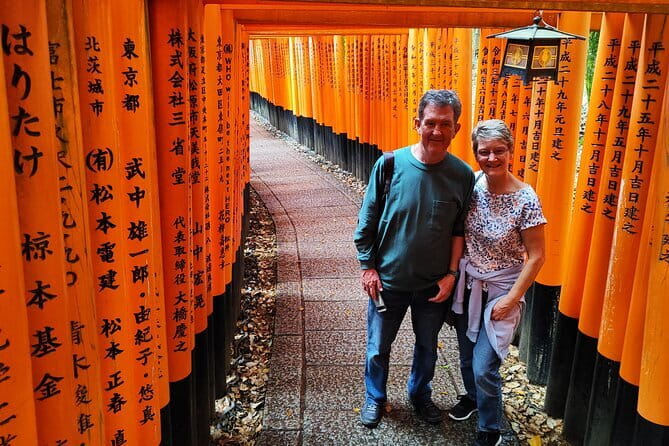
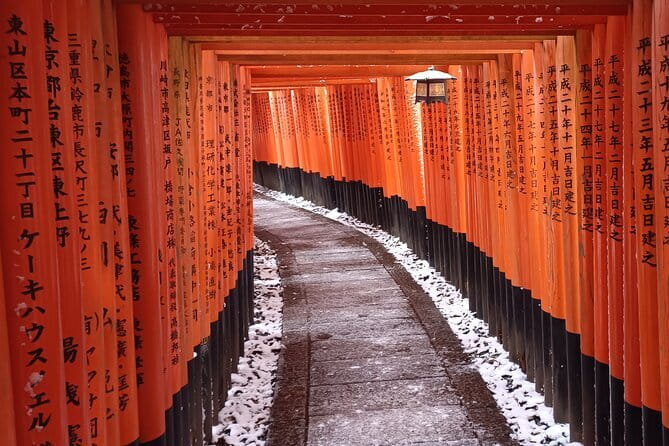
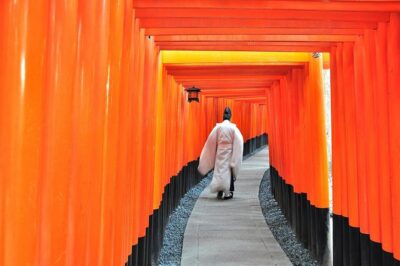
Fushimi Inari-taisha is the headliner. Thousand-plus red torii gates, dramatic sightlines, and that unmistakable Kyoto icon status. But the difference-maker on a guided version is understanding what you’re looking at.
You’ll spend about 1.5 hours here, and the tour is designed to help you see it with fewer crowds. Going early changes the mood. The place still feels busy compared to a quiet shrine visit, but the lines and crush are usually smaller than later in the day.
What I like most is the emphasis on Shintoism. You’re not just collecting gate photos; you’re learning how Shinto thinking shapes the way people relate to sacred space. That matters because Fushimi Inari isn’t one simple courtyard. It’s a route. The guide’s context helps you read the landscape—how the shrine functions, why there are so many paths, and why the experience feels like a journey even when you’re staying mostly on marked walkways.
Practical tip: wear shoes you can walk in comfortably. Even if the day is “only” half-day, Inari is a proper walking stop. Bring a light layer too; early mornings in Kyoto can feel cool before the city warms up.
Arashiyama Bamboo Forest: Natural Drama, Guided Flow
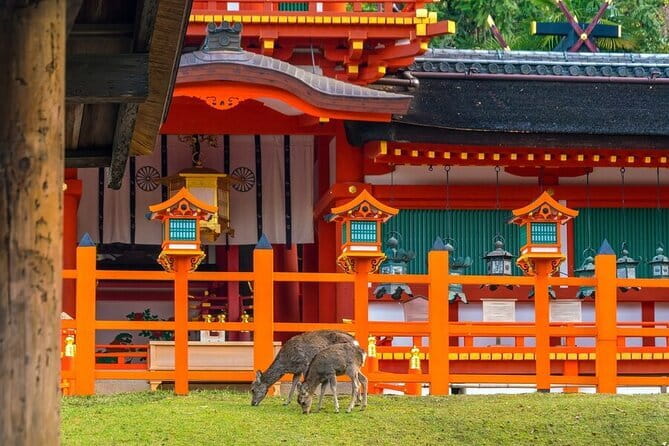
Next up is the Arashiyama Bamboo Forest. You’ll have about 1.5 hours here, which is a good chunk for soaking in the atmosphere without turning it into a rushed photo sprint.
Bamboo forests in photos can look like a single scene. In person, they feel bigger and more directional—like you’re walking through a living corridor. This stop is special because the guide connects the scenery to Japanese society, not just nature appreciation. You’ll hear context that helps the forest feel grounded in culture and daily life, not like a staged “set.”
The big practical win is pacing. Without a structured plan, Arashiyama can turn into stop-and-go milling around. With a guide keeping the group moving, you’re more likely to enjoy the quiet moments between crowd pockets and still make it to the next attraction on time.
Also, this is one of the best stops for travelers who like a breather. It’s visually striking, but it’s not just one building you look at for five minutes. You’ll actually walk, pause, and look around.
Tip from the way the day is set up: keep your energy for Kinkakuji. Bamboo forest time is the perfect middle “slow down” moment, but don’t let it stretch so long that you arrive at the Golden Pavilion scene feeling flat.
Kinkakuji (Golden Pavilion): Buddhism Context and a Ticket You Need
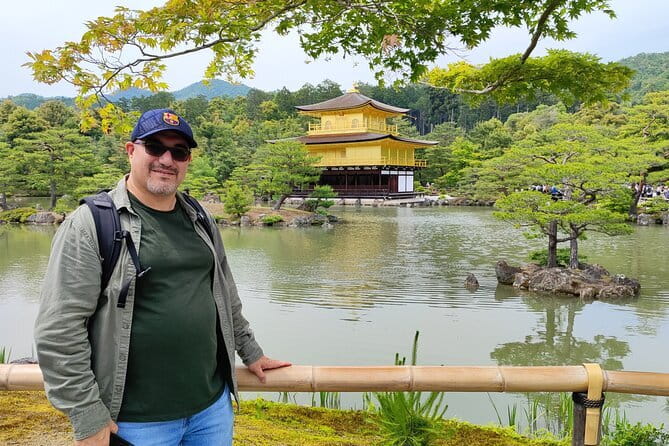
Kinkakuji is the temple stop everyone recognizes, and it’s also the one with an extra cost you need to plan for. You’ll spend about 1.5 hours here, learning about Buddhism in Japan and the temple’s history while you enjoy the iconic golden-pavilion views.
Important: Kinkakuji’s entrance fee is not included. The tour lists ¥500. I’d treat this as part of the standard Kyoto “temple budget,” not a surprise add-on. If you’re doing Kyoto highlights, you’ll likely pay temple fees anyway—this just means you should keep money aside and avoid being caught mid-day without the right payment method.
Why this stop is worth paying for as part of a guided morning: Kinkakuji can feel overwhelming if you only know it as a photo. With the guide’s explanation, the temple becomes more than a background image. Buddhism and temple function start to make sense as you move through the area.
The visit also fits the day’s rhythm. You’ve already done the spiritual lesson at Inari, so Kinkakuji’s Buddhist angle works like a second chapter. The contrast makes it easier to remember things later, especially if you’re the type who likes your travel to leave more than pictures.
Kyoto Station Building: A Handy Finish You’ll Appreciate
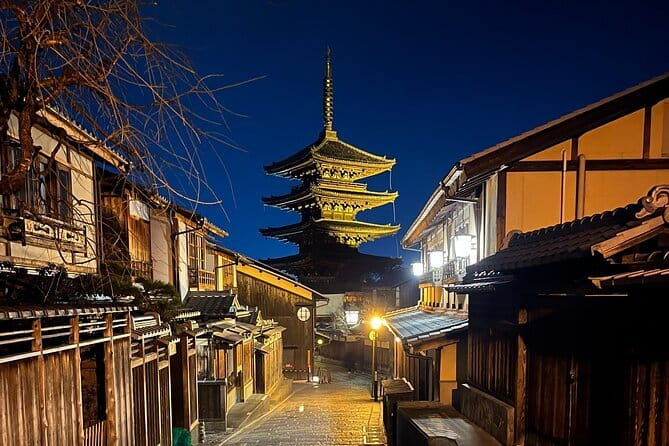
After Kinkakuji, you’ll return to your start point. The schedule includes a short stop back at Kyoto Station Building with about 15 minutes for wrapping up.
This might sound minor, but it’s a real advantage. When tours end in random places, you spend your “free time” solving transport. Ending back at Kyoto Station keeps it clean. You can easily continue your afternoon plans—shopping, snacks, museum time, or just heading back to your hotel area without stress.
Also, Kyoto Station is a landmark in its own right. Even if you don’t plan to explore deeply on tour time, it helps to finish somewhere recognizable. You’ll feel oriented for the rest of the day, especially if it’s your first Kyoto trip.
Price and Value: What $94.71 Really Buys
The listed price is $94.71 per person for about five hours, with a mobile ticket and an experienced local guide. On paper, it looks like a “high-volume highlights” deal. In practice, the value comes from the combination.
First, you’re getting three major sights, with the middle two included in the schedule in a way that’s hard to replicate without local routing knowledge. Second, the guide adds cultural context—Shinto at Inari and Buddhism at Kinkakuji—so the day doesn’t become only a string of photos.
Now the math you should know:
- Kinkakuji entrance is ¥500 and not included.
- Public transport is listed as ¥1,300 per person and not included.
So yes, your total spend will be higher once you account for those two items. But you’re also not paying for a driver, and the tour is designed around walking and transit. That often keeps the experience more flexible and less “bus ride sightseeing.”
If you’re traveling solo or as a couple, small-group pricing can be a sweet spot. A max group size of 8 helps keep the experience personal without jumping to private-tour costs.
The Pace, the Group, and When This Tour Fits You Best
This is a walking tour, and the itinerary expects you to cover real ground. The half-day format works best if you want to check off key Kyoto highlights while still keeping your afternoon open.
I also like that the group size is capped at 8. Smaller groups tend to move more like a shared plan than like a herd. That matters at famous sites where people stop, restart, and take photos from the same angles.
The best match for this tour is:
- you’re seeing Kyoto for the first time and want an efficient orientation
- you like learning context, not just ticking off landmarks
- you prefer early starts to avoid fighting the worst crowd times
- you want a small group experience with space for questions
One more practical note: the tour is marked as suitable for most travelers. That’s a fair general guideline, but it’s still a walking day. If you have mobility limits, you’ll want to think carefully before committing to temples plus shrine walking.
Tips to Get the Most Out of Your Morning
Here are the small things that make this kind of morning tour feel smooth instead of tiring.
- Arrive early enough to breathe before 8:00 am. Kyoto Station areas can take longer than you expect.
- Bring a light layer for the early air, then keep something simple for later in the morning.
- Plan your payment for Kinkakuji (¥500). You’ll want it ready.
- Think about your lunch strategy. Since the tour ends back near Kyoto Station, you can head out soon after with fewer transport headaches.
- Use the guide’s context. Ask one or two questions at Inari and then again at Kinkakuji. That’s where the day becomes more memorable than a photo walk.
The biggest “pro move” is to treat this as an orientation day. You’ll see Kyoto’s most famous spiritual sites and a major nature icon. Then you can spend your afternoon going where your interests pull you.
Should You Book This Kyoto Highlights Tour?
If your goal is a smart, early introduction to Kyoto’s greatest hits, I think this is a strong choice. You get the iconic stops in a compact plan, with cultural context that makes the sites feel more meaningful than a simple checklist. The small group size (max 8) helps keep the day friendly and gives you room to ask questions, which is where a guide like Indra adds real value—organization, clarity, and the kind of storytelling that turns places into something you’ll remember.
I’d pass or reconsider if you hate walking, or if you absolutely need every entrance and transport cost included in the base price. With this tour, you should expect to budget for Kinkakuji’s entrance fee and public transport.
Overall, it’s an efficient morning that sets you up for a relaxed afternoon in Kyoto. If you like your highlights tour to feel planned rather than chaotic, this one is worth your time.
FAQ
What time does the tour start, and how long does it last?
It starts at 8:00 am and lasts about 5 hours.
Where is the meeting point?
The meeting point is Starbucks Coffee – Kyoto Tower Sando, in front of Kyoto Station.
Which main sights are included?
The tour covers Fushimi Inari-taisha Shrine, Arashiyama Bamboo Forest, and Kinkakuji (Golden Pavilion), plus a finish back near Kyoto Station.
Is Kinkakuji entrance fee included?
No. The Kinkakuji entrance fee is ¥500 per person and is not included.
Is public transportation included in the price?
No. Public transportation is listed as ¥1,300 per person and is not included.
Is the tour ticket digital?
Yes. You’ll receive a mobile ticket.
What’s the group size?
The maximum group size is 8 travelers.
What’s included in the tour price?
The tour includes an experienced local guide with good command of English. Many site tickets are listed as free, but Kinkakuji’s entrance fee is not included.
What’s the cancellation policy?
You can cancel for a full refund up to 24 hours before the experience’s start time. It also notes the experience requires good weather, and if canceled due to poor weather you’ll be offered another date or a full refund.
More Tour Reviews in Kyoto
More Kyoto Sightseeing Loops
Just added: more Kyoto tours to browse





Kyoto Bus & Sightseeing Tours, compared.
 ★ 5.0PERFECT KYOTO 1-Day Bus TourFrom $12913,518 reviews
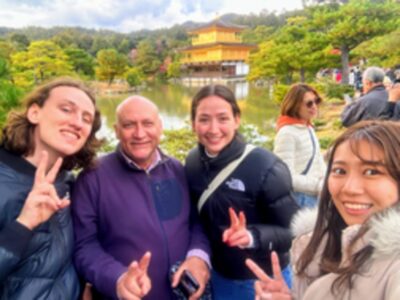 ★ 4.8Fushimi Inari, Kinkakuji, Bamboo Grove 1 Day Bus TourFrom $1224,316 reviews
 ★ 4.9Best of Kyoto: Gion, Geisha, Pagodas & CobblestonesFrom $242,058 reviews
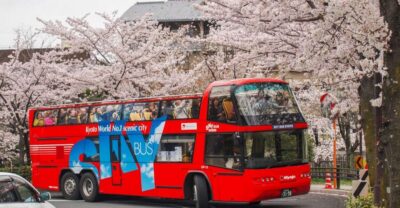 ★ 3.9Hop-on Hop-off Sightseeing Bus TicketFrom $272,034 reviews
 ★ 5.0Private Kyoto Tour with a Local, Highlights & Hidden Gems, PersonalisedFrom $1021,543 reviews
 ★ 4.7Kyoto/Osaka: Nara, Fushimi Inari Taisha, Arashiyama Bus TourFrom $521,275 reviews
 ★ 5.010 Must-see Spots in Kyoto One Day Private Tour (up to 7 people)From $1791,108 reviews
 ★ 4.5One-Day Tour of Kyoto’s Highlights from Osaka/KyotoFrom $661,092 reviews
Browse the lists this tour appears in