
Reviewed · KYOTO SAKE TASTING TOURS
Private Pewter Sake Cup Experience with a Kyoto Artisan
Hammer a souvenir in quiet Kyoto. In this private pewter workshop with artisan Kanako, you learn traditional metal-hammering techniques and make a sake cup that’s truly personal. The class runs about 2 hours 30 minutes, and it’s staged in a calm studio outside the busy center of town.
I especially like that you get a real craft lesson, not just a demo. You’ll get hands-on shaping of the cup, from striking patterns on the metal to adjusting the rim so it feels good in your hand.
One possible drawback: the location is a bit out of downtown Kyoto, so plan extra time to get there by public transit. The reward is a more peaceful setting, but it’s not a quick walk-off-the-street stop.
In This Review
- Key things that make this workshop worth your time
- Where You Start: Craft Gallery SALUK and a Calm Trip Beyond Downtown
- The 2.5-Hour Flow: From Hammer Choice to a Cup You Can Actually Use
- Hammering Pewter 101: How Patterns Really Form
- Personalize the Base With Letters, Numbers, and Dates
- Shaping the Rim: Getting That Comfortable Drinking Angle
- Pewter for Sake: Why This Material Holds Up (and Stays Useful)
- What You Take Home: Size Specs and the Finished Cup Reality Check
- Kanako’s Teaching Style: Clear English, Real Patience, and a Welcoming Studio
- Price and Value: What You’re Really Paying For
- Who This Workshop Suits Best (and Who Might Feel Out of Place)
- My Booking Checklist Before You Go Hammering
- Should You Book This Private Pewter Sake Cup Experience?
- FAQ
- How long is the private pewter sake cup workshop?
- Where does the experience start?
- What is the price per person?
- Do I need to bring any tools or materials?
- Can I personalize the cup with letters or numbers?
- What do we actually do during the class?
- Will the cup be good for drinks besides sake?
- What size is the finished cup?
- Is the tour private?
- Is it near public transportation and are service animals allowed?
Key things that make this workshop worth your time
- Private, small-group instruction with Kanako, so you’re not stuck watching from the sidelines.
- Choose from different hammers and rotate the cup on the anvil to create your own pattern effects.
- Personalize the base with letters, numbers, initials, or even a date.
- Materials are provided, so you don’t need to bring tools or craft supplies.
- You finish with a functional rim, shaped and polished for drinking comfort.
- A keepsake that works beyond sake, since the cup can be used for other drinks too.
Where You Start: Craft Gallery SALUK and a Calm Trip Beyond Downtown
Your experience begins at Craft Gallery SALUK in Sakyo Ward (35-2 Shizuichinonakachō). This matters because the workshop is not in the thick of tourist Kyoto. You’re heading to a quieter pocket of the city, and that shifts the whole vibe of the activity.
Getting there is easiest if you use Kyoto’s public transportation and plan for a commute. One nice detail from past participants: the journey is part scenic and part simple, and the studio environment stays relaxed instead of rushed.
If you’re the type who enjoys workshops where you can hear yourself think, this location fits. If you only want central, short-hop activities, you’ll want to schedule this earlier in the day so the travel time doesn’t stress you out.
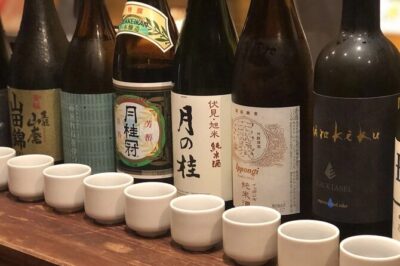
Follow the sake trail through Fushimi and beyond


The 2.5-Hour Flow: From Hammer Choice to a Cup You Can Actually Use
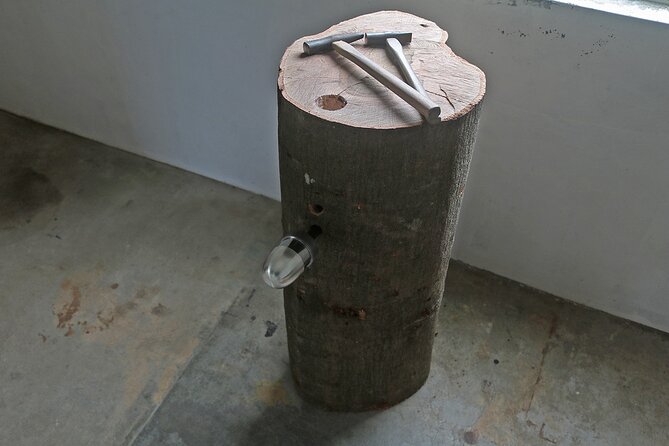
The class is built around one main idea: you create the form first, then refine it into something drinkable. You’ll move through a few stages, and each one has a clear job.
You start with hammering. Then you move to the finishing work—adjusting the height and beveling the rim for comfort. Finally, the craftsman handles the last polishing step using a rotary machine for safety and consistency.
That structure is good for beginners. You’re not expected to already know metalwork, and you still end up with a finished, usable object.
Hammering Pewter 101: How Patterns Really Form
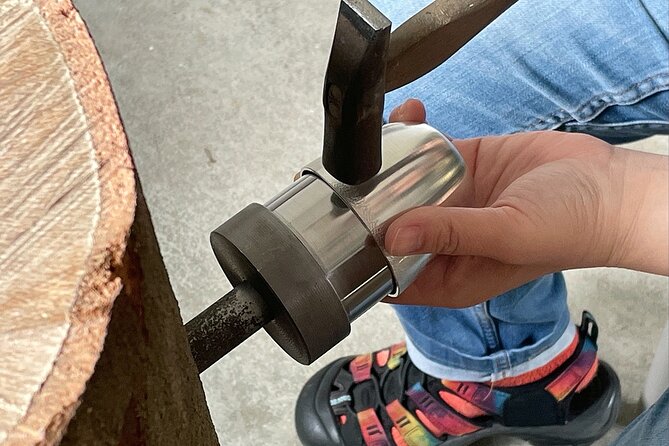
Here’s the fun part: striking metal with your own hands. You’ll pick your favorite hammer from several types, set the pewter cup on the anvil, and strike while rotating the cup.
That rotation is the trick. It changes how the marks build across the surface, so the same hammer can look totally different depending on your angle and movement. You can use just one hammer or combine several to layer patterns.
This is also where the experience becomes personal in a way that store-bought souvenirs can’t touch. You’re not just choosing a design—you’re making the texture, depth, and rhythm yourself. It’s tactile, slightly noisy, and satisfying in that hands-on, problem-solving way.
Personalize the Base With Letters, Numbers, and Dates
After your main pattern work, you can add stamps to the base. You can use letters, numbers, initials, or a date if you want a more specific memory tied to your trip.
This option is small, but it can make a big difference when you’re thinking about gifting. A stamped date turns the cup into a specific marker of your time in Kyoto, not a generic craft object.
One practical note: go into it ready to commit. Stamping is a one-way process—once it’s done, it’s done—so take a second before you press.
Shaping the Rim: Getting That Comfortable Drinking Angle
Hammering gives the character. The rim is what makes the cup feel right.
In the workshop, you’ll use a file to adjust the height and bevel the rim at an angle. That angle matters because it changes how the cup meets your lip and how smoothly a drink sits in it.
Your final polishing is handled by the craftsman with a rotary machine. That’s a safety and quality step, and it also means you won’t have to worry about perfecting the final finish yourself.
When it’s finished, you’re left with a cup that looks handmade and feels handmade in the hand—not awkward or flimsy.
Other Kyoto tours and experiences to compare






Pewter for Sake: Why This Material Holds Up (and Stays Useful)
Pewter has a long reputation in Japanese craft traditions, and this class explains why it’s prized for drinking sake. The takeaway is that it’s meant for real use, not just display.
And your cup isn’t locked into one beverage. The workshop format and class description point out that you can drink sake from it, but you can also use it for whiskey, chilled green tea, and other occasions.
One extra point that comes up in participant learning: pewter is said to help keep water clean, which can support longer-lasting freshness for flowers in arrangements. So even if you’re not a sake person, the cup still makes sense as a functional desk object.
If you’re worried about practicality, don’t be. This is not a fragile keepsake that stays in a box. It’s designed to be held and used.
What You Take Home: Size Specs and the Finished Cup Reality Check
You’ll leave with a finished pewter cup made from your own work. The standard finished size is about 64 mm in diameter and 53 mm in height.
In terms of capacity, it holds about 90 ml, or about 115 ml when filled to the rim. That’s a useful detail because it tells you the cup is sized for thoughtful pours, not a tiny shot glass that disappears too fast.
Packaging is another perk. Several participants noted the cup came in a wood box, which helps with travel and keepsake storage. It also makes the souvenir feel more substantial when you hand it over or show it at home.
Kanako’s Teaching Style: Clear English, Real Patience, and a Welcoming Studio
The biggest reason this workshop gets top scores is the teaching style. Kanako runs the experience with clear instructions, and the process stays beginner-friendly even if you’ve never hammered metal before.
A few recurring things show up in the reviews: the studio welcome, the step-by-step guidance, and the way mistakes get corrected without embarrassment. That’s a big deal in hands-on crafts, because the metal doesn’t care if you’re nervous.
Language is also handled well. One participant specifically called out that the instructions in English were clear. If you’re traveling in English, that’s reassuring.
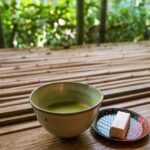
Hospitality can extend beyond the workshop itself. Some participants described being welcomed with tea and snacks, and when sake isn’t part of the plan for someone in the group, green tea may be used instead so everyone can enjoy their cup experience.
Price and Value: What You’re Really Paying For
At $144.96 per person, this isn’t the cheapest Kyoto activity. But it’s also not a generic souvenir-making stop.
You’re paying for several value drivers that add up: private instruction, access to a workshop that isn’t typically open to the public, and the fact that you’re working with pewter using multiple hammer types and real finishing steps. Materials are provided, so you’re not carrying extra costs for supplies.
You’re also buying time with a working artisan who can guide you through each stage. That’s harder to replicate when you DIY at home or try to follow videos with no feedback.
If you want a buy-one-and-forget-it postcard souvenir, skip this. If you want a handmade object that looks and feels different every time you pick it up, the price can make sense fast.
Who This Workshop Suits Best (and Who Might Feel Out of Place)
This class fits best if you like hands-on activities and want an authentic Kyoto craft souvenir. It works well for couples too, since you’re building one-of-a-kind cups with your own design choices side-by-side.
It’s also a good match if you’re traveling with a mixed group of craft interests. The process gives structure for beginners, and the pattern effects offer room for more creative people to experiment.
If you’re the kind of traveler who wants nonstop sightseeing and doesn’t want to spend two-plus hours in one spot, you might not love the pacing. This is about making, not touring.
My Booking Checklist Before You Go Hammering
Plan for a short commute out of central Kyoto. Wear clothes you don’t mind getting a bit warm or a bit dusty. Metalworking workshops tend to be practical, not fashion-forward.
Bring your willingness to try. You don’t need skill. You do need patience for the process—especially in the hammering stage where small changes create different patterns.
Finally, think about your personalization before you arrive. If you want letters, numbers, initials, or a date on the base, decide what you want it to say so you can move through the steps smoothly.
Should You Book This Private Pewter Sake Cup Experience?
Book it if you want a Kyoto souvenir with real craft behind it, and you’ll enjoy working with your hands. The combination of private instruction, materials provided, and the chance to personalize with stamps makes this feel like more than a quick activity.
Skip it if you’re only looking for central, low-commitment entertainment. The studio is outside downtown, and the main event is the workshop itself.
If you want to leave Kyoto with a functional cup you made—one that you’ll use, gift, or at least proudly display—this is a strong choice.
FAQ
How long is the private pewter sake cup workshop?
It lasts about 2 hours 30 minutes.
Where does the experience start?
The meeting point is Craft Gallery SALUK at 35-2 Shizuichinonakachō, Sakyo Ward, Kyoto 601-1122, Japan.
What is the price per person?
The price is $144.96 per person.
Do I need to bring any tools or materials?
No. Materials are provided, and the class is designed so you don’t need to bring anything.
Can I personalize the cup with letters or numbers?
Yes. You can stamp letters, numbers, initials, or a date on the base.
What do we actually do during the class?
You hammer pewter to create patterns, can stamp the base, then file and bevel the rim for drinking comfort. The final polishing is done by the craftsman.
Will the cup be good for drinks besides sake?
Yes. The cup can be used for sake, whiskey, chilled green tea, and other occasions.
What size is the finished cup?
It measures about 64 mm in diameter and 53 mm in height, holding about 90 ml (115 ml when filled to the rim).
Is the tour private?
Yes. It’s a private tour/activity, and only your group will participate.
Is it near public transportation and are service animals allowed?
Yes, it’s near public transportation, and service animals are allowed.
More Food & Drink in Kyoto
More Tour Reviews in Kyoto






The Fushimi Sake Trail, Continued
Just added: more Kyoto tours to browse








Kyoto Sake Tasting Tours, compared.
 ★ 5.0Kyoto Night Foodie Tour in Gion (9+ dishes + 6 Sake tastings)From $1631,762 reviews
 ★ 5.03-Hour Kyoto Insider Sake Brewery Tour with Tastings & PairingsFrom $84917 reviews
 ★ 4.8Arashiyama Bamboo, Temple, Monkeys, or Secret Sake BreweryFrom $87886 reviews
 ★ 5.0Insider Sake Brewery Tour with Sake and Food PairingFrom $87704 reviews
 ★ 5.0Kyoto Sake Brewery & Tasting Walking TourFrom $98623 reviews
 ★ 5.01.5-Hour Kyoto Insider Sake Experience with 7 Tastings & PairingsFrom $68297 reviews
 ★ 5.0Insider Sake Experience with 7 Tastings and SnacksFrom $66266 reviews
 ★ 5.0Private Tea Ceremony and Sake Tasting in Kyoto Samurai HouseFrom $99163 reviews
Browse the lists this tour appears in