
Reviewed · TOURS
Kyoto Full-Course Tour: Explore 10 Must-Sees & Hidden Gems
Kyoto feels big. This tour turns it into a tight one-day route with 10 major sights plus quieter streets, guided in English. It’s a smart way to get your bearings fast, from Arashiyama calm to Gion evening vibes.
I especially like the small group setup (max 10) with guides such as Megumi or Masa, so you’re not stuck in a crowd pretending to enjoy yourself. I also like that you travel by bus/train and on foot, learning the practical stuff you need on your own after the tour. The main drawback: it’s a long day with lots of walking, and it’s not a good match if your fitness is limited or you have mobility limits.
In This Review
- Key points to notice before you go
- A 9.5-hour Kyoto sampler built for first-timers
- Meeting point at JR Saga-Arashiyama: how to find your guide quickly
- What you actually get for $96: guide, time, and value
- Arashiyama Bamboo Forest to Ryoan-ji: quiet Kyoto, then Zen stillness
- Ryoan-ji to lunch at Kura Sushi: a smart reset, not just food
- Kinkaku-ji and Fushimi Inari Taisha: icons with built-in photo strategy
- Kiyomizu-dera, Ninenzaka, and souvenir streets: where the stone paths slow you down
- Yasaka Pagoda photo stop and Gion at dusk: the payoff ending
- Walking load, cash, and IC cards: what can trip you up
- Who this Kyoto tour fits best
- Should you book this Kyoto full-course tour?
- FAQ
- Where is the meeting point?
- What time does the tour start and how long is it?
- How big is the group?
- What language is the guide?
- Is the transportation included in the price?
- Is lunch included?
- Do I need an IC card?
- How much cash should I bring?
Key points to notice before you go
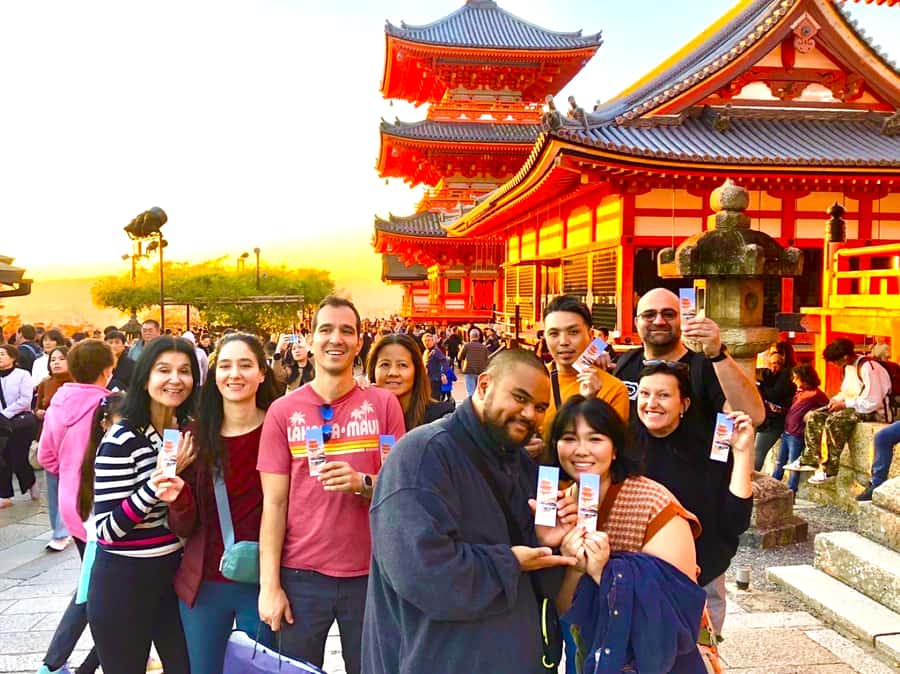
- Small group capped at 10, which makes staying together and asking questions much easier
- English live guide, with local know-how from guides such as Megumi and Masa
- Hands-on transit lesson using Kyoto’s buses and trains (plus a short tram ride)
- Real cultural mix: classic temples, a Zen garden, and a modern revolving sushi lunch at Kura Sushi
- Cash and IC-card planning that keeps you from losing time at the worst possible moment
- Finish in Gion near Minamiza Theater, so you end with old-streets atmosphere instead of rushing back early
A 9.5-hour Kyoto sampler built for first-timers
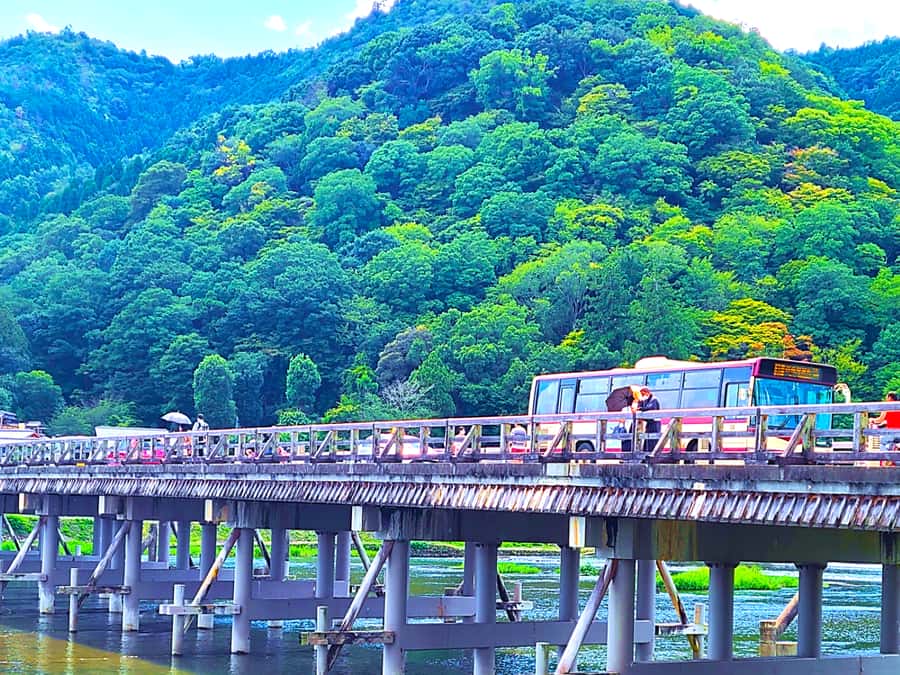
This is the kind of Kyoto day that only works with a plan. You start at Saga-Arashiyama Station around 8:50 and end at Minamiza Theater later in the day, after hitting sights spread across the city. With a 570-minute total run time, you’re going to walk, ride public transit, and see a lot in a short window.
The payoff is how the route gives you a mental map. Arashiyama sets the tone with greenery and stillness. Then you move into Zen and gold-leaf splendor, switch gears to torii gates, and finish with the old-street texture of east Kyoto and Gion. If you only have one day and want the “greatest hits,” this delivers. If you want to practice how to move around Kyoto after this, it also helps.
The tour is designed to reduce stress. Kyoto’s transport and station-to-station transfers can feel like a puzzle when you’re tired. Having a born-and-raised guide handling the connections means you spend your energy looking up at pagodas and torii, not at signage.
Still mapping out your days? A few more Kyoto tours worth a look.



Meeting point at JR Saga-Arashiyama: how to find your guide quickly
You’ll meet on the 2nd floor of JR Saga-Arashiyama Station, past the ticket gate. Your guide holds a paging board that says Beautiful day tours. That detail matters, because Saga-Arashiyama is busy and lines can be confusing when everyone is searching for the same person.
If you’re the type who likes a buffer, show up a few minutes early, grab your public transport ticket, and double-check your plan for getting an IC card (more on that soon). Once you’re with the group, you’ll move efficiently.
What you actually get for $96: guide, time, and value
The price is $96 per person, and the included parts are straightforward: the professional guide fee and taxes. What you need to budget separately is also clearly spelled out:
- Transportation fares (about 1,500 JPY / $10)
- Lunch and personal snacks (you eat at the stop, but you pay for your own meal)
- Entrance fees for temples and shrines (about 1,500 JPY / $10)
So is it good value? For one-day Kyoto, yes—because you’re paying to buy three things:
1) a local guide to explain what you’re seeing (not just point at it)
2) efficient movement across far-flung areas
3) a schedule that avoids you wandering in circles
Also, the small group (up to 10) is part of the value. You’re more likely to hear the explanations, and it’s easier for the guide to keep everyone together without feeling bossy.
Arashiyama Bamboo Forest to Ryoan-ji: quiet Kyoto, then Zen stillness
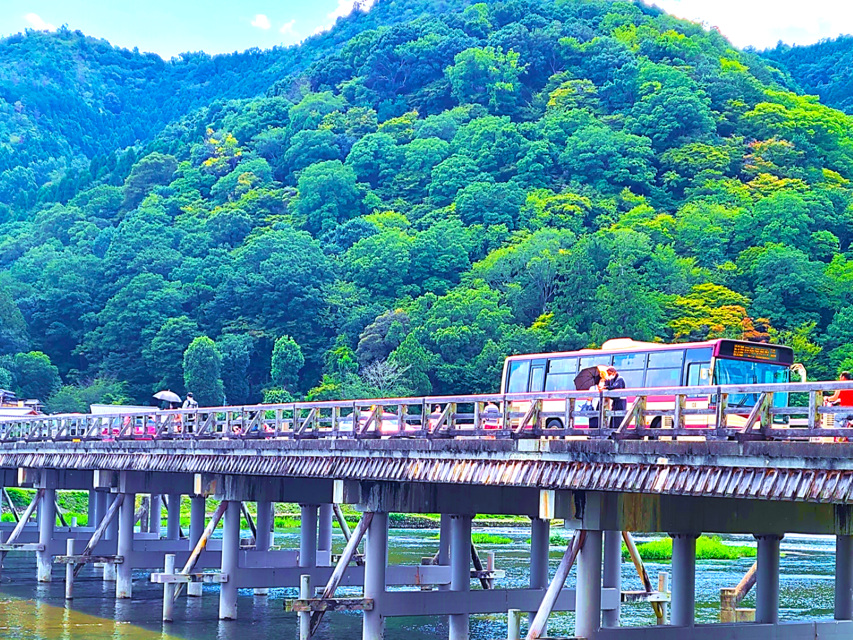
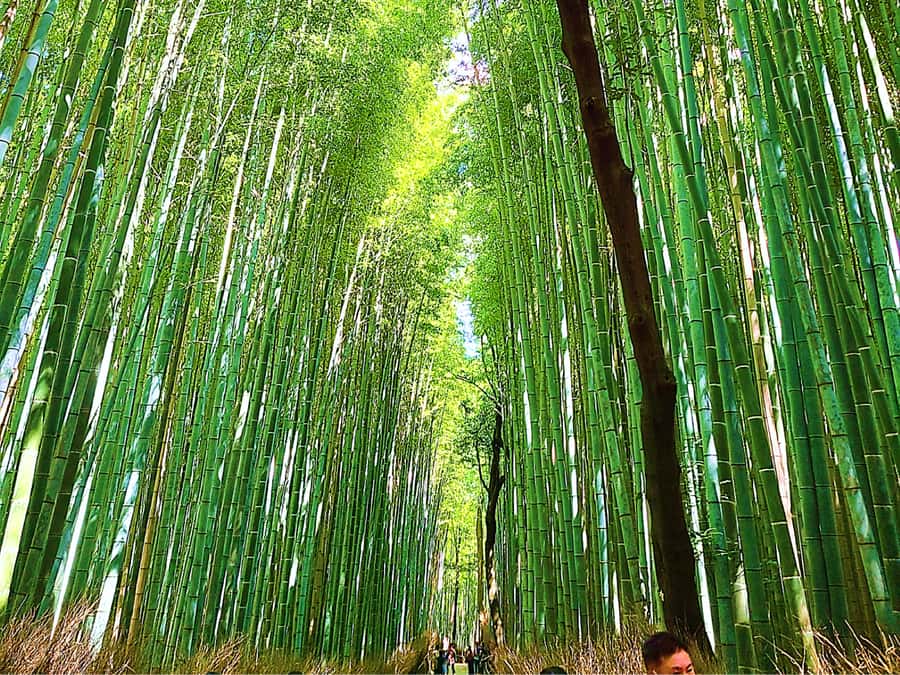
Your morning starts in Arashiyama, where you walk into the bamboo forest. This is one of those scenes that looks like a movie set, with tall green stalks forming walls and corridors. You get 45 minutes, which is enough time to enjoy the views and still not feel like you’re trapped in a slow-moving line.
Next comes the Randen Tram Line, a short 15-minute ride on a vintage tram through neighborhood streets. It’s not just cute. It’s a breathing pause between heavy walking moments, and it gives you a feel for local transit beyond trains and buses.
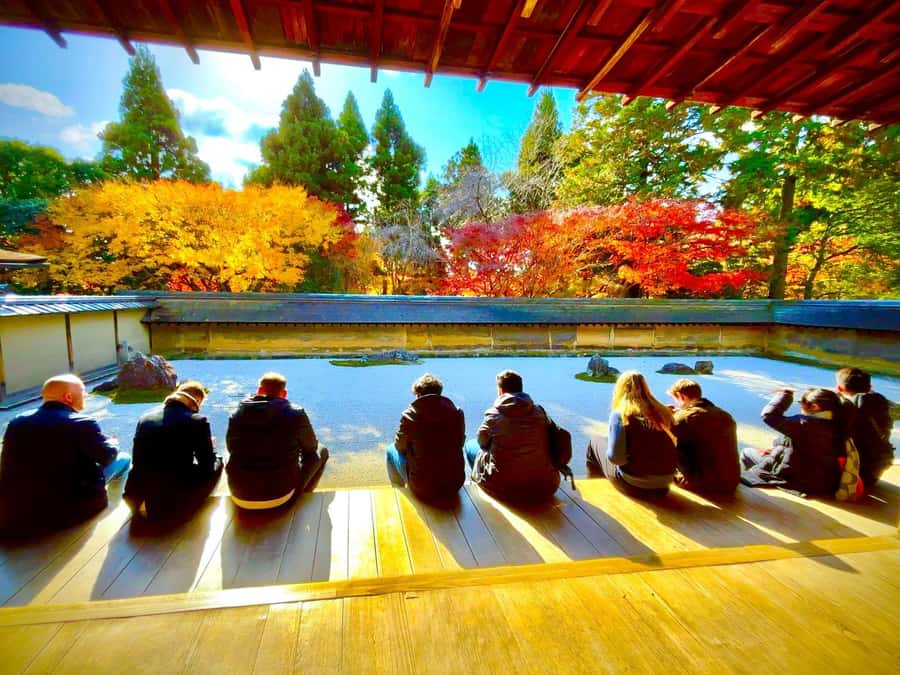
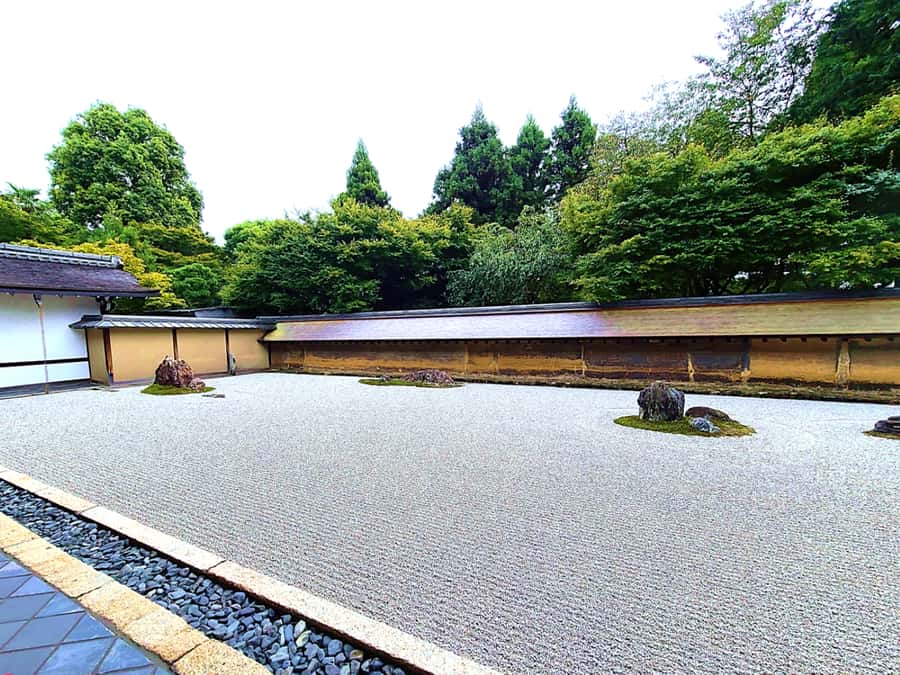
Then you reach Ryoan-ji Temple, home to the world-famous Zen rock garden. Expect 45 minutes here. The experience works best if you don’t rush. Look slowly, notice how minimal elements do a lot of emotional work, and let your guide connect what you see to Japanese Zen ideas.
Watch-outs at these stops are simple: you’ll want good shoes, and you’ll want to keep your pace realistic. This tour is structured, but you still need to be ready to move.
Ryoan-ji to lunch at Kura Sushi: a smart reset, not just food
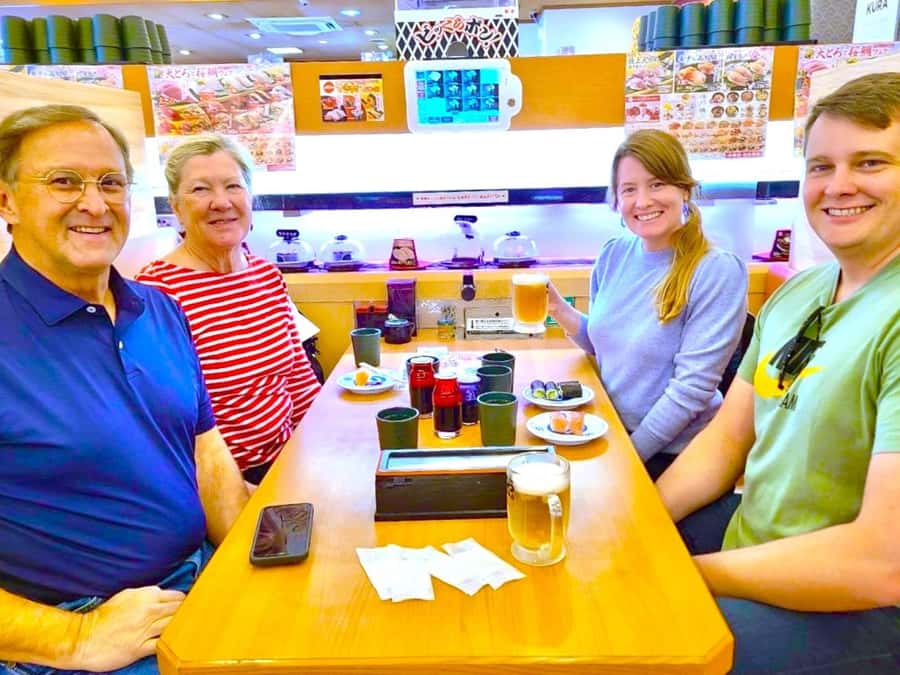
Lunch is at Kura Sushi (a revolving sushi chain), inside a stop timed near Kinkaku-ji. You’ll have 45 minutes. Since lunch is not included, you control what you order, which is helpful if you have dietary preferences or you want to try more than you planned.
What makes this stop useful for your trip is that it’s a bite-sized example of modern Japanese life—fast, casual, and interactive. A revolving setup also keeps you from wasting time while hungry. It’s a functional reset before the next big visual hits.
This is also where I’d recommend keeping your energy steady. The morning-to-afternoon transition is when people start fading. If you stay hydrated and move at the right pace, you’ll feel better for the temples later.



Kinkaku-ji and Fushimi Inari Taisha: icons with built-in photo strategy
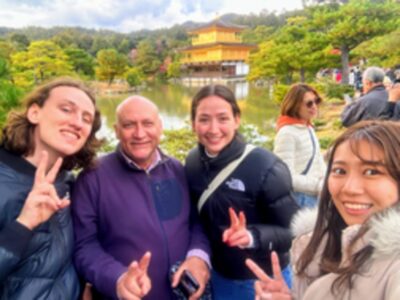
First, you hit Kinkaku-ji (Golden Pavilion). You’ll get 45 minutes there, enough time to see the gold-leaf look from different angles and understand why it’s so famous. The setting includes a peaceful pond, which helps make reflections part of the experience, not just an afterthought.
Then you move to Fushimi Inari Taisha, with its famous 1,000 vermilion torii gates. You’ll have 45 minutes. This is the kind of place where the best photos often come from walking a bit and adjusting your angle, not sprinting to the first overlook you see.
A practical consideration: Inari can be crowded depending on the day and time. Your best move is to let your guide manage the group flow, then take your time for the gates and for the area afterward where you can grab street snacks and drinks.
Kiyomizu-dera, Ninenzaka, and souvenir streets: where the stone paths slow you down

After the torii, the tour shifts into east Kyoto vibes with Kiyomizu-dera Temple. This stop includes a photo-and-view focus, and you’ll also reach the Koyasunoto Pagoda area. You get 45 minutes.
The big detail here is the massive wooden stage, famous for being built without a single nail. Your guide will help you interpret what you’re seeing so it doesn’t become just “another temple sign photo.” If you enjoy architecture and structure, this is one of the stronger stops.
From there, you walk the historic slopes of Ninenzaka (and the surrounding area connected with the traditional streets). You get 30 minutes on stone-paved streets lined with traditional shops. This is where you’ll likely spend your time thinking about gifts: small crafts, snacks, and Kyoto-style souvenirs.
My advice: keep your shopping light and fast. The route is packed. You want to buy because something truly catches your eye, not because the first shop is the only one you had time for.
Yasaka Pagoda photo stop and Gion at dusk: the payoff ending
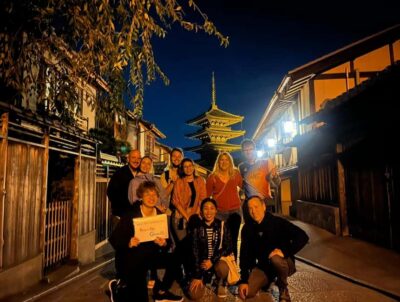
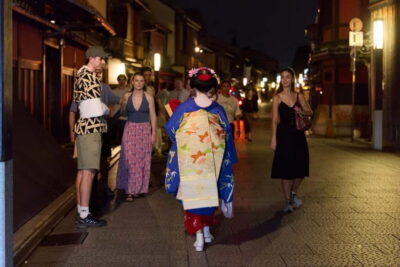
Near the end, you get a quick 15-minute photo stop at Yasaka Pagoda (Hokan-ji)—a classic five-story pagoda that often becomes the skyline symbol people remember. Then the tour goes into Gion, where you’ll stroll for 30 minutes through preserved wooden-townhouse streets and the atmosphere associated with geisha culture.
The schedule matters here. You finish late enough that Gion feels like evening Kyoto. One person put it best: the tour ends as the streets are turning atmospheric, and that timing makes the last leg feel earned rather than rushed. Even if it’s not dramatic sunset every day, you’re finishing when light and mood shift.
You end at Minamiza Theater, which also puts you in the right part of town to continue your evening on foot. If you want to do more later—dessert, a short walk, or a performance—this is a good launch point.
Walking load, cash, and IC cards: what can trip you up
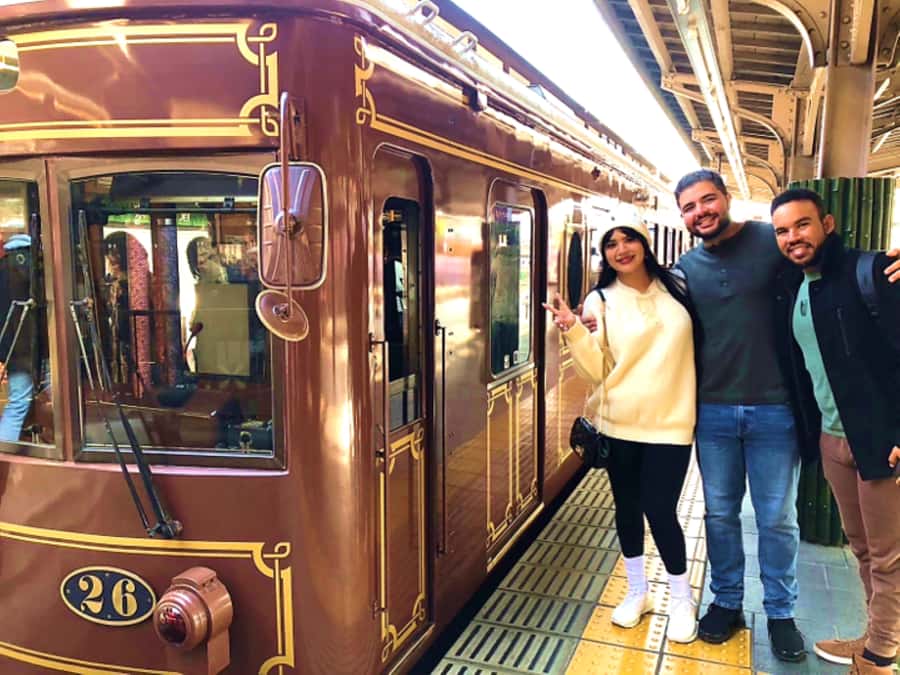
This tour involves serious steps. You should plan for about 20,000 steps. The tour explicitly requires comfortable shoes and easy-to-move clothes. High-heeled shoes and oversize luggage are out.
You’ll also need the money tools:
- Cash (JPY) is required because some shops accept cash only, including places you might want to buy from during the day.
- An IC card like Suica, Pasmo, or Icoca is required for Metro travel parts. Even if you mostly ride buses and trains, having the IC card ready helps you avoid friction.
Weather is the other big factor. Kyoto can rain without much warning, and you should bring umbrella or rain gear as the tour proceeds in rain.
One more note: the tour is not for everyone. It’s not suitable for pregnant guests or those with mobility issues, and it’s not designed for wheelchair users. If you have back problems or you know you’re not walking-friendly for long days, skip this one.
Who this Kyoto tour fits best
This tour fits best if you:
- are in Kyoto for a short time and want a tight one-day orientation
- like being guided through big-name sights, but also want time for smaller side streets
- prefer small groups and conversations where you can ask questions
- want practical help with Kyoto movement and etiquette rather than solo guessing
It may not fit if you want a slow, sit-down day. This is a “keep moving” format. People who enjoy travel by foot and transit will love it. People who want zero hustle should look for something shorter and more relaxed.
Should you book this Kyoto full-course tour?
If your goal is to see Arashiyama, Zen at Ryoan-ji, Kinkaku-ji, Fushimi Inari, Kiyomizu-dera, and Gion in one day with an English guide who keeps the group on track, I’d book it. The biggest reason: you’re buying time, organization, and context, not just photos.
Just be honest with yourself about the walking load. Bring shoes that can handle rough stone and long distances, carry cash for small purchases and possible entrances, and expect a full-day effort. If that sounds like your kind of travel day, this is a strong match.
FAQ
Where is the meeting point?
Meet your guide at the 2nd floor of JR Saga-Arashiyama station, past the ticket gate. Your guide will be holding a paging board that says Beautiful day tours.
What time does the tour start and how long is it?
The tour starts at 8:50 and runs for 570 minutes (about 9.5 hours).
How big is the group?
This is a small group limited to up to 10 participants.
What language is the guide?
The tour has a live English guide.
Is the transportation included in the price?
No. Transportation fares (bus and train) are not included, and the estimate given is about 1,500 JPY / $10.
Is lunch included?
No. Lunch and personal snacks are not included. You can choose what to eat at the Kura Sushi stop.
Do I need an IC card?
Yes. A pre-charged Suica, Pasmo, or Icoca is required for Metro travel. The tour also asks you to bring a public transport ticket.
How much cash should I bring?
You should bring cash in JPY. The tour notes that some shops accept cash only, and it also estimates temple/shrine entrance fees around 1,500 JPY / $10.
More Tours in Kyoto
More Tour Reviews in Kyoto
Just added: more Kyoto tours to browse








Tours, compared.
 ★ 5.0PERFECT KYOTO 1-Day Bus TourFrom $12913,518 reviews
 ★ 4.8Fushimi Inari, Kinkakuji, Bamboo Grove 1 Day Bus TourFrom $1224,316 reviews
 ★ 4.7Kyoto Geisha Walking Tour: Gion District & Hidden GemsFrom $253,273 reviews
 ★ 4.9Gion Magical Night Walking Tour with Geisha TriviaFrom $242,393 reviews
 ★ 4.7Gion Geisha District Walking Tour – Stories of GeishaFrom $202,187 reviews
 ★ 5.0Hidden Kyoto E-Biking tourFrom $1161,843 reviews
 ★ 5.0Kyoto Night Foodie Tour in Gion (9+ dishes + 6 Sake tastings)From $1631,762 reviews
 ★ 5.0Fushimi Inari Hidden Hiking Tour (Private Option Available)From $631,750 reviews