
Reviewed · CONCERTS
Kyoto: Traditional Concert at Townhouse or Bathhouse
Quiet music, big satisfaction in Kyoto.
What makes this experience special is the scale: you sit close enough to notice tiny details in how koto and shamisen are played, and the musicians keep the whole evening easy to follow. I love the cozy townhouse setting for solo programs, and I also love how the Japanese/English explanations make the pieces feel understandable, not mysterious.
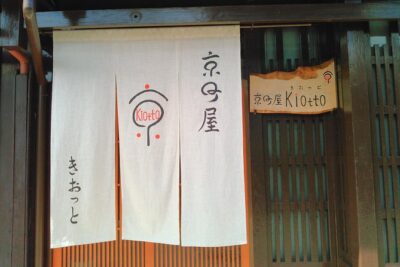
One thing to watch: the meeting spot can be a little tricky to locate, so I’d have your map pin ready (some people find using longitude/latitude helps). The good news is that once you’re in, hosts like Gen (and sometimes interpreters such as Shima or Samuel) make you feel welcome fast.
In This Review
- Key points to know before you go
- Two Kyoto Venues, Two Very Different Sounds
- What Happens During the 45–105 Minute Program
- Solo Townhouse Programs: Close-Up Koto and Shamisen
- Bathhouse Hall Duets: When Acoustics and Instruments Talk
- How the Q&A Turns Music Into a Story You Can Retell
- The Townhouse Workshop: Hands-On Koto Without the Pressure
- Price and Value: Why $32 Can Feel Like More
- Pair It With Kyoto Sightseeing Without Losing Your Day
- Should You Book This Kyoto Koto and Shamisen Concert?
- FAQ
- What’s included in the concert?
- What’s the difference between the townhouse and the bathhouse hall?
- How long does the experience take?
- Is there an English-speaking host or instructor?
- Do I need experience with koto or shamisen?
- Is the hands-on koto workshop included?
- Are transfers or food included?
- When are the bathhouse hall concerts available?
- Is this suitable for young children?
Key points to know before you go
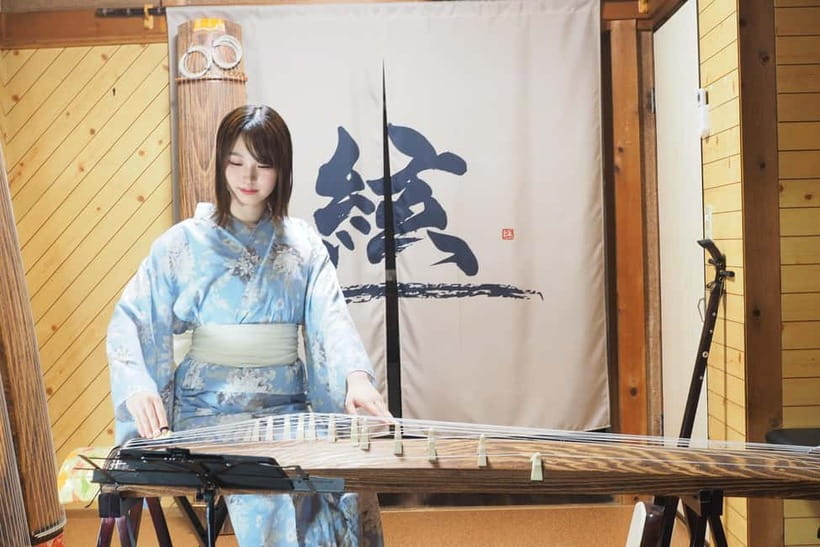
- Townhouse vibe, solo programs with up to about 11 people and 4–5 pieces
- Historic bathhouse hall acoustics with natural reverberation and duet programs (up to about 30 people)
- Instrument intro first so you understand picks, bridges, parts, and notation before the concert
- Bilingual mini-commentary in Japanese/English during the evening
- Optional koto workshop at the townhouse, beginner-friendly with sanitized instruments
- Post-concert Q&A and photos where you can ask real questions and get the stories behind the music
Two Kyoto Venues, Two Very Different Sounds
You pick your atmosphere. That’s the main decision here, and it affects how the music lands in your ears.
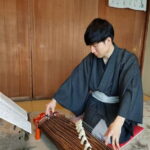
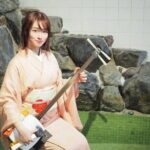
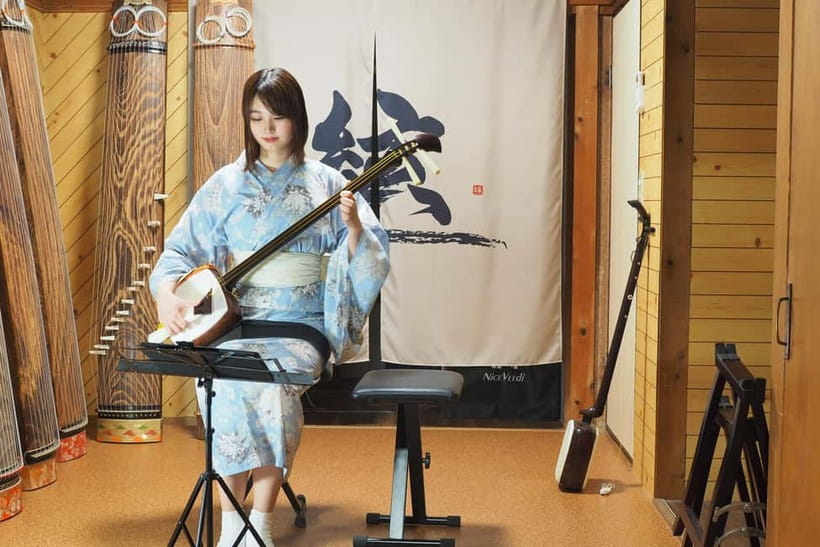
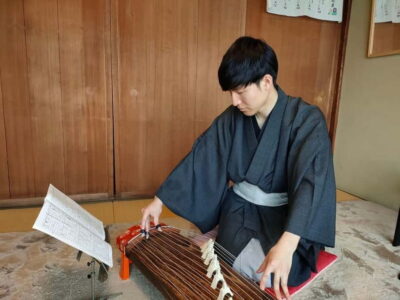
In the traditional townhouse, you’re in a warm, living-room style space. Expect a small group vibe (up to around 11). The performer plays solo sets—typically 4–5 pieces—so you hear the full character of the koto and the voice/technique details of shamisen without distraction. People often describe this as a calm, reflective pocket of Kyoto, not a “tour stop.”
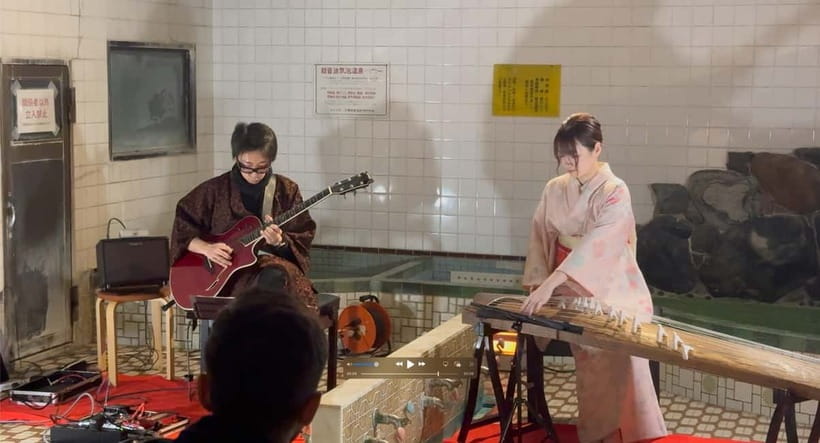
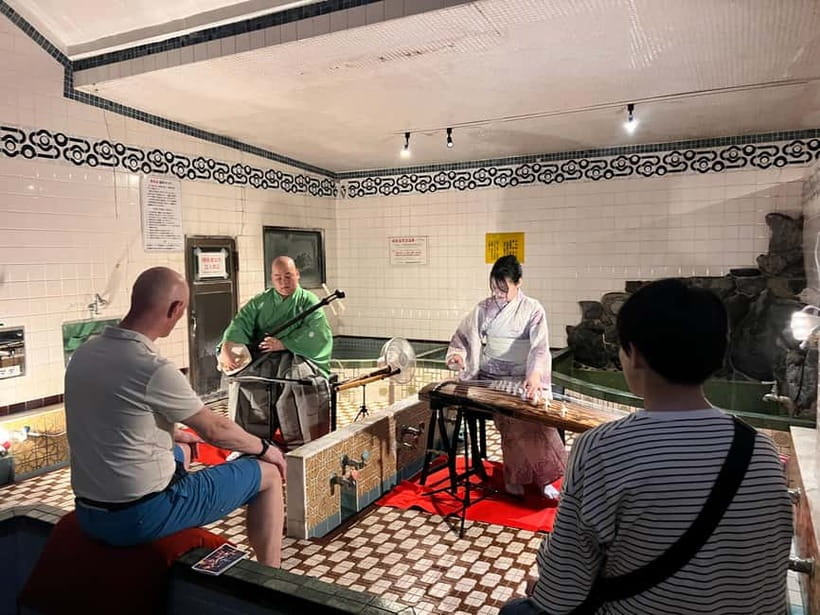
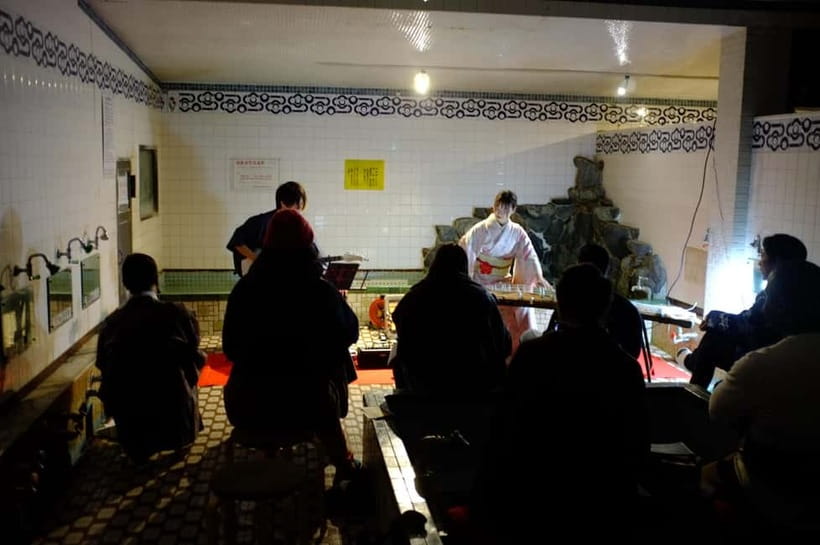
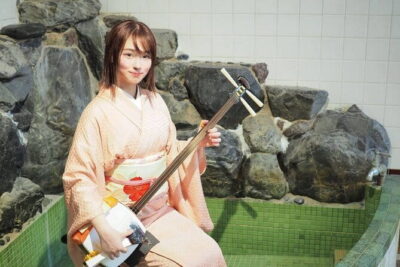
In the historic bathhouse hall, the room does part of the job. The tiled walls create strong natural resonance, so sound stretches and wraps around you. Seating is larger (up to about 30), but the format leans interactive in a different way: this venue focuses on koto duets paired with another instrument, such as shamisen, shakuhachi, taishōgoto, flute, guitar, and more. The performer still keeps commentary bilingual, but the duet format makes the evening feel more like a conversation between instruments.
If you want the most up-close, “I can hear the technique” experience, lean townhouse. If you want drama and atmosphere from the room itself, lean bathhouse hall.
Other Kyoto tours and experiences to compare
What Happens During the 45–105 Minute Program
This runs in a clean sequence, and it’s designed so first-timers don’t feel lost.
Check-in & seating (about 5–10 minutes):
You’ll get welcomed and learn basic venue etiquette. Then you settle into cushions/chairs in the townhouse, or rows in the bathhouse hall.
Instrument introduction (about 10–15 minutes):
This is where the evening becomes more than background music. You’ll learn how koto and shamisen are played, including parts and how performers use picks/bridges and interpret the notation.
Concert (about 25–30 minutes):
The main performance comes next. You’ll hear 4–5 pieces with commentary. Depending on venue choice, the style can lean solo (townhouse) or solo + duet pairing (bathhouse hall). In both cases, expect a mix of Japanese musical traditions with classical, contemporary, and original compositions.
Q&A & photos (about 5–10 minutes):
This is short but meaningful. You can ask direct questions, and the musicians explain the stories and choices behind specific pieces. It’s also when you get photo time with the performers.
Optional hands-on koto workshop (about 35–40 minutes):
Only offered at the traditional townhouse. You try basic koto techniques and a short phrase, with guidance and sanitized instruments. It’s beginner-friendly, which matters because the koto is deceptively technical.
Overall length depends on whether you do the workshop. The standard concert experience fits the shorter end, while adding the workshop can push things toward the longest end of the time range.
Solo Townhouse Programs: Close-Up Koto and Shamisen
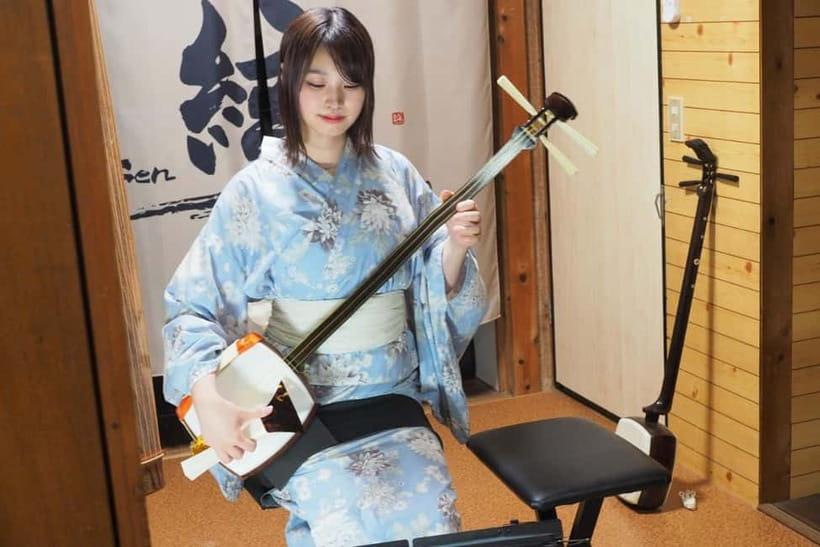
The townhouse version is built around clarity and intimacy. With a small audience, you hear how the music is shaped in real time.
Typically, you’ll get solo sets of 4–5 pieces, mixing Japanese classical tunes with contemporary and newer works. Some pieces you might encounter include titles like Kajimakura, Chidorino Kyoku, and Kaede no Hana—and the program is artist-driven, rotating by season and performer.
Because it’s solo, you don’t have to keep track of multiple instruments at once. Instead, you can focus on the details:
- how the sound changes phrase by phrase
- how the performer controls pacing and emphasis
- the relationship between instrument technique and emotional tone
This is also where the human side shows. From past sessions, hosts often do a warm job of translating the “why” behind the music, not just the “what.” If you meet an interpreter/host such as Samuel or Shima, the instrument primer tends to be friendly and practical, with time for follow-up questions.
If your goal is cultural understanding plus goosebump-level craft, townhouse solo programs are the easiest choice.
Bathhouse Hall Duets: When Acoustics and Instruments Talk
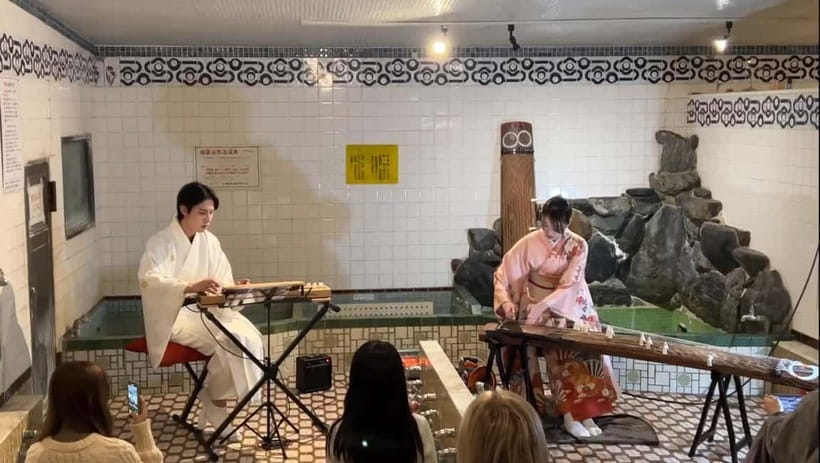
The bathhouse hall is the more atmospheric option, and the venue changes the listening experience.
You’ll hear 4–5 pieces that include a koto duet paired with another instrument. The pairing can vary—examples include koto + shamisen, koto + shakuhachi, koto + taishōgoto, koto + flute, and koto + guitar. Solo works may also be included, so the program typically balances individual expression with collaboration.
Here’s why that matters: duets don’t just add volume. They add contrast. The koto’s plucked, glassy tones can become lyrical or percussive depending on technique, while the second instrument introduces a different breath-like or string-like color. In a resonant bathhouse space, these contrasts feel bigger, like the room is helping stage the dialogue.
If you’re the type of person who likes the sound of a place—tiled walls, natural reverberation, and a bit of dramatic silence—this venue fits your ear.
One scheduling note: the bathhouse hall shows are offered irregularly on Mondays, so it’s worth checking the live calendar when you plan your Kyoto days.
How the Q&A Turns Music Into a Story You Can Retell
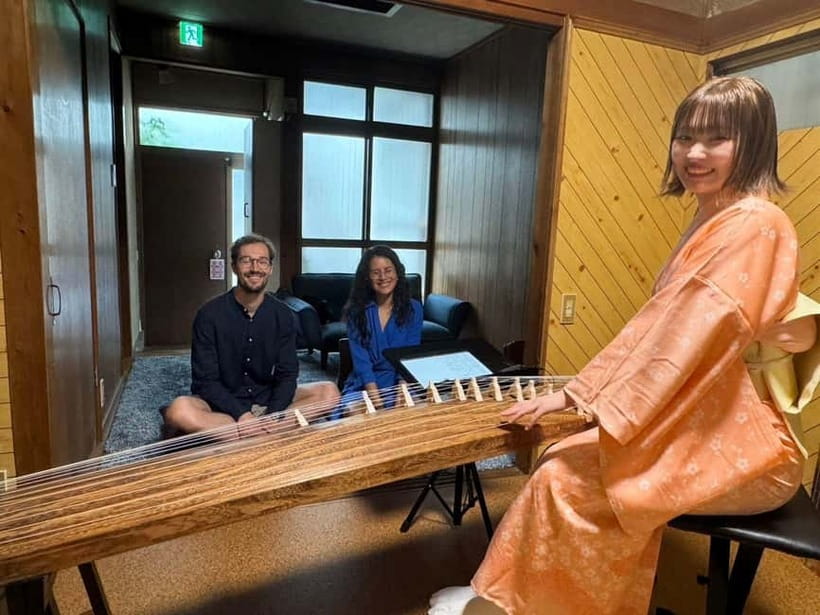
The concert ends, then it doesn’t quite end. The Q&A is where the evening becomes memorable later, not just while you’re sitting there.
You’ll typically get a few minutes to meet the musicians again and ask questions. In practice, the most helpful answers tend to connect three things:
1) what you heard (technique and instrument choices)
2) what the piece is doing emotionally or structurally
3) why that matters in Japanese musical culture
Hosts such as Gen often guide the conversation, and interpreters (sometimes Samuel or Shima) help translate the small details that beginners usually wonder about. I’d recommend having one or two questions ready, like:
- what a performer is emphasizing in a specific piece
- what the notation or phrasing means
- how koto technique changes the sound
Even better: if you’re curious enough to ask, you’ll likely leave with a mental map of the evening that helps you recognize similar sounds later in Kyoto.




The Townhouse Workshop: Hands-On Koto Without the Pressure
If you pick the townhouse and add the workshop, you get a different kind of learning. It’s not a performance course. It’s a chance to understand what you were hearing.
Workshop time is typically 35–40 minutes, and it happens after the concert components. You’ll use sanitized instruments and get guidance on basic posture and technique. Most people won’t leave as expert players, but that’s not the point. The point is to feel the mechanics:
- how you sit and position your hands
- how plucking connects to tone
- how short phrases can become music quickly
From past participants, hosts like Shohei are often the patient teachers who coach first tries and help you get the most out of limited time. That kind of patient correction is exactly what makes a workshop worth your time instead of turning it into a rushed demo.
If you’re traveling with someone who likes interactive activities, the workshop is the best “value add” here.
Price and Value: Why $32 Can Feel Like More
At $32 per person, this is priced for real access, not just a seat in a big hall. The value comes from three things you can’t fake:
- scale (small group options, from about 11 in the townhouse to about 30 in the bathhouse)
- explanation (bilingual mini-commentary plus Q&A)
- proximity to the craft (instrument intro and close listening)
A lot of cultural experiences in Kyoto are either purely visual, or they’re performances where you can’t ask questions. Here, you get both the listening and the meaning.
Also, the rating is strong: the experience averages 4.9 across 224 bookings. That doesn’t automatically guarantee perfect timing on every date, but it does signal consistent quality in execution and hospitality.
If you want one evening that feels more personal than a theater show, this is one of the better bets.
Pair It With Kyoto Sightseeing Without Losing Your Day
One reason I like this kind of activity is that it fits into your Kyoto rhythm. You don’t need to build your whole itinerary around it.
The activity is also positioned with convenient access to major sights. From the area, you can connect relatively easily:
- Arashiyama (about 25 minutes) via a Hankyu ride and transfer to the Randen Line
- Nijō Castle (about 20 minutes) with one subway stop from Saiin on the Tozai line
- Kinkaku-ji (about 20 minutes) with a bus from Nishioji Sanjō plus a short walk
- Nishiki Market (about 25 minutes) for shopping and snacks around your concert timing
Practical tip: plan your concert so you’re not arriving from the farthest site right at the last minute. The meeting point can be a little tricky to find, so give yourself a buffer.
If you want to do both venues, you can. The schedule can vary, and the bathhouse hall is irregular on Mondays, so you’ll want to check dates carefully.
Should You Book This Kyoto Koto and Shamisen Concert?
Book it if you want a Kyoto evening that feels human, not like a checklist. This works especially well if:
- you’re a first-time visitor curious about traditional Japanese instruments
- you like small-room listening where you can hear technique
- you enjoy asking questions and getting straight explanations in Japanese/English
- you want a calm moment after temples and crowds
Skip it or think twice if you need a fully guided, walking-style tour with lots of movement. This is a sit-and-listen experience. Also, the bathhouse hall schedule is irregular on Mondays, so your dates need flexibility.
If you’re unsure which venue to choose, here’s the simplest rule:
- choose townhouse for intimate solo artistry and the chance to try the koto
- choose bathhouse hall for duet variety and resonant acoustics
You can cancel up to 24 hours in advance for a full refund, and you can often reserve first and pay later, which is handy when you’re still tuning your Kyoto plan.
FAQ
What’s included in the concert?
You get a live performance of 4–5 pieces by professional koto and shamisen artists, bilingual mini-commentary (Japanese/English), a post-concert Q&A, and a photo opportunity time with the performers. Venue seating is provided (cushions or chairs in the townhouse; rows in the bathhouse).
What’s the difference between the townhouse and the bathhouse hall?
The traditional townhouse is a cozy solo setting for about up to 11 guests, usually featuring solo koto and shamisen sets of 4–5 pieces. The historic bathhouse hall has stronger natural reverberation, seats up to about 30 guests, and focuses on koto duets paired with another instrument across 4–5 pieces.
How long does the experience take?
The total duration ranges from about 45 to 105 minutes, depending on the starting time and whether you add the optional hands-on koto workshop.
Is there an English-speaking host or instructor?
Yes. The instruction and guidance are available in English and Japanese, including the bilingual mini-commentary during the program.
Do I need experience with koto or shamisen?
No. Most people come with little prior knowledge, and the evening includes explanations of the instruments, parts, and how they are played.
Is the hands-on koto workshop included?
It’s optional and only available at the traditional townhouse. You’ll try basic koto techniques and a short phrase with guidance using sanitized instruments.
Are transfers or food included?
No. Transfers or transportation, food, drinks, and any bathing access are not included.
When are the bathhouse hall concerts available?
The historic bathhouse hall venue is offered irregularly on Mondays. You’ll need to check the calendar for the next available dates.
Is this suitable for young children?
It’s not suitable for babies under 1 year old.
More Concerts in Kyoto
More Tour Reviews in Kyoto
Just added: more Kyoto tours to browse








Concerts, compared.
 ★ 5.0Concerts Played with Traditional Instruments in KyotoFrom $3950 reviews
 ★ 4.9Japanese Koto & Shamisen Concert and Koto ClassFrom $3831 reviews
 ★ 5.0Traditional Concert in Public bath near Kyoto StationFrom $325 reviews
 ★ 5.0Private Japanese music concertFrom $574 reviews
Browse the lists this tour appears in