
Reviewed · KYOTO
Hammer Pattering Experience of Ring
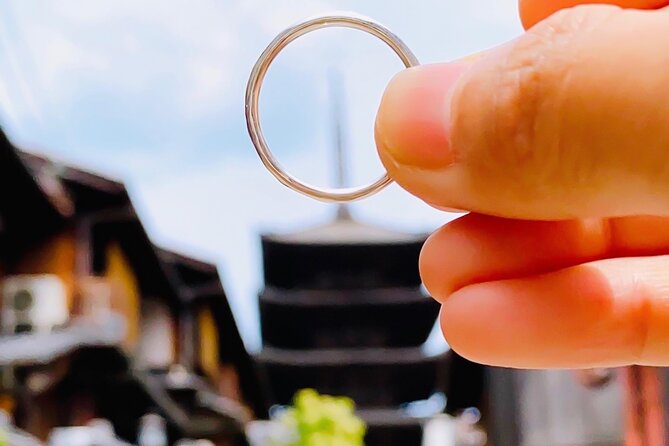
Hammers turn silver into memories. In Kyoto’s Higashiyama, you make a ring in about an hour using the Japanese Tankin style, choosing material, thickness, shape, and texture before you start hammering. The shop staff explain each step clearly and stick around to help you through the process, including a hand-off with a commemorative photo.
I especially like that this workshop is built for real-life results. You leave with a finished ring the same day, and the final polish and cleaning are handled by the craftsmen so your keepsake looks intentional, not rushed.
One drawback to consider: if you expect full jewelry-making with welding and soldering from scratch, this isn’t that. The process adds texture patterns to rings that have already been welded or polished, so it’s more about surface design than raw-metal construction.
In This Review
- Key things to know before you go
- Where It Happens: Itoaware Kyoto in Higashiyama
- What You Actually Make With Tankin Hammering
- Your Choices: Material, Thickness, Shape, and Texture
- The Workshop Flow: From Hammering to Final Polish
- Price and Value: Why $21.68 Can Make Sense in Kyoto
- The Biggest Trade-Offs (So You Can Decide Quickly)
- A Few Practical Tips That Improve Your Ring Outcome
- Who Should Book This Workshop in Kyoto?
- Should You Book It or Skip It?
- FAQ
- How long is the ring-making workshop?
- How much does it cost?
- Where do I meet for the workshop?
- Is this a private experience?
- Do I need experience with jewelry making?
- Does the workshop include welding work?
- Can I take my ring home the same day?
- When will I get confirmation after booking?
- What is the cancellation policy?
Key things to know before you go
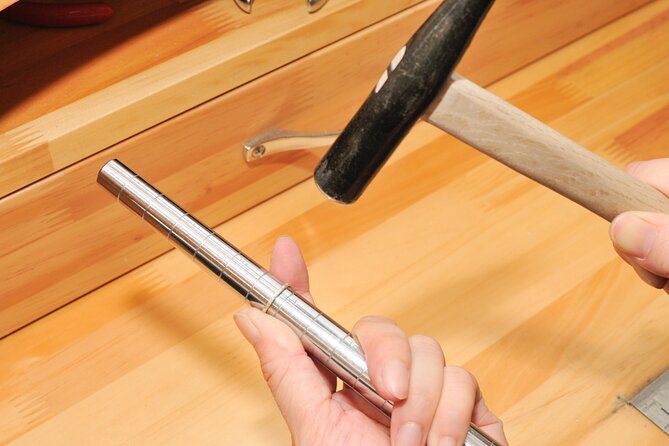
- Tankin hammer-texture method: You’ll use special hammers and tools to press patterns into the ring’s surface.
- You choose the look: Pick your favorite material, thickness, shape, and texture before hammering.
- About 1 hour, same-day take-home: The workshop runs around 60 minutes and you can take your ring home the day of.
- No DIY polishing stress: Skilled craftsmen handle the final polishing and cleaning.
- Private, small-group feel: Only your group participates, so you’re not squeezed into a crowd.
- Good gift energy: It’s a Kyoto-made souvenir that feels personal, not off-the-shelf.
Where It Happens: Itoaware Kyoto in Higashiyama
This workshop takes place at Itoaware Kyoto in Higashiyama Ward, right by Kyoto’s classic sightseeing neighborhoods. Your start and end point is the same address: Itoaware Kyoto, 91-5 Hoshinochō, Higashiyama Ward, Kyoto, 605-0853, Japan. That makes the timing simple: no complicated routing, no mystery meeting points tucked behind other streets.
It’s also described as near public transportation, which matters in Kyoto. You’ll likely be walking a bit anyway, but at least you’re not locked into a long trek just to reach the studio.
One small practical win: it’s private, meaning it’s only your group. That usually translates into calmer instruction and more time to ask questions—especially if you’re traveling with kids, visiting as a couple, or booking as a family.
Still mapping out your days? A few more Kyoto tours worth a look.



What You Actually Make With Tankin Hammering
The core experience is texture work using the traditional Japanese Tankin approach. In plain terms, you’re not learning to fabricate a ring from raw metal. Instead, you’re shaping the ring’s surface—adding character through repeated hammer impressions.
Here’s the key detail: the workshop does not include welding work. The ring you work on has already been welded or polished, and your part is customizing the look by creating patterns. That’s why this can fit into a tight one-hour schedule without turning into a multi-day metals course.
If that sounds familiar to you, great. If you were hoping for the full movie-scene version—cutting, forming, soldering, and forging—adjust expectations early. The upside is that you still get a handmade ring you can wear with pride, without the technical bottleneck of construction.
Your Choices: Material, Thickness, Shape, and Texture
This is where the experience feels personal fast. Before you start hammering, you’ll choose your ring’s material, thickness, shape, and texture. That combination matters because the same technique looks totally different depending on the surface design you choose.
In other words, your decision isn’t just aesthetic—it affects how the hammered pattern catches the light once it’s polished. A texture that looks bold in the studio can look subtle and elegant once the ring is cleaned and finished.
You can also think about this as a gift-design shortcut. If you’re buying for someone else, you can guide your choices toward a style they’ll actually wear. Clean, consistent textures tend to be more “everyday.” More dramatic patterns read as statement pieces.
The Workshop Flow: From Hammering to Final Polish
The workshop runs for about 60 minutes, but it doesn’t feel like you’re thrown into a task and left to guess. The staff explain the process and stay with you through the steps, including help during the practical parts.
A typical flow looks like this:
- Start with instruction: You’ll get guidance on how the tools are used to create texture patterns.
- Choose and prep your ring: You confirm your selections (material, thickness, shape, texture) before hammering begins.
- Hammer the pattern: You’ll press texture into the ring using special hammers and tools.
- Get sizing support: The class includes time to help you with sizing—so you’re not just making a ring that looks right in theory.
- Commemorative photo support: The studio helps with a photo so you leave with a memory, not just a finished object.
- Craftsmen finalize the ring: Skilled craftsmen handle the polishing and cleaning at the end.
One detail I like: you’re supported until the end. Some hands-on crafts can feel sink-or-swim once the first tool is in your hand. Here, the staff are careful about walking you through what to do next.
And you get a result you can take home the same day. That’s a big deal in Kyoto, where you don’t want to build “jewelry logistics” into your trip plan.
Price and Value: Why $21.68 Can Make Sense in Kyoto
At $21.68 per person for about an hour, this workshop is priced like a smart, accessible experience rather than a luxury craft class. You’re paying for the shop space, tools, staff time, and the finishing work done by craftsmen—not just for the time you spend hammering.
The value jumps when you compare it to what a comparable piece of silver jewelry costs at retail. Even if you don’t buy anything else during your Kyoto days, you’re still investing in a tangible keepsake that looks handmade and personal.
It also hits a different kind of value than a cooking class or guided tour. You’re not just consuming the experience—you’re creating something you can wear. That makes it feel more like a souvenir with meaning, especially if you’re traveling with your partner or marking a milestone.
From the feedback, people consistently highlight the ring as a thoughtful gift and a meaningful memory. That tracks with the structure here: you’re making a design choice, hammering the texture, and then seeing it cleaned and polished into something presentable.



The Biggest Trade-Offs (So You Can Decide Quickly)
Let’s be honest about who this is for.
This workshop is ideal if you:
- Want a handmade Kyoto souvenir you’ll actually use
- Like hands-on crafting but don’t want a long technical course
- Prefer a guided class with staff support
- Are traveling as a private group and want a calm experience
This workshop may be less ideal if you:
- Expect to learn full jewelry construction (cutting, welding, soldering) from scratch
- Want a longer class where you learn advanced metalworking steps
- Are mainly interested in learning the chemistry or metallurgy side of jewelry
One review also described it as more limited than classic ring-making expectations: the ring is given to you and you add texture, rather than contouring and soldering metal pieces together. That matches the official note that welding work isn’t included.
A Few Practical Tips That Improve Your Ring Outcome
Even with beginner-friendly guidance, you’ll get better results if you show up with a plan.
First, think about what kind of pattern you want before you start hammering. Texture choice is the heart of Tankin style, so decide if you want a ring that feels delicate, bold, or somewhere in between.
Second, pay attention during the sizing support. The workshop helps with sizing, but it’s still your best chance to confirm fit while you’re there. A ring that’s slightly off can be frustrating once you’ve left the studio.
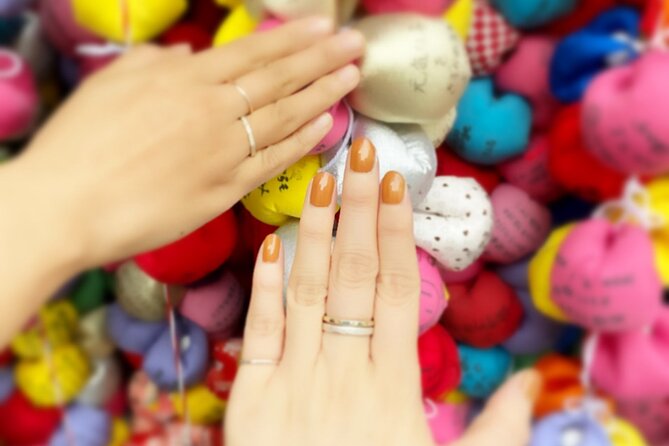
Third, if you want personalization beyond the hammered pattern, ask about extra customization possibilities. One couple-style use case in the feedback mentioned adding Kyoto wording to the ring. That may be offered as an option, but it’s not spelled out in the basic description—so it’s worth checking with the staff during your time in the shop.
Who Should Book This Workshop in Kyoto?
This is a great fit for:
- Couples who want a shared activity and a wearable keepsake
- Families, since the class runs about an hour and includes hands-on support
- People hunting for a gift that feels genuinely made for the recipient
- Travelers who want something meaningful without spending half a day in a workshop
It’s also stated as suitable for most travelers and includes service animals allowed, which makes it simpler for wider needs.
Because it’s private and ends back where you start, it fits easily into a Kyoto schedule. You can slot it into a day that already includes Higashiyama wandering without worrying about long transfers.
Should You Book It or Skip It?
I’d book this if you want an easy-to-schedule, same-day take-home craft experience that produces something you can wear. The combination of customizable choices, patient staff guidance, hammer-texture creativity, and final polish makes it feel like real craft—not just a demo.
Skip it only if you’re specifically chasing the kind of ring-making where you weld and solder metal pieces from scratch. This is about texture and pattern, not construction.
If your goal is a Kyoto-made souvenir that feels personal and well-finished, Hammer Pattering Experience of Ring delivers strong value for the time and cost.
FAQ
How long is the ring-making workshop?
The experience takes about 1 hour.
How much does it cost?
The price is $21.68 per person.
Where do I meet for the workshop?
Meet at Itoaware Kyoto, 91-5 Hoshinochō, Higashiyama Ward, Kyoto, 605-0853, Japan. The activity ends back at the same meeting point.
Is this a private experience?
Yes. It’s listed as private, so only your group participates.
Do I need experience with jewelry making?
No prior experience is mentioned. The workshop is described as suitable for most travelers, and staff support you throughout.
Does the workshop include welding work?
No. The experience states it does not include welding work. It focuses on adding texture/patterns to rings that have already been welded or polished.
Can I take my ring home the same day?
Yes. You can take the ring home on the day of the workshop.
When will I get confirmation after booking?
Confirmation is received within 48 hours of booking, subject to availability.
What is the cancellation policy?
You can cancel for a full refund if you cancel at least 24 hours before the experience’s start time. If you cancel less than 24 hours before, the amount paid is not refunded.







